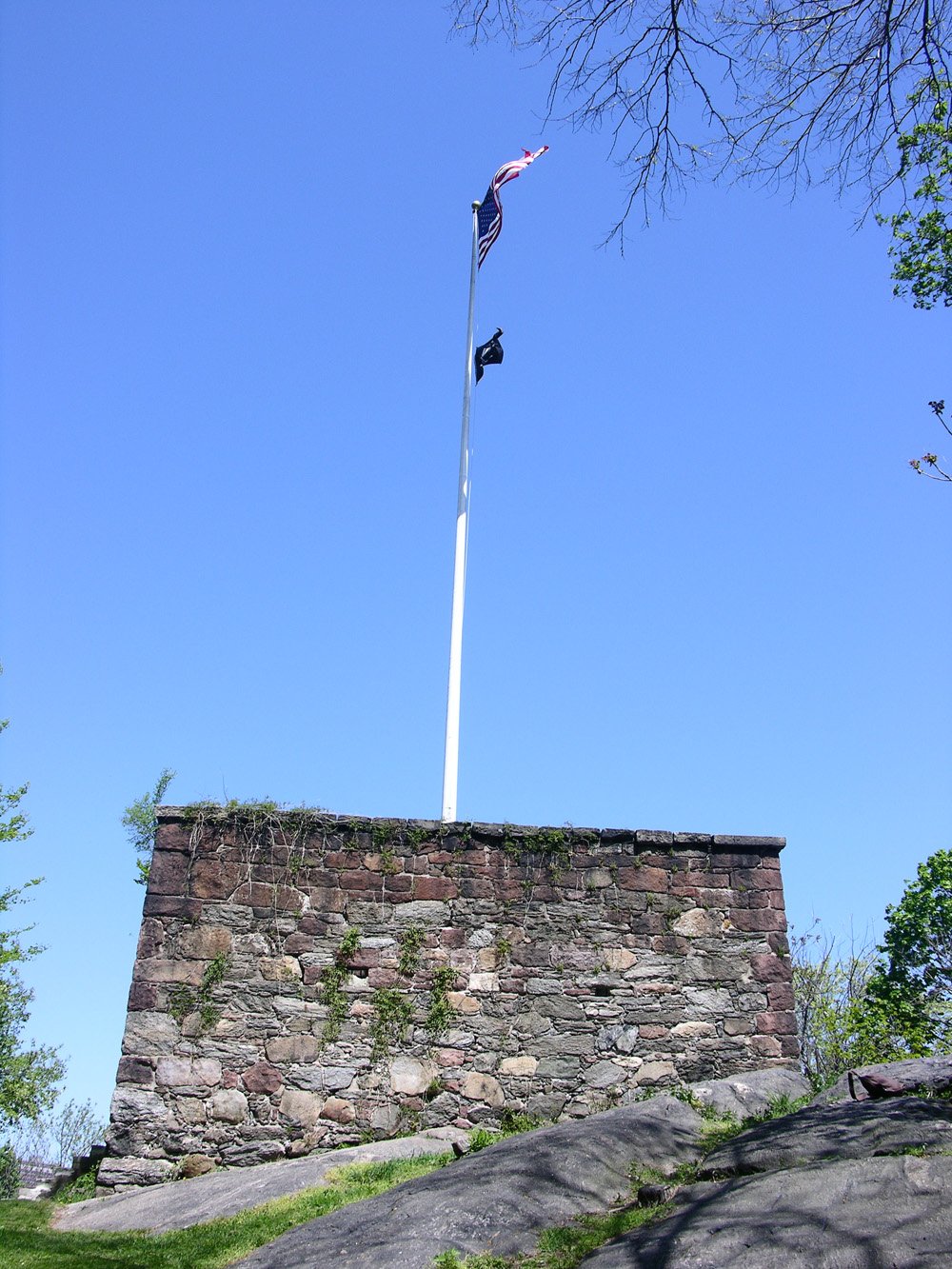
Hidden in Central Park's North Woods, Blockhouse No. 1 is more than just a serene sanctuary. Finished in 1814, it is the second-oldest structure in the park, after Cleopatra's Needle, and the oldest surviving structure originally built within the park site. It is part of a line of fortifications that once defended New York City during the War of 1812. The fort's history also dates back to 1776, when British and Hessian troops occupied Manhattan; trial excavations in 1995 determined that the foundations of Blockhouse No. 1 date back to this time. Located south of North Drive and north of the Huddlestone Arch, the building sits on an overlook of Manhattan schist with a clear view of the flat surrounding areas north of Central Park. It overlooks Harlem Meer and the Lasker Rink to the east.
Construction on the tower was completed on December 22, 1814, just two days before the Treaty of Ghent was signed to end the war. The fort was built by New York volunteers who brought their own materials, including red sandstone blocks, in anticipation of a British invasion. The structure consists of a two-story bunker surrounding a small area that once held a wooden platform with a revolving turret for a cannon. During its use as an ammunition and storage building, the top two feet of stone-work were added. At the turn of the 20th century, the current entrance, staircase, and a tall flagpole were added. In 1905, the fort was described as standing 19 feet (5.8 m) tall at the western wall and having a base 34 feet (10 m) square.
While the fort was built as a defense for the city, it never saw actual combat because the British did not attack New York. After being abandoned shortly after 1814, it served as an ammunition storage building and later as a place to celebrate patriotic holidays in the early 20th century. Today, the structure is unoccupied and unused. A large metal gate covers the door, and while Urban Park Rangers occasionally provide tours, independent exploration of the interior is not allowed.
Sources: Wikipedia, OpenStreetMap, Wikidata, Wikimedia Commons

Written by No Other
Discuss this with the author and others
No comments yet. Be the first to start the conversation.