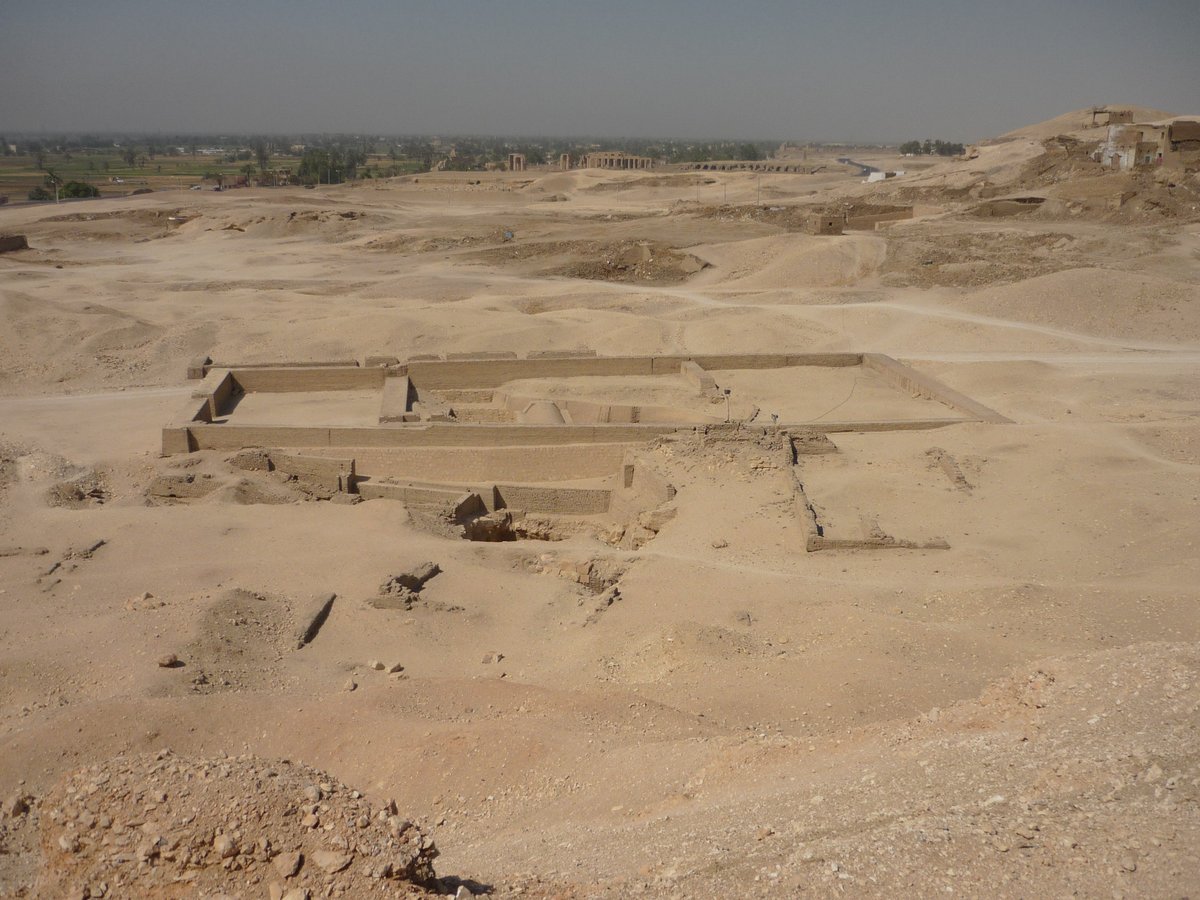

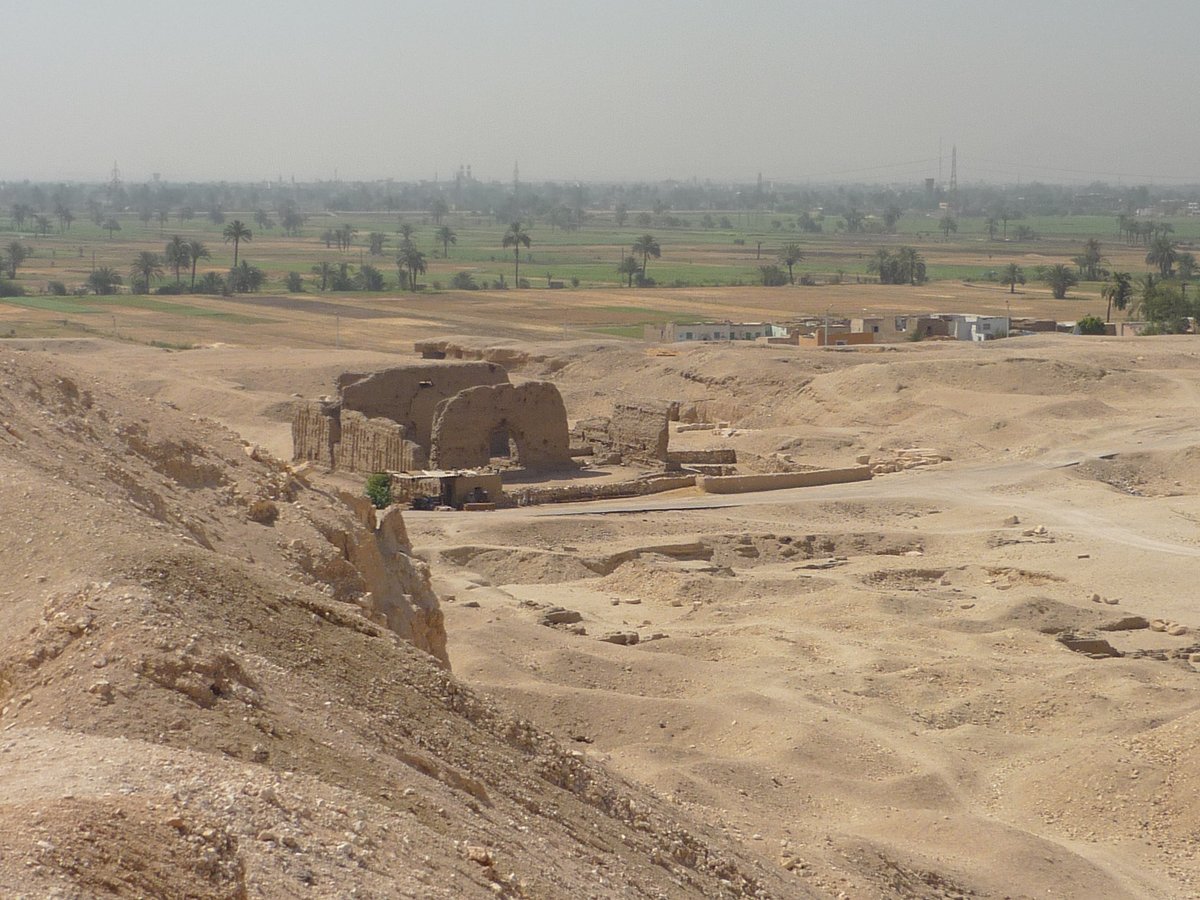
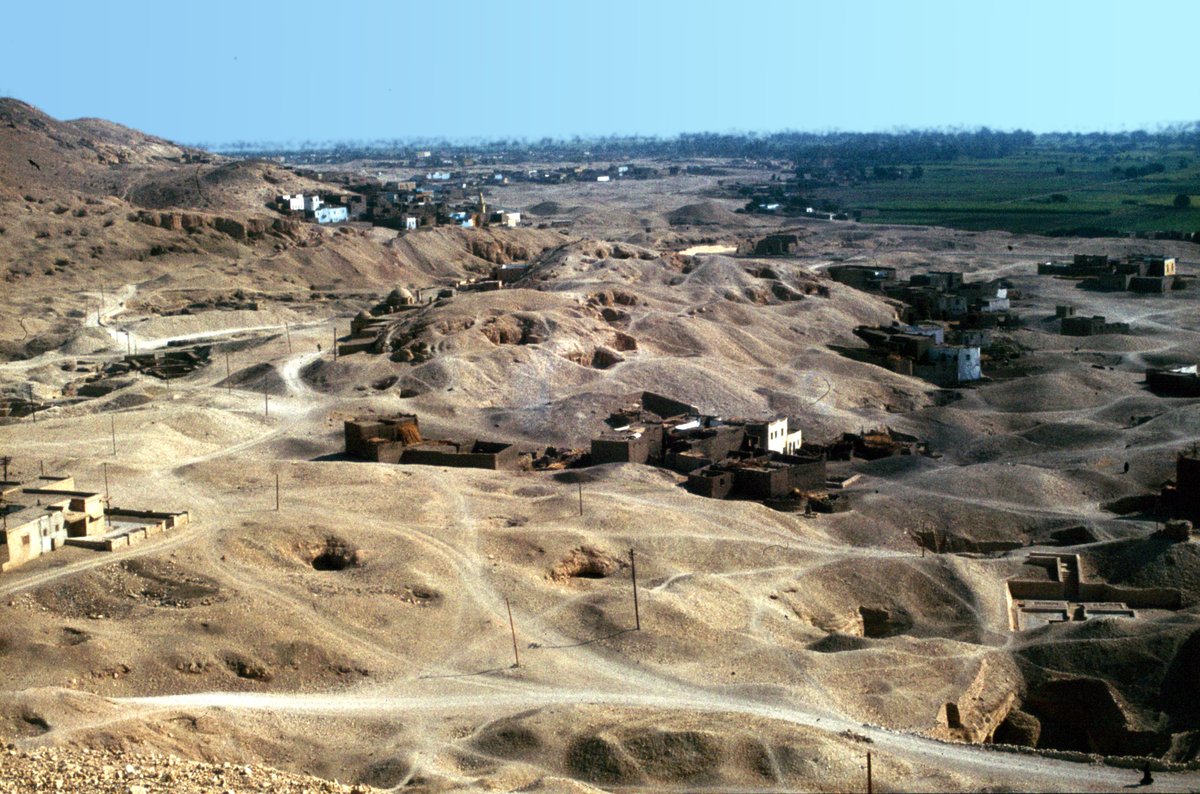
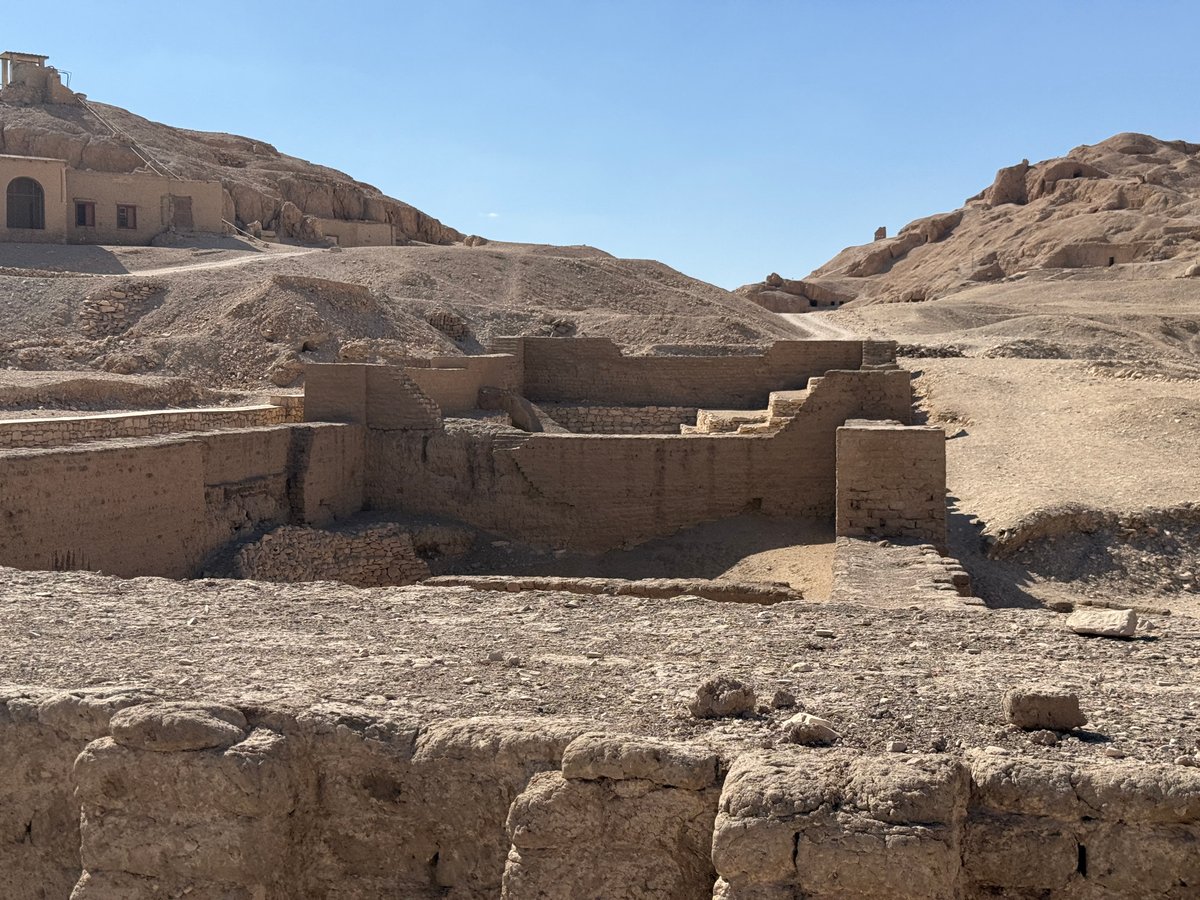
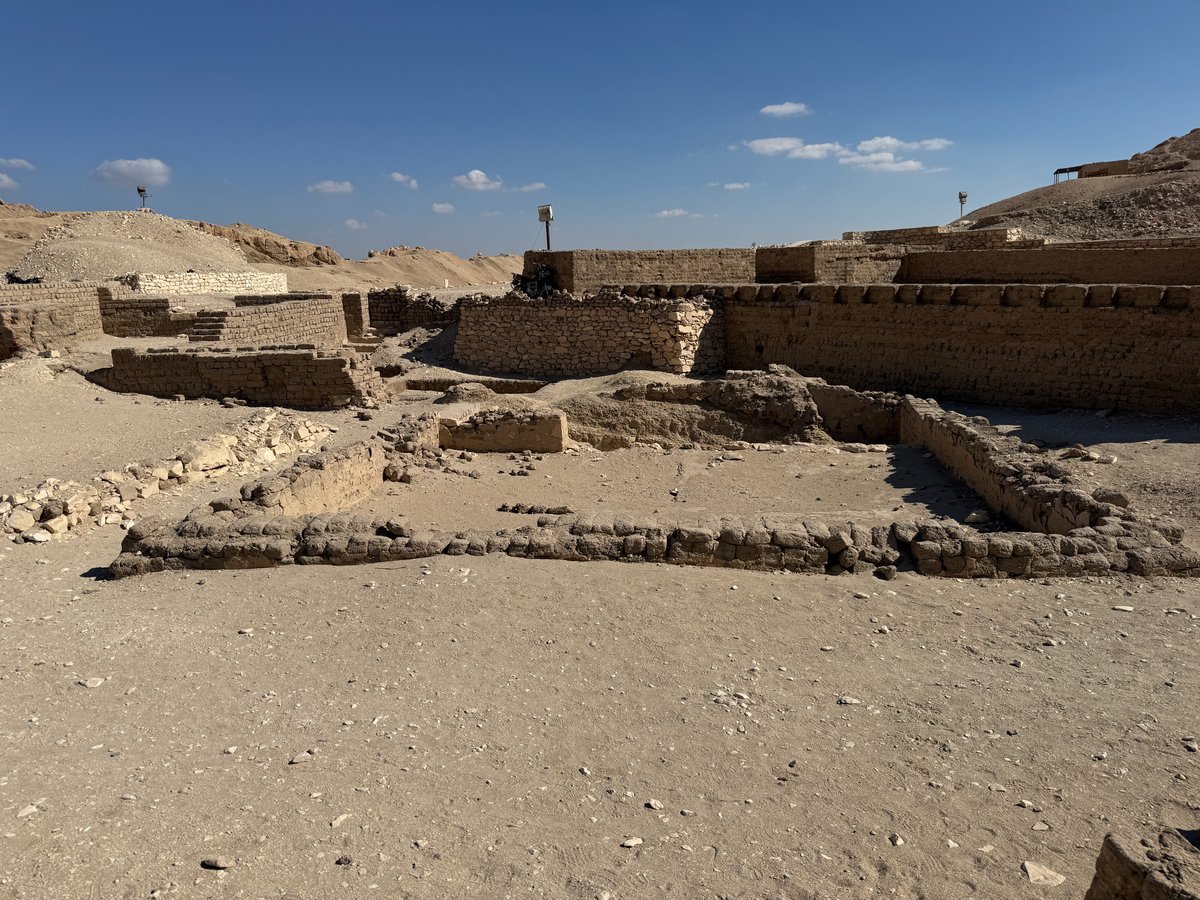
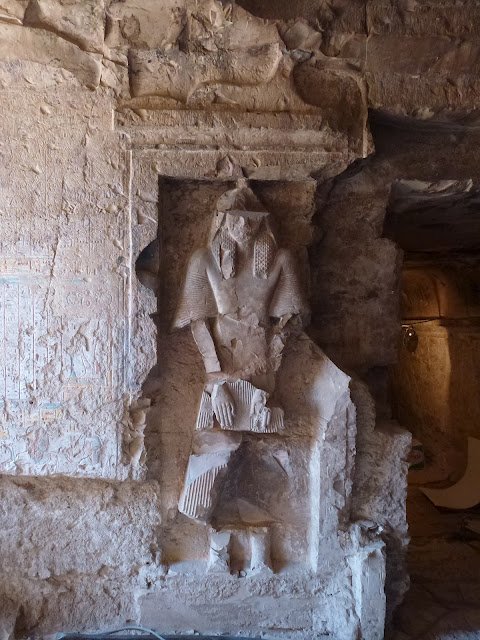
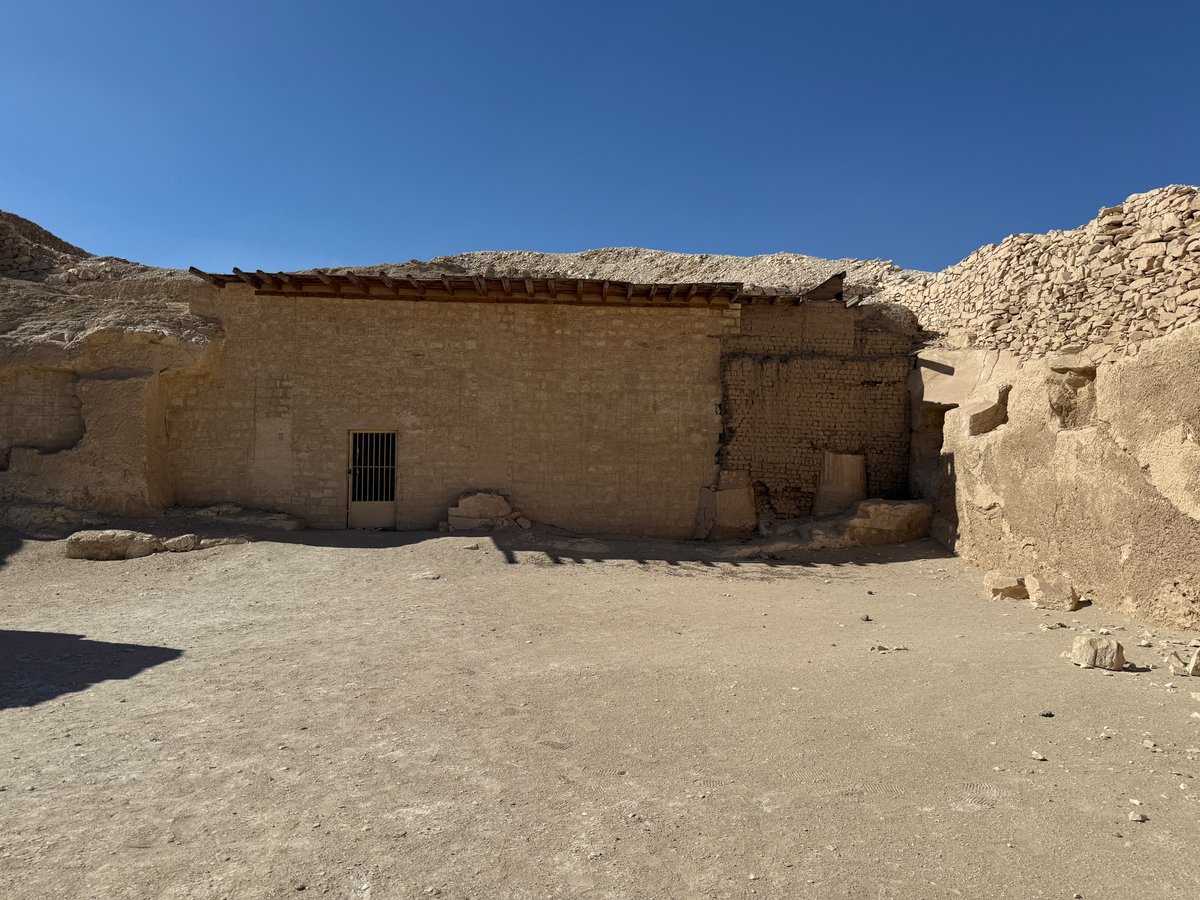
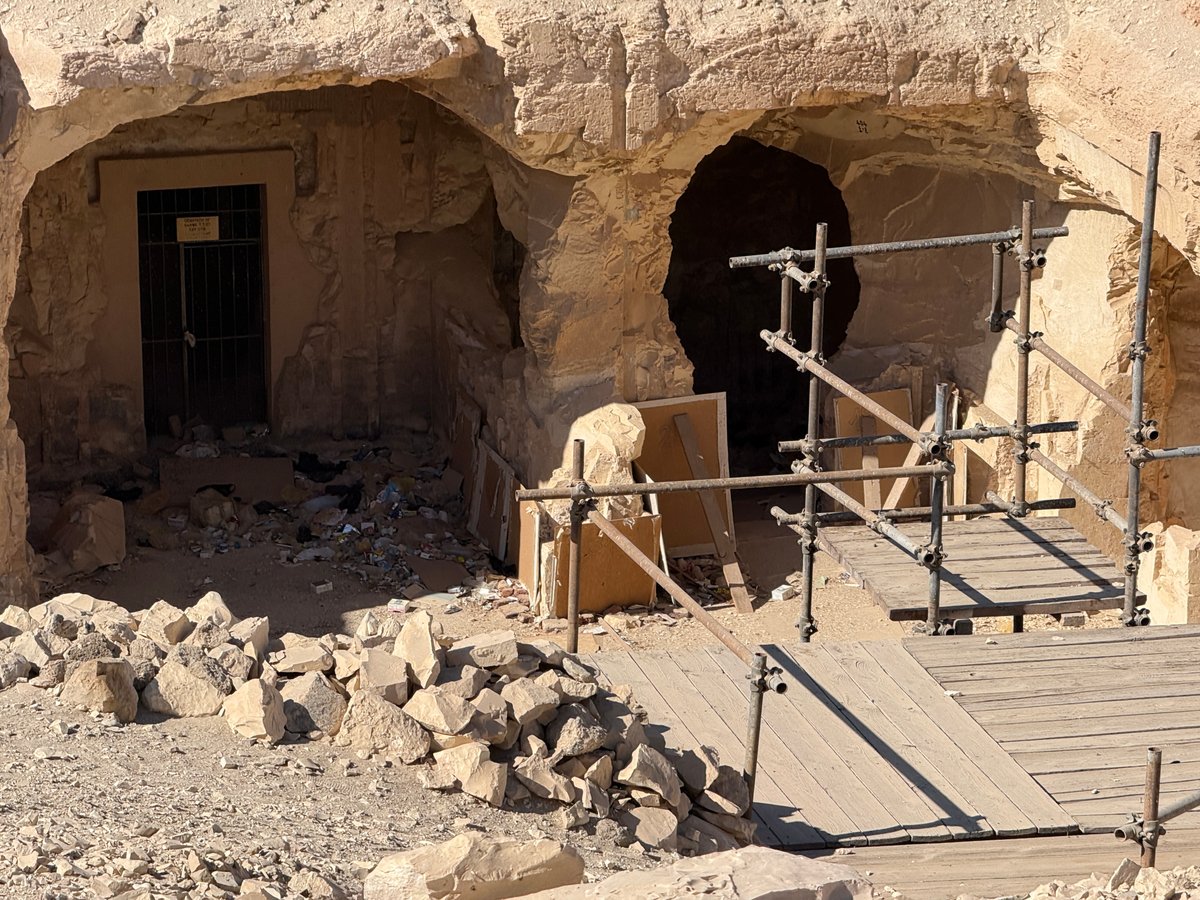
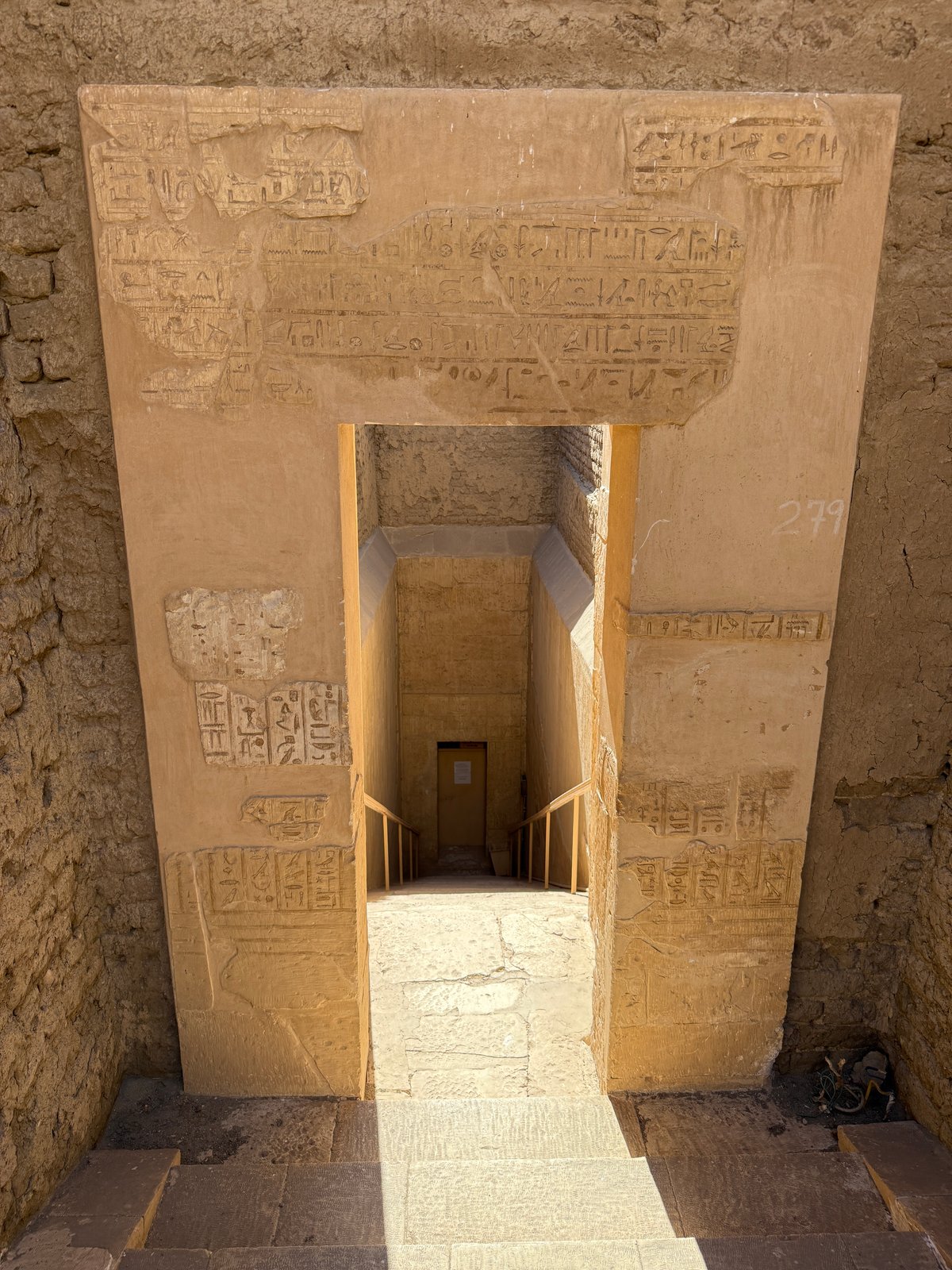
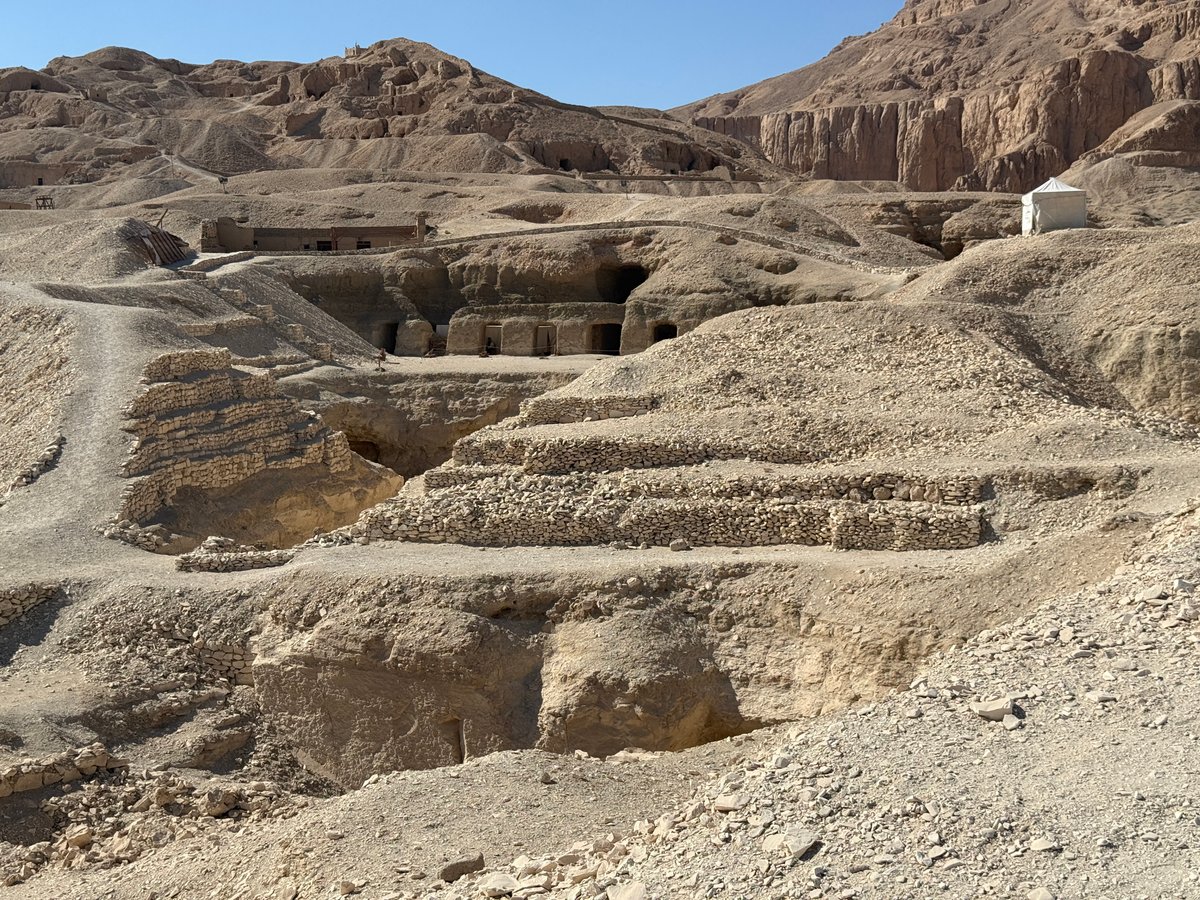
Located in the El-Assasif necropolis on the west bank of the Nile, the Theban tomb TT414 was originally constructed for the use of Ankh-hor and his family. Ankh-hor served as the Chief Steward to the God's Wife Nitocris during the 26th Dynasty, during the reigns of Pharaohs Psamtik II and Apries. While the tomb was designed for his use, it was later usurped during the 30th Dynasty and the Ptolemaic Period.
During the period of ca 590–530 BC, the tomb was used for Ankh-hor and his family. Burials from this era include those of Ankh-hor, his sister, several brothers, and a daughter. Although the burials were thoroughly ransacked, archaeologists found remains of coffins, pearl nets, stelae, canopic jars, shabhtis, and Ptah-Sokar-Osiris statuettes. Fragments of two anthropoid coffins of Ankh-Hor were discovered, though the inner wooden coffin is notable for its poor quality of decoration. This stands in stark contrast to the size and architecture of the tomb itself and the higher quality of the funerary equipment of contemporary family members.
Further exploration reveals a high-quality coffin belonging to a possible nephew or grandson of Ankh-Hor named Psammetik-men-em-Waset II. Parts of this coffin were found spread over multiple locations, with the largest fragments coming from room 10, where the sarcophagus was apparently located. Room 8 contained the remains of the funerary equipment of a woman named Her-aset, who was possibly the wife of one of Ankh-hor's brothers.
Successive families occupied the tomb in later centuries. In ca. 380–300 BC, the family of Padi-Amun-neb-nesuttawy I, a priest of Amun from Karnak, introduced secondary burials in room 7.1 and constructed additional rooms. An intact burial of Wahibre I dates to the 30th Dynasty. By the period of 300-150 BC, the tomb was used by the family of Djed-Khonsu-iuef-ankh, and later, during the period of 150/100 – 0 BC, it was used by the family of Horus (Hor) and one of his sons, Osoroeris.
Sources: Wikipedia, OpenStreetMap, Wikidata, Wikimedia Commons
Written by Mutabor
Discuss this with the author and others
No comments yet. Be the first to start the conversation.