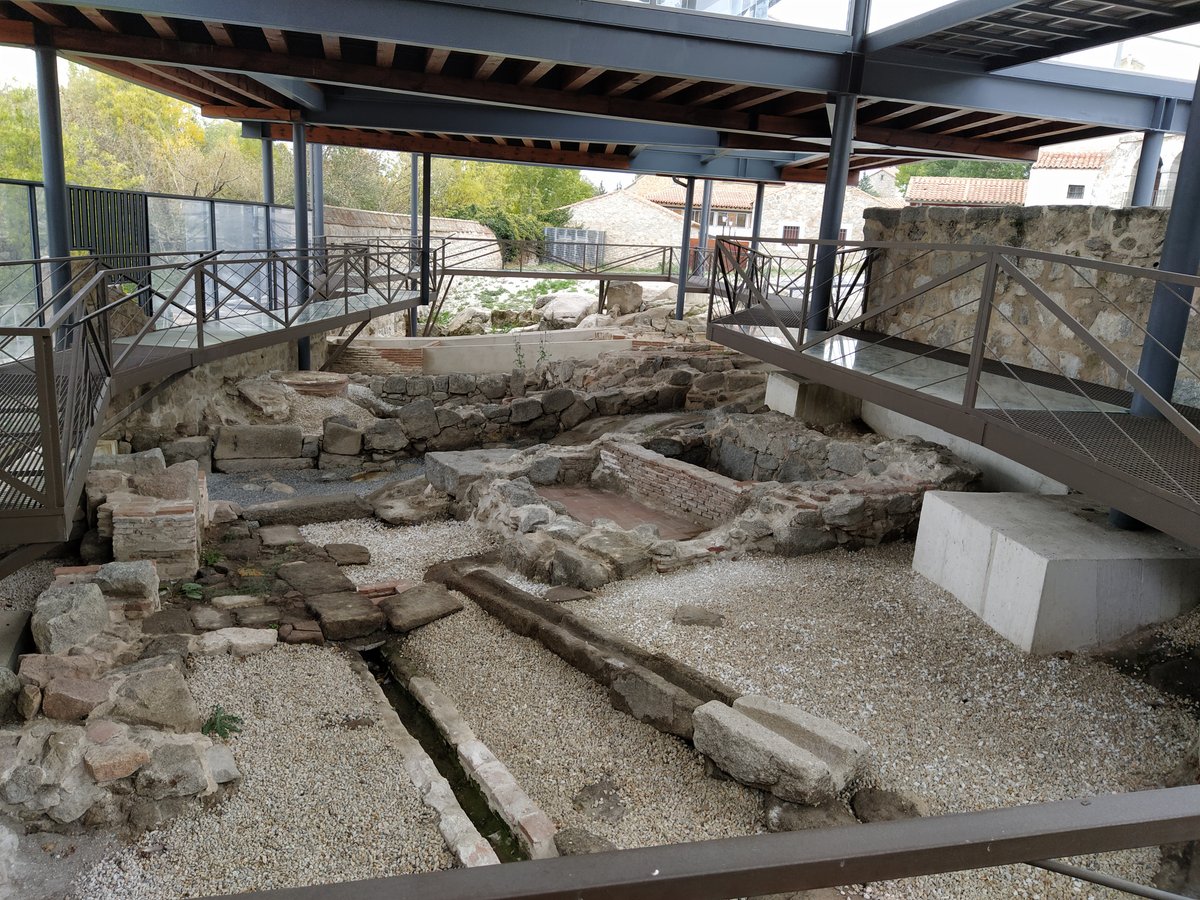

The river Adaja provided a vital resource for the industrial life of Ávila. In the suburb of San Segundo, the water was indispensable for the work carried out within a complex of buildings and craft workshops dedicated to tanning hides, dyeing fabrics, and operating fulling mills.
Human activity in this area dates back to the Roman and Visigothic periods, but the site gained notable importance due to the presence of craft factories related to tanning hides, dyeing, and fulling mills. Some of these workshops remained in operation until the 18th century.
Archaeology reveals a site that was constantly being rebuilt. While some remains date from the period between the 16th and 17th centuries, the majority of the vestiges belong to a phase that lasted for about two hundred years before the site was eventually abandoned and transitioned to agricultural use for the first half of the 20th century.
Today, the ruins are protected as a site of cultural interest. Visitors can see the remains of walls, pavements, and containers that mark the layout of this historical industrial zone.
Sources: Wikipedia, OpenStreetMap, Wikidata, Wikimedia Commons
Written by Nik Frost
Discuss this with the author and others
No comments yet. Be the first to start the conversation.