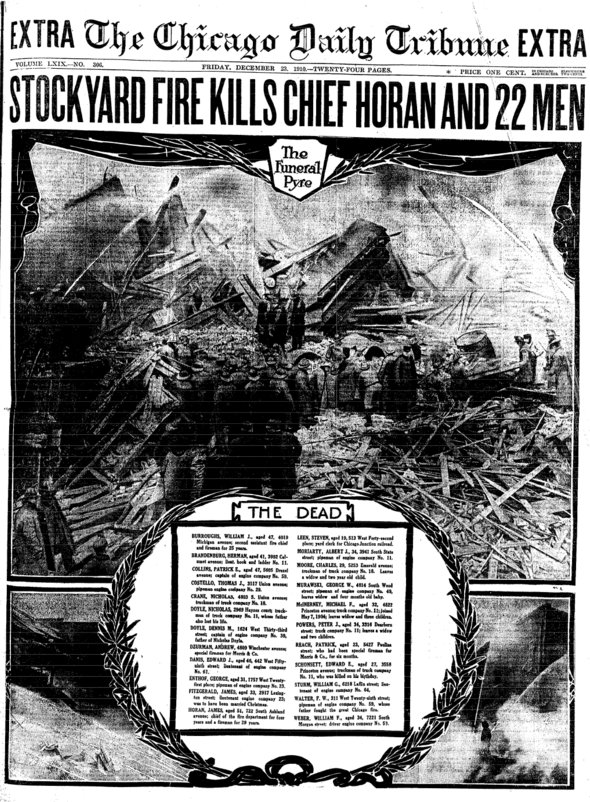

Firefighting isn't for the faint of heart, but they still respond with gusto. In the frosty December of 1910, they were summoned to the Union Stock Yards of Chicago, only to face one of the most calamitous conflagrations in American history. The inferno began in Warehouse 7 of the Nelson Morris Company. By the time the blaze was extinguished at 6:37 am on December 23, after beginning at 4:09 am on December 22, twenty-one Chicago Fire Department firemen, including Fire Chief James J. Horan, and three civilians had been killed when one of the blazing buildings collapsed with them inside.
Until the September 11 attacks, the fire was the deadliest building collapse in American history, although the Texas City Disaster of 1947 killed more firefighters overall. It remains the worst such incident in Chicago history. Following Horan's death, First Assistant Chief Charles Seyferlich took command of the operations, diverting men from fighting the fire to search and retrieve the dead firefighters.
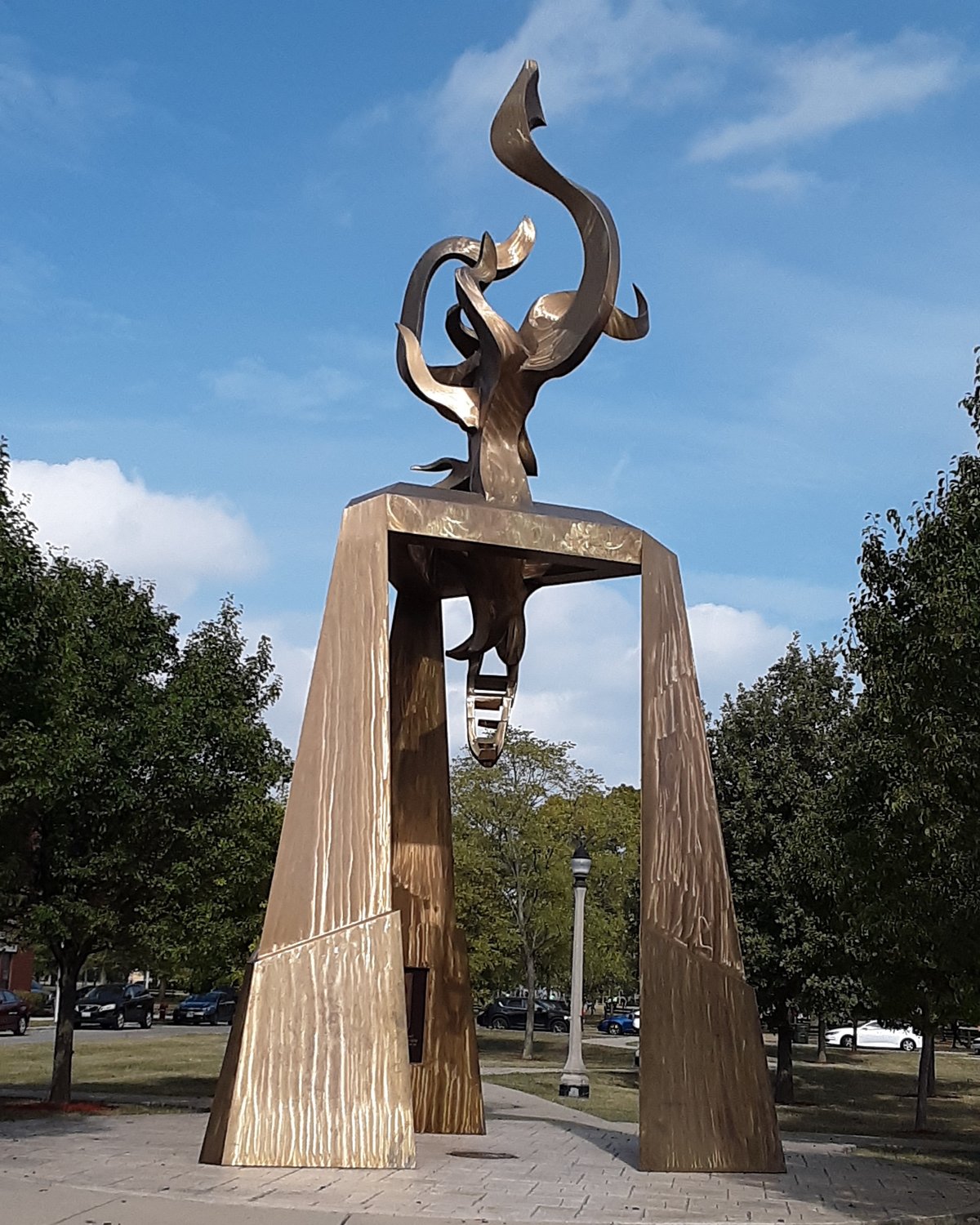
The memorial unveiled in 2004 bears the names of all Chicago firefighters who have perished in the line of duty since 1865. A historical marker titled "The Fallen 21" was affixed to the old Union Stock Yard Gate a short distance from the memorial, offering a description of the fire. Early film pioneer Freeman Harrison Owens also captured the scene on newsreel, documenting the firefighting effort.
Fire hydrants near the location had been shut off prior to the outbreak of the fire to prevent freezing. When the blaze broke out, more than thirty fire engines battled the flames, eventually requiring 50 engine companies and seven hook and ladder companies to be called to the scene.
Sources: Wikipedia, OpenStreetMap, Wikidata, Wikimedia Commons
Written by Friendly Jane
Discuss this with the author and others
No comments yet. Be the first to start the conversation.