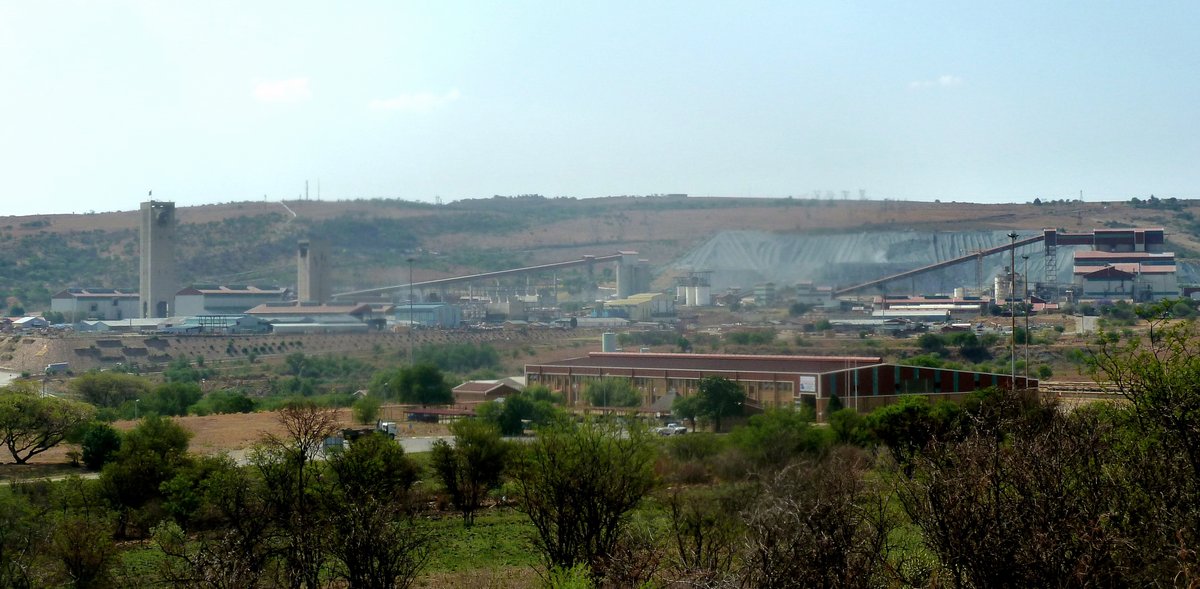

Buried deep in the Witwatersrand Basin, Mponeng is an ultra-deep tabular gold mine in South Africa. Since beginning operations in 1986, it has become one of the most substantial gold mines in the world in terms of both production and magnitude. The mine has a proven gold reserve of roughly 46 million ounces (over 1300 tons). While it was previously known as Western Deep Levels No1 Shaft, the name Mponeng came into use in 1999.
The mine faces significant geological challenges, including seismic events. A seismic event in March 2020 killed three miners, causing a stoppage of operations, and the mine also closed due to the COVID-19 pandemic in May 2020. However, it has since returned to production. With current depths reaching roughly 3.8 km down, it is expected to reach beyond 4.2 km in the coming years, with production estimated to persist until 2029 when reserves may run out.
The industrial scale of Mponeng is highlighted by its infrastructure and sheer depth. Reaching over 4 kilometres below the surface, a trip from the surface to its deepest point takes over an hour. The mine supports a very large number of people, companies, and industries, including entire towns and cities. Notably, an Ecuadorian marathon runner completed a half marathon within the mine in 2017.
Sources: Wikipedia, OpenStreetMap, Wikidata, Wikimedia Commons

Written by Mutabor
Discuss this with the author and others
No comments yet. Be the first to start the conversation.