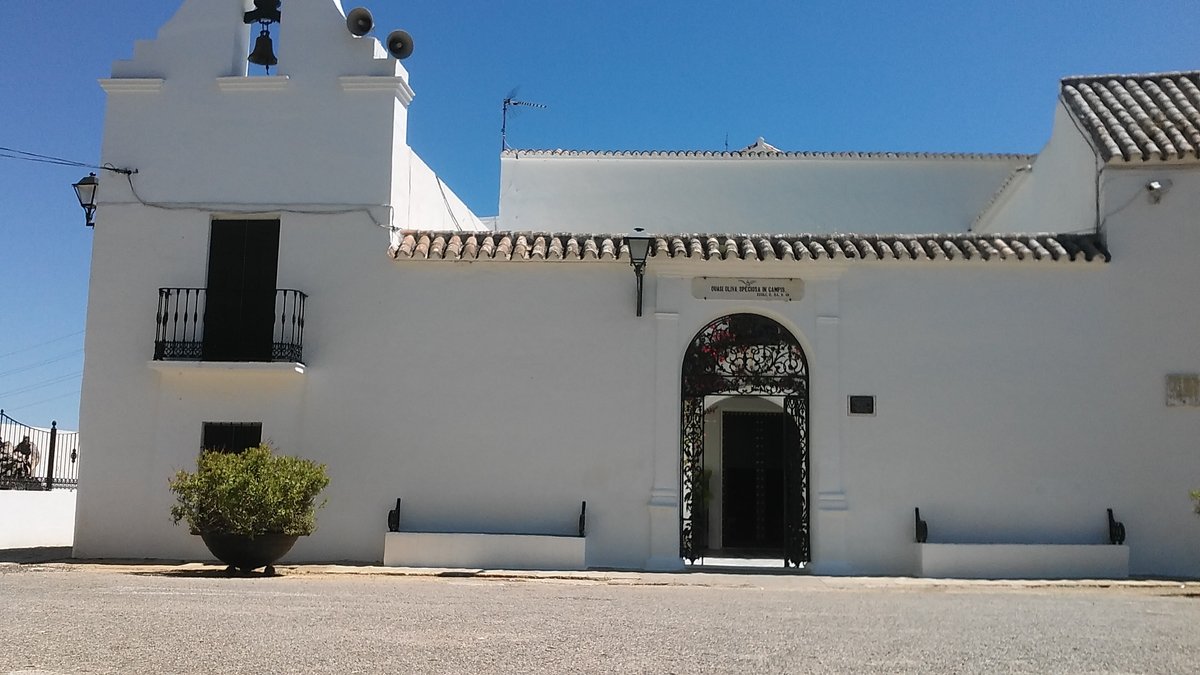

The Ermita de Nuestra Señora de la Oliva in Vejer de la Frontera is a temple consecrated to Catholic worship. Let us focus on the ‘consecrated’ aspect, for it turns out this place has deeper roots than what meets the eye. The current building dates to 1780, but its site holds a testament to an age far older: the Visigoth period. Ancient Rome, in fact, lies beneath this Visigoth structure, which was built on the site of a Roman villa. The villa lies beneath this Visigoth structure, which was built on top of it.
The bones of the villa, in turn, lurk within the basilica that was consecrated in 678 by Bishop Teodoracio. The basilica’s foundation, remarkably, still bears the marks of Rome: a pedestal from the Roman period remains, with a funerary inscription and a commemorative inscription from the Visigoth consecration. Inside the ermita, one can find the image of the Virgen de la Oliva, created by Martín Alonso de Mesa in 1596, and a baroque retable, dated 1773.
Sources: Wikipedia, OpenStreetMap, Wikidata, Wikimedia Commons
Written by Nik Frost
Discuss this with the author and others
No comments yet. Be the first to start the conversation.