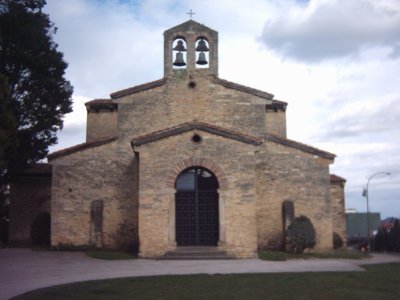

Nestled on Calle Selgas, Oviedo, San Julián de los Prados, better known as Santullano, is a Pre-Ramirense church. It was born under the reign of Alfonso II of Asturias and overseen by the skillful Tioda. This church, dedicated to the martyred Egyptian saints Julian and Basilissa, showcases astounding Asturian craftsmanship and is acclaimed as one of the greatest works of Asturian art.
The church's distinctive character may be traced to its pictorial embellishments, which were the most important of their time in all of Western Europe in terms of extent, conservation, and the variety of designs represented. The building features a spacious layout with a nave, two aisles separated by square piers, and a transept of impressive height. It includes an iconostasis that is remarkably similar in appearance to a triumphal arch, along with marble flagstones featuring hexagonal geometric figures and floral motives in the central chapel.
San Julián de los Prados is most revered for its aniconic frescoes and architectural decoration that bears clear Roman influences, elements that distinguish it from Visigothic architecture. Although it appears more as a monastic rather than a royal church, a gallery was reserved for the king in the transept.
Sources: Wikipedia, OpenStreetMap, Wikidata, Wikimedia Commons
Written by Nicolo Ciampini
Discuss this with the author and others
No comments yet. Be the first to start the conversation.