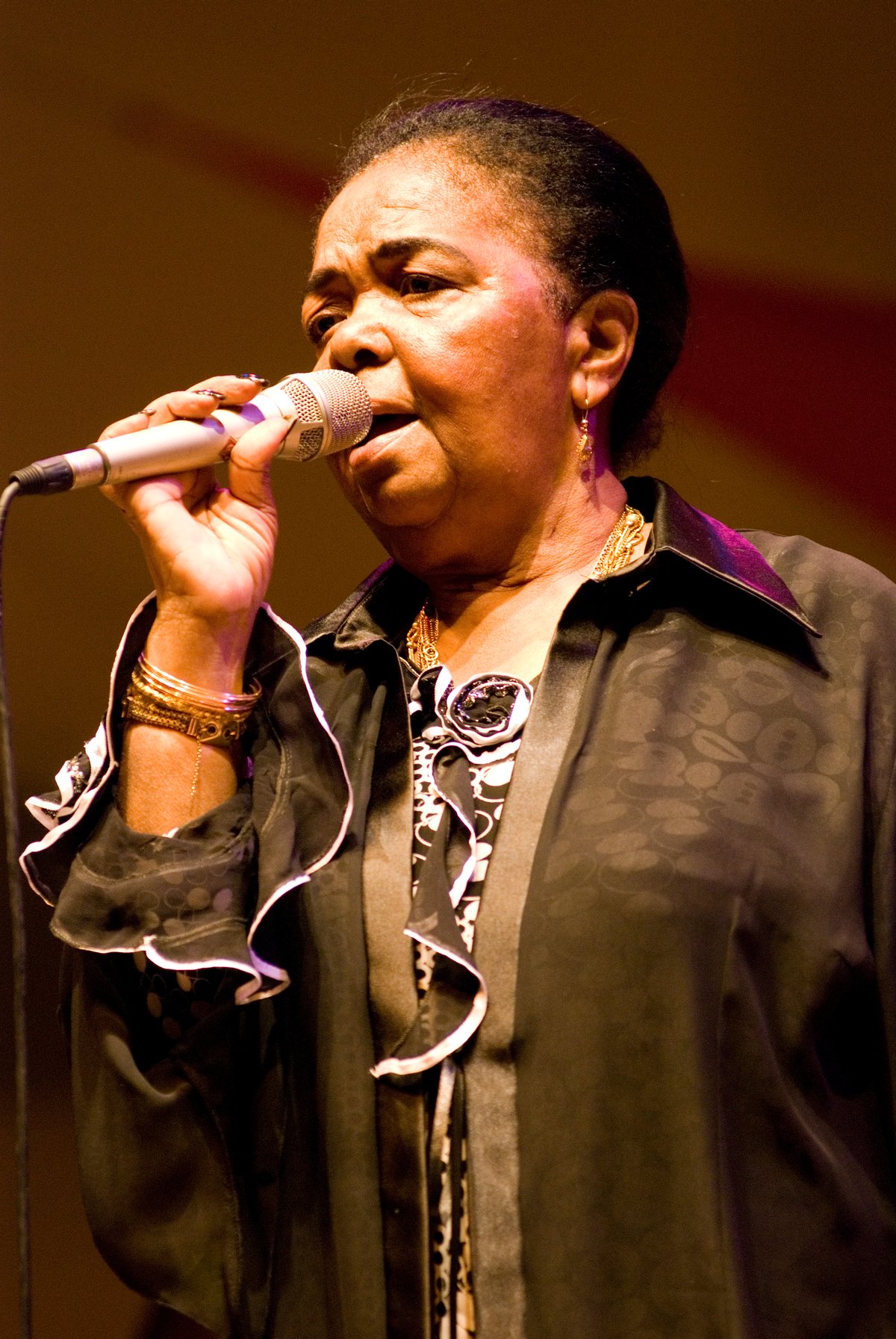

Born on 27 August 1941 in Mindelo, São Vicente - a part of the Portuguese Cape Verde, Cesária Évora was the daughter of Joana, a cook and maid, and Justino, a violinist. Raised by her grandmother amidst poverty, she received little formal education. At sixteen, she began a romantic relationship with a guitarist who encouraged her to perform morna and coladeira in local bars, marking the beginning of her musical journey.
Her hometown's status as an international port town provided her with venues to perform, eventually leading her to become the headliner for Mindelo's Café Royal. In 1985, she traveled to Portugal at the request of the Organization of Cape Verdean Women to contribute to a women's music anthology album. This led to her meeting music producer José "Djô" da Silva, who signed her to his record label, Lusafrica.
In 1988, she released her debut album, La Diva Aux Pieds Nus, followed by Distino di Belita in 1990 and Mar Azul in 1991. Her fourth and fifth albums, Miss Perfumado (1992) and Cesária (1995), achieved worldwide success and sold hundreds of thousands of copies. Known as Cize, the Barefoot Diva, and the Queen of Morna, she was famous for performing barefoot and for her habit of smoking and drinking on stage during intermissions. Her music, which explored themes of love, homesickness, and nostalgia, won a Grammy Award in 2004.
Évora influenced many Cape Verdean diaspora musicians as well as American pop singer Madonna and Brazilian singer Caetano Veloso. After facing health problems in the late 2000s, she retired in September 2011. She died in Mindelo on 17 December 2011 from respiratory failure and hypertension, leaving behind a legacy that continues to influence artists worldwide.
Sources: Wikipedia, OpenStreetMap, Wikidata, Wikimedia Commons
Written by Mutabor
Discuss this with the author and others
No comments yet. Be the first to start the conversation.