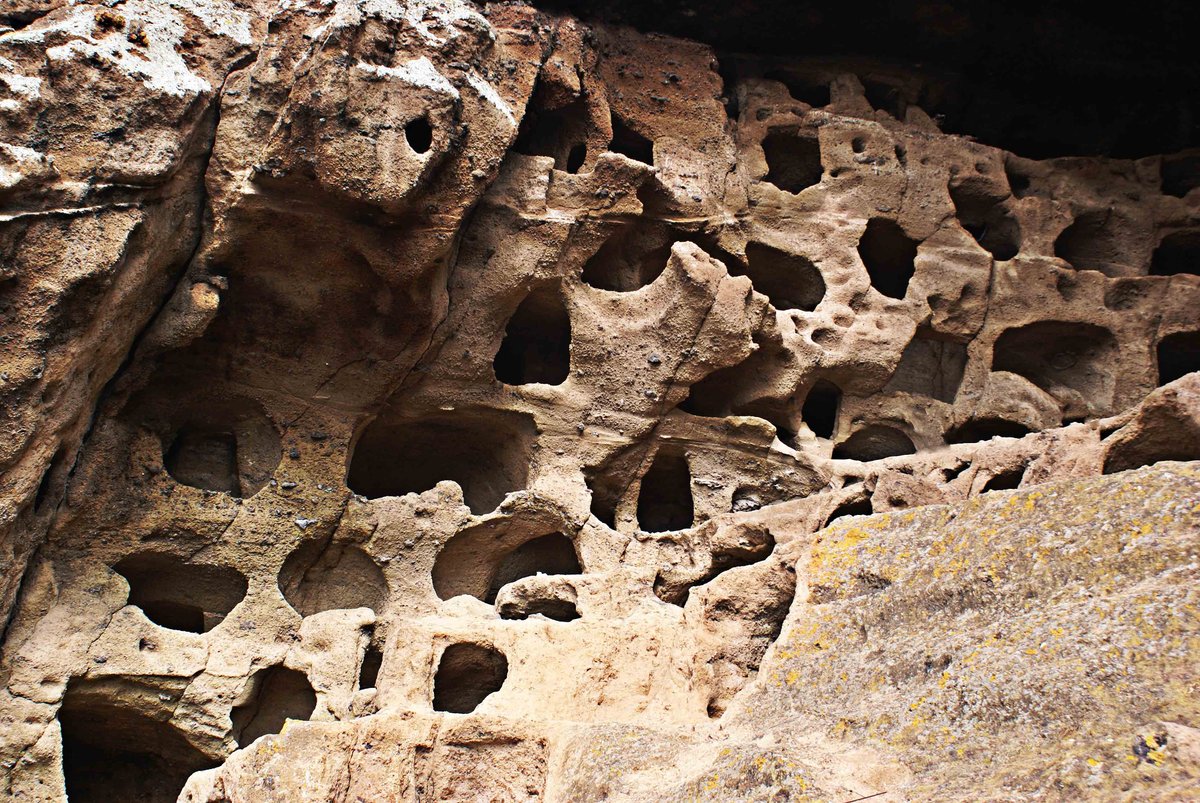

Buried in the soft tuff of the Mountain of the Galician, the Cenobio de Valerón is an archaeological site in the municipality of Santa Maria de Guia. This structure is the largest pre-Hispanic collective granary built before Roman times. It was used by the island's inhabitants until the conquest of the island at the end of the 15th century. The site was chosen for its easy-to-dig tuff, its hidden position from the sea, and its steep access slopes that provided natural defences.
The collective granary is a complex system of caves on several levels. It contains 298 compartments with surfaces between one and three square meters, distributed on 8 levels. Altogether with silos, rooms, and cavities, there are more than 350 storage places. These were excavated with stone and wood tools in the soft tuff - cemented volcanic tephra - on the north-west face of the mountain. The caves are of varied forms and sizes, and the steps excavated in the rock still exist.
Within the site, archaeologists have found idols, paintings, ceramics, human bones, and ashes, which are believed to have belonged to those who were guarding the granary. The sheer size of the caves complex is witness to the importance of agriculture on Gran Canaria for subsistence and for the society's socio-political structure. The name "monastery" comes from the Roman belief that celibate priestesses called "harimaguadas" lived here, a vision that prevailed until the 20th century. Recent rehabilitation works have turned the site into a discovery circuit for visitors.
Sources: Wikipedia, OpenStreetMap, Wikidata, Wikimedia Commons
Written by Mutabor
Discuss this with the author and others
No comments yet. Be the first to start the conversation.