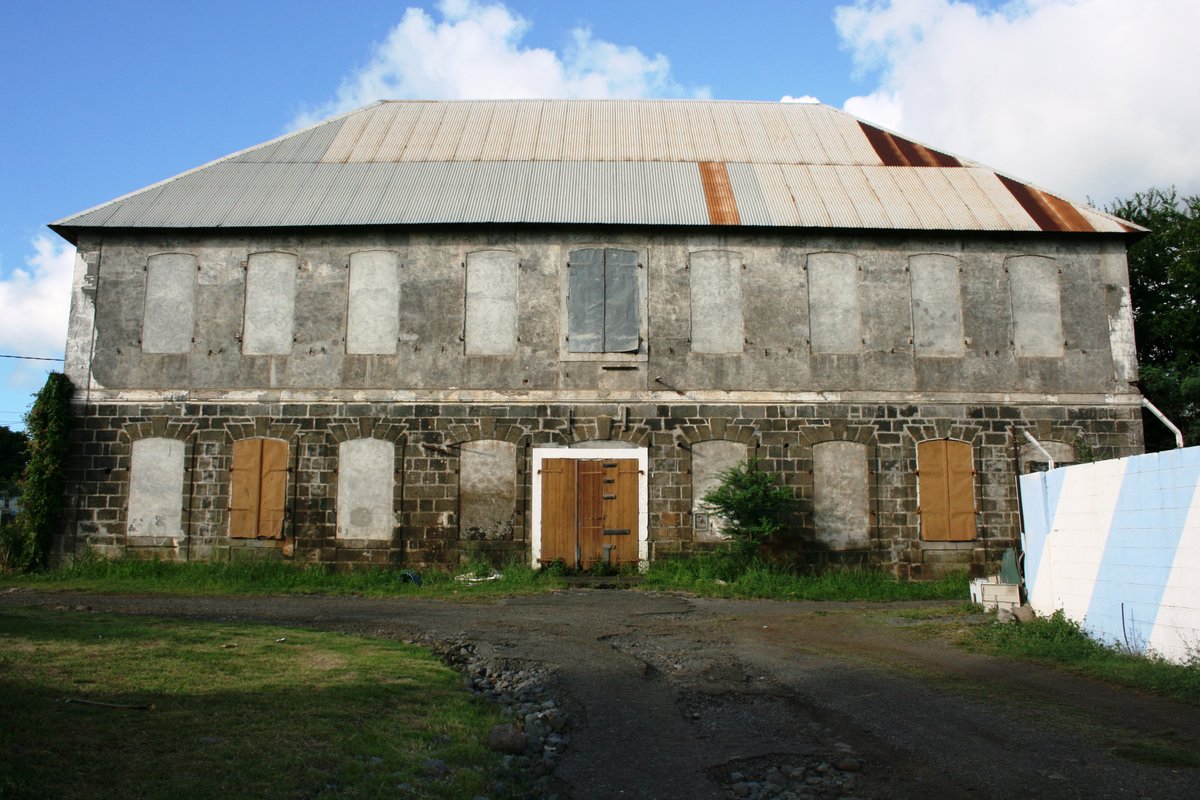

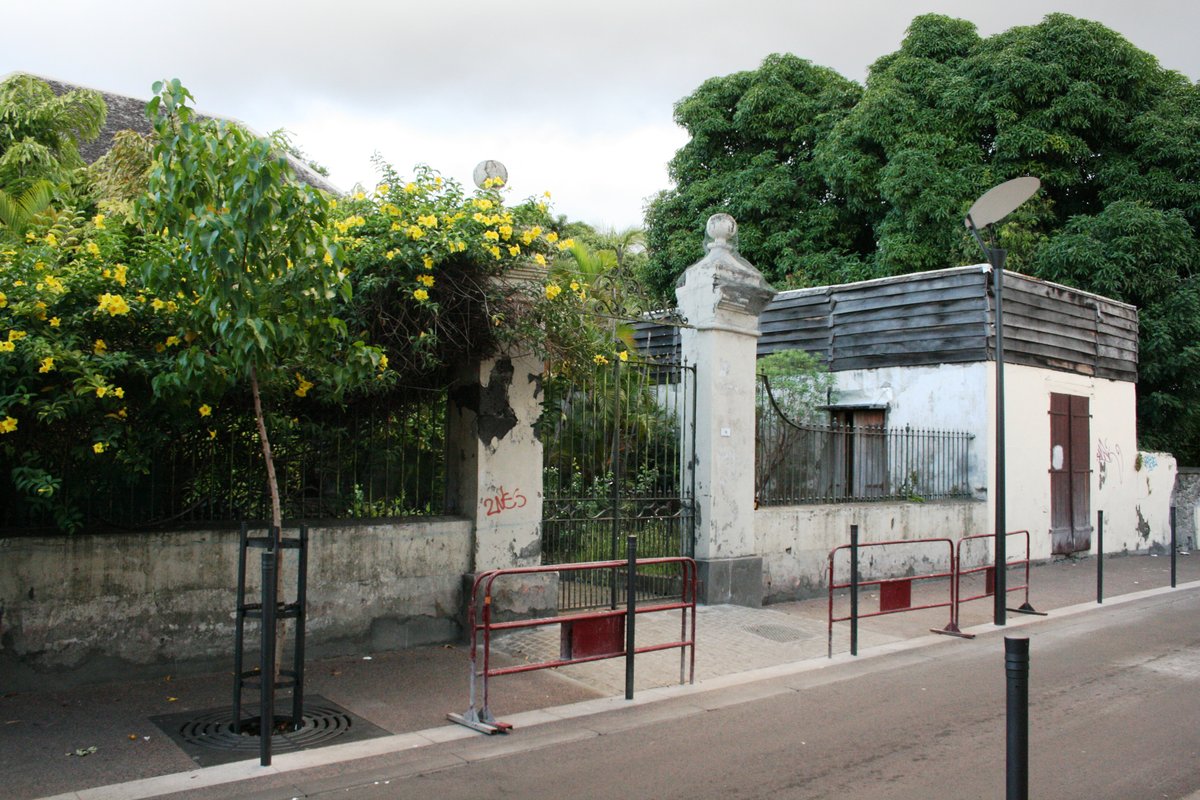
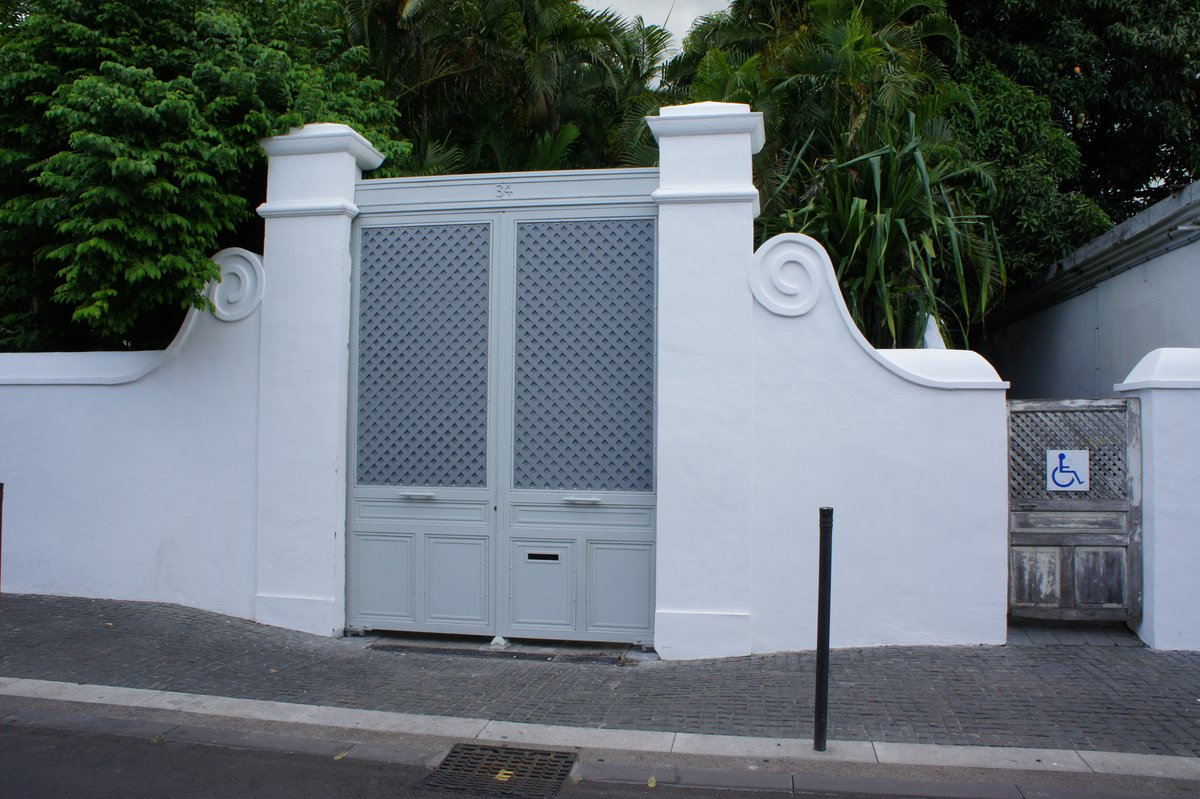
The Grande maison de l'ancien domaine sucrier de Savanna is a remarkable house on the island of Réunion, in the French overseas department in the southwest Indian Ocean. Located on Rue Jules Thirel in Savannah, in the commune of Saint-Paul, it was added to the additional inventory of Historic Monuments on October 22, 1998. Originally built as a hospital for the colony, the building later became the master's house of a sugar plantation.
The building was constructed in 1772 at the site called "Parc à Jacques" by the Ministry of the Marine and Colonies to serve as a hospital for the incurable sick. It is an architectural replica of the building installed in the south of Saint-Paul in 1767, featuring a single-story structure made of carved basalt and natt wood with a shingle roof. This hospital was used for about twenty years, then sold to a major doctor, Pierre Fiteau, who sold it again to the Colony in 1803. At that time, it served as a lazaret for people who had traveled on ships where illnesses were declared.
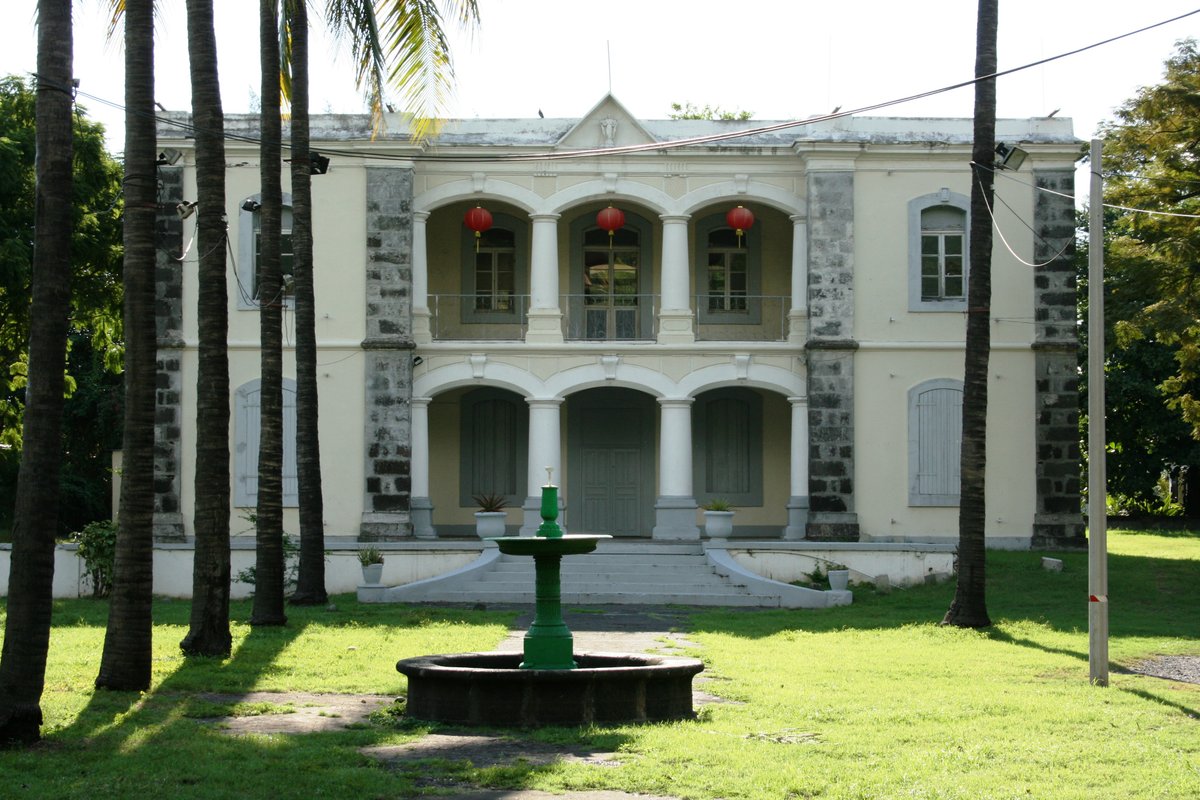
The house was later sold to private individuals, the Troussail, Lacaille, and finally to Olive Lemarchand, who gave it a different function. During the development of sugarcane culture, he baptized his new domain Savannah and created a sugar factory near the house, which became the Grande maison de Savanna, where the various directors of the factory were housed. He landscaped a park in front decorated with three fish ponds.
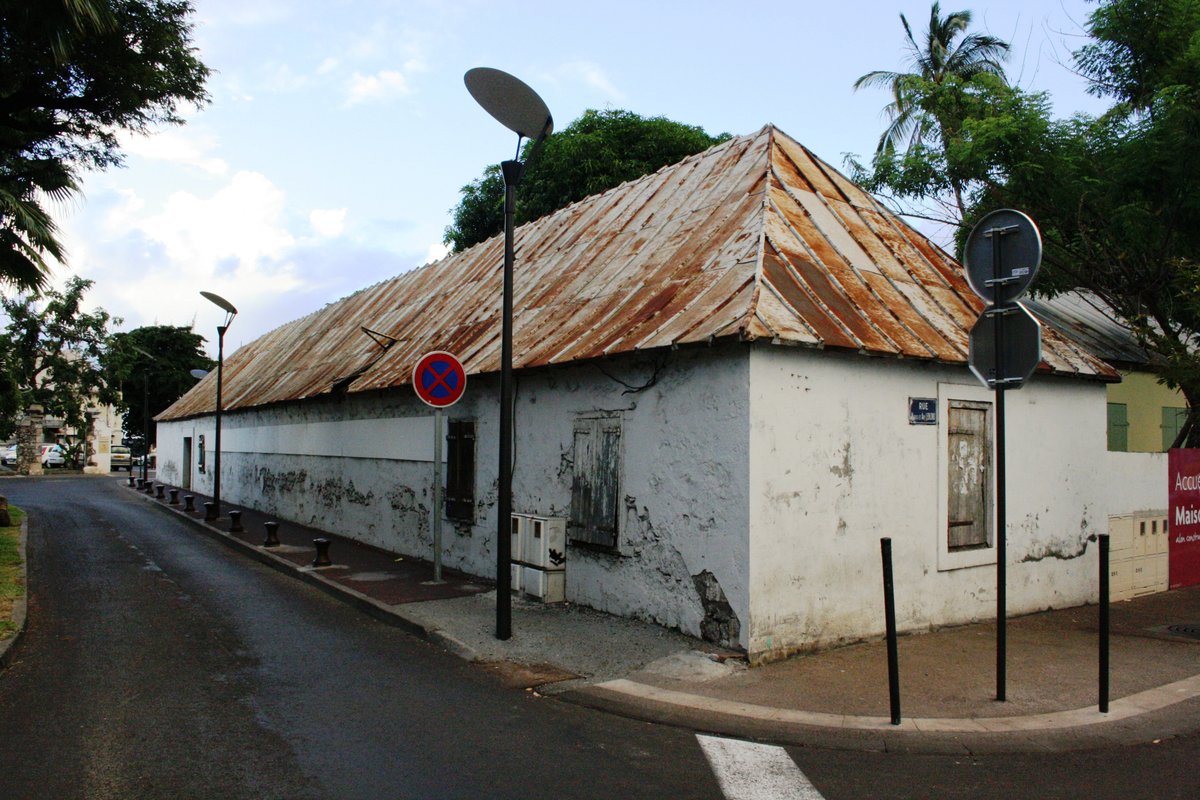
The island of Réunion was isolated and transport was cut off, and the house served as a storage location for bags of sugar that could no longer be exported. Then, the 1948 cyclone that devastated the island took away the shingle roof, which was replaced by sheet metal. It has been uninhabited and closed since. Most of the windows have been bricked up. It currently belongs to the town hall of Saint-Paul, which is considering rehabilitating it for a use related to the proximity of the Réserve naturelle nationale de l'Etang de Saint-Paul.
Sources: Wikipedia, OpenStreetMap, Wikidata, Wikimedia Commons

Written by Mutabor
Discuss this with the author and others
No comments yet. Be the first to start the conversation.