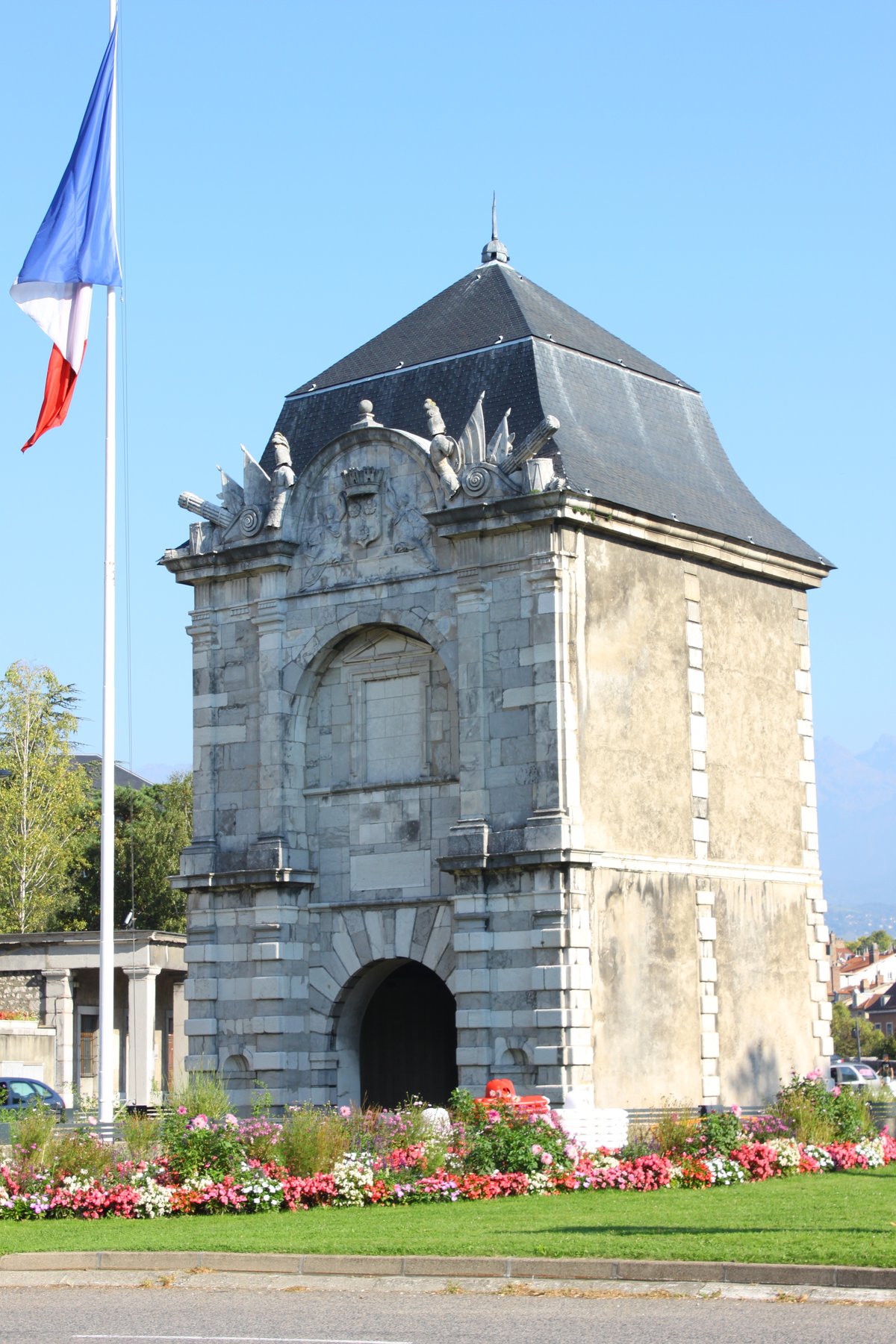

The Porte de France, a Baroque-style city gate in Grenoble, France, reveals a forgotten past just above its current role as a ceremonial gateway. Constructed in 1620 during the fortification of Colline de la Bastille, it served as a grand entrance for King Louis XIII multiple times between 1622 and 1630. Classified as a French historical monument since 1935, it is ornamented with bas-reliefs and features a monument to the dead of Grenoble bearing the names of 1,722 soldiers killed between 1914 and 1926. The quarry overlooked by this ancient monument is a relic from the Gallo-Roman era, providing limestone for the Porte de France, as well as other Granoble structures including the cathedral Notre-Dame de Grenoble.
Sources: Wikipedia, OpenStreetMap, Wikidata, Wikimedia Commons
Written by Nicolo Ciampini
Discuss this with the author and others
No comments yet. Be the first to start the conversation.