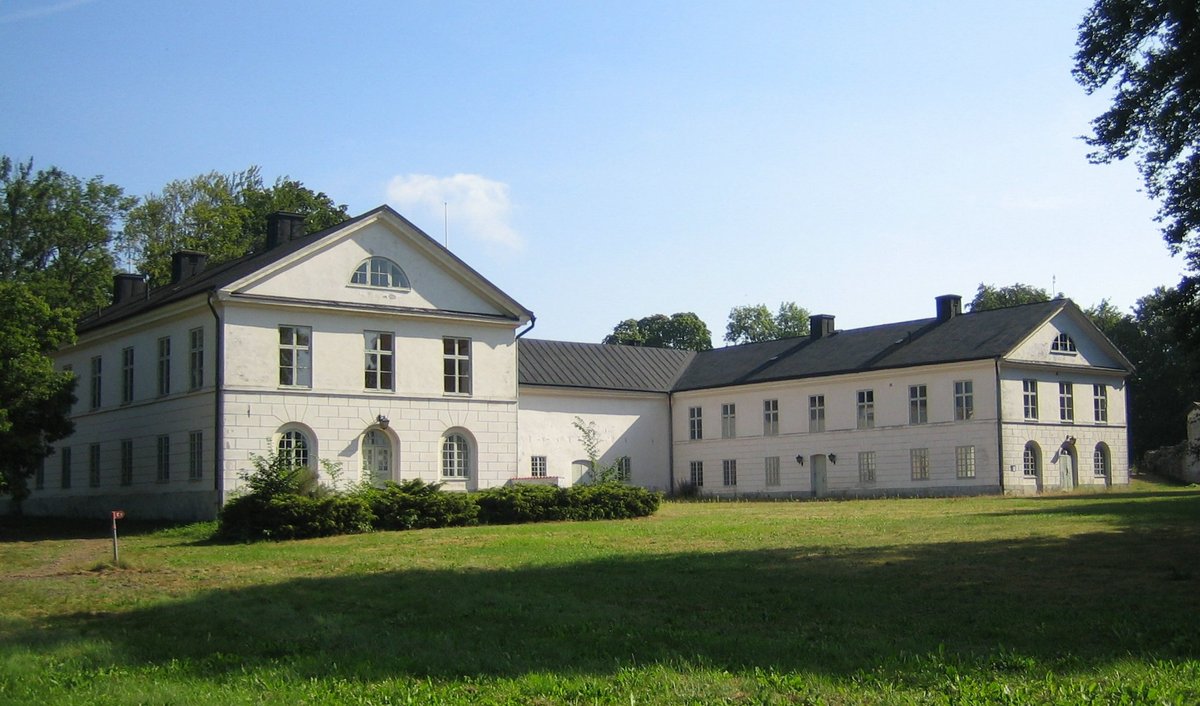

Herrevad Abbey, located in Scania, was founded from Cîteaux Abbey in 1144 with the support of Archbishop Eskil of Lund. It was one of the first Cistercian monasteries in Denmark. The abbey was named ‘Herivad’, which meant the 'army ford', referring to a ford over the Rönne. Eskil wrote to Bernard of Clairvaux to request Cistercian monks from Cîteaux Abbey to come to Denmark and establish the new monastery. Robert was the first abbot of Herrevad. The abbey was consecrated in 1150, but it was far from complete.
The church was begun in 1158 and built in the Romanesque style. Over the following decades, construction continued, with bricks eventually replacing the original sandstone. The abbey was severely damaged by a fire in 1291, but was rebuilt with a larger Brick Gothic church. At its height, the abbey owned more than 400 income-producing properties. In 1536, during the Protestant Reformation, the abbey and its property fell to the Danish crown. The abbey with its farms functioned much as it had as a monastery after secularization.
Sources: Wikipedia, OpenStreetMap, Wikidata, Wikimedia Commons
Written by Nik Frost
Discuss this with the author and others
No comments yet. Be the first to start the conversation.