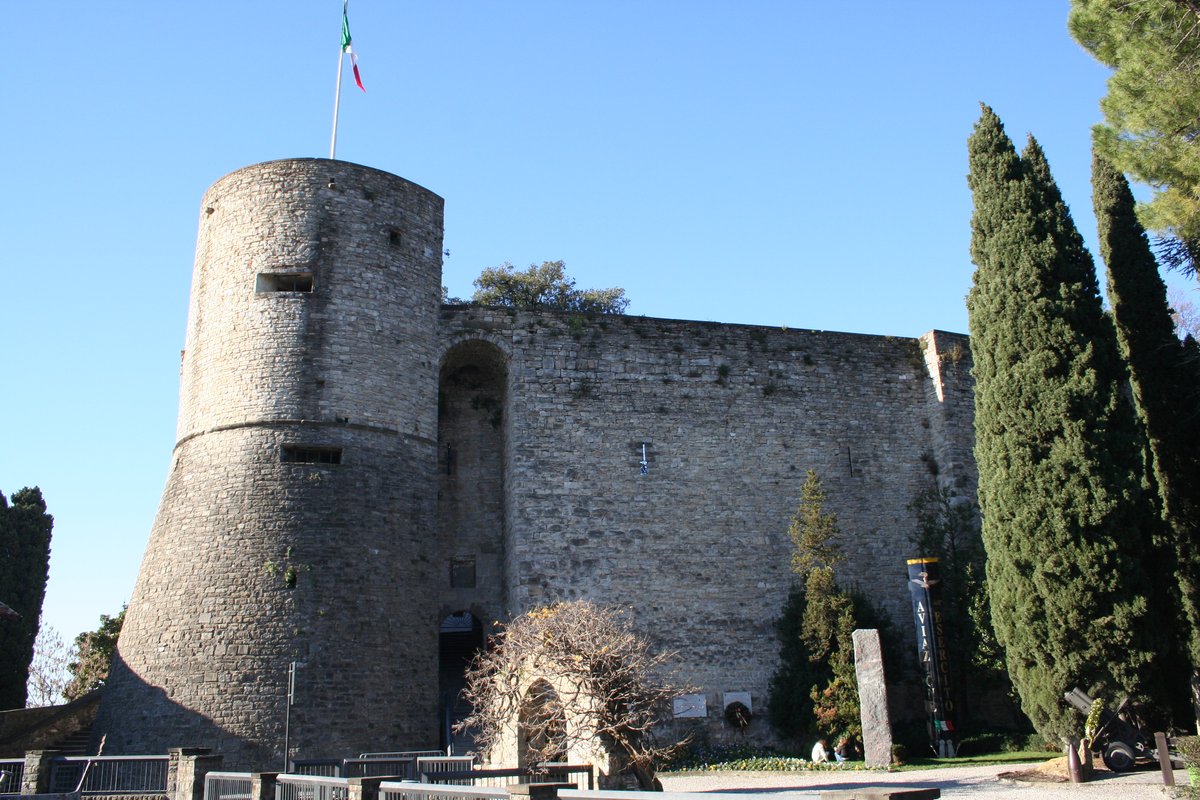

In the 14th century, Bergamo faced internal struggles between the Guelph and Ghibelline factions. These internal discordances led the free commune to seek a peacemaker in Giovanni of Luxembourg, King of Bohemia and Poland, in 1331. This transition moved the city from a free commune to a monarchy, where it followed the path of other cities becoming subjects of regional powers and national monarchies.
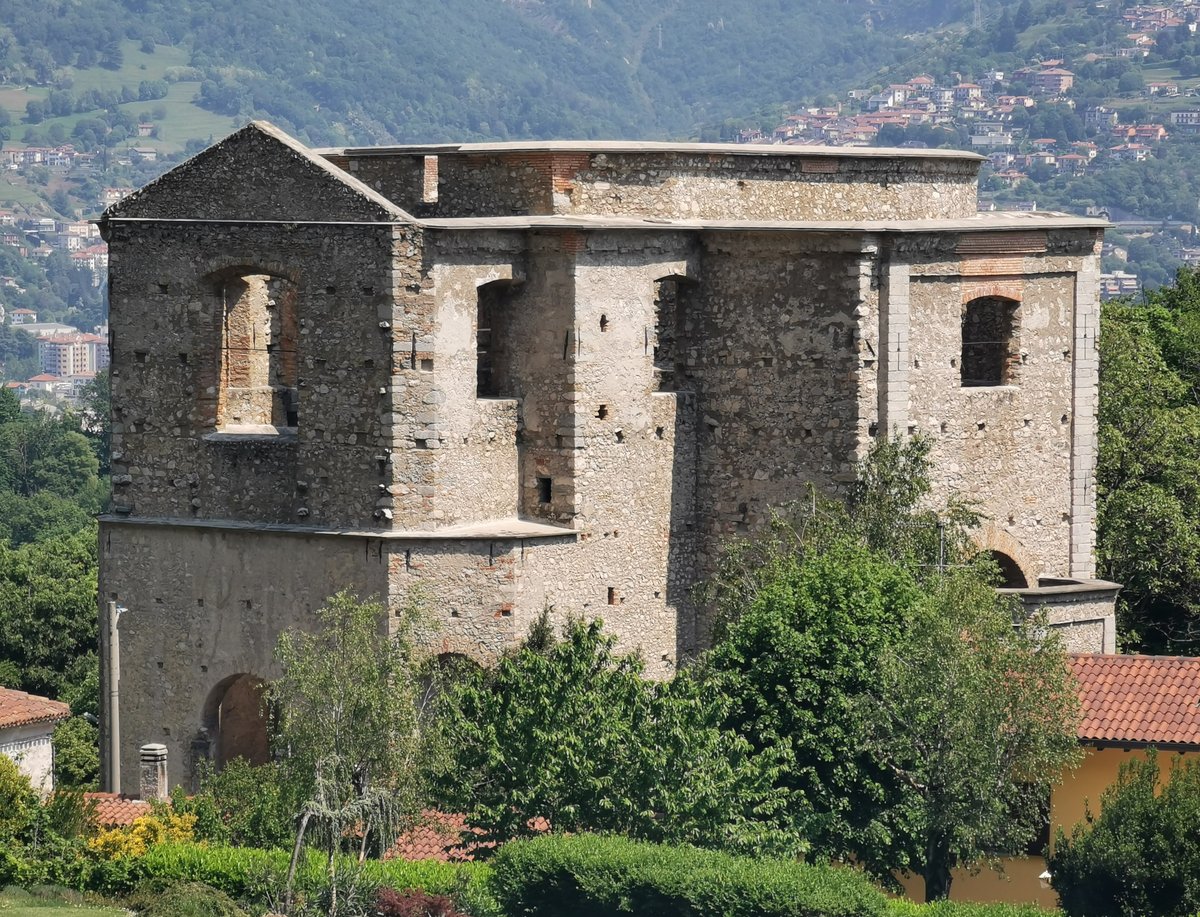
Construction on the Rocca began in 1331, potentially utilizing a pre-existing Roman fortification. Work was coordinated by Guglielmo di Castelbarco and continued by the Visconti after the brief rule of Giovanni del Lussemburgo. Azzone Visconti completed the work in 1336. The Visconti added fortifications to increase the defensive function against both external enemies and internal rebels, turning the castle into a tool for repression and territorial control. In 1345, the podestà Negro Pirovano had a commemorative plaque placed on the walls reinforced to strengthen the castle.
The Rocca was later integrated into a dual defensive system with the construction of the Cittadella on the San Giovanni hill. Started by Bernabò Visconti in 1355, the Cittadella was designed to secure the garrison while allowing for external supply and relief. This complex enclosed the historic center between two fortified hills. In this coordinated system, the Rocca represented the final possibility for safety and counterattack in case of enemy occupation. This arrangement made the city's defense dynamic rather than a static circuit of walls.
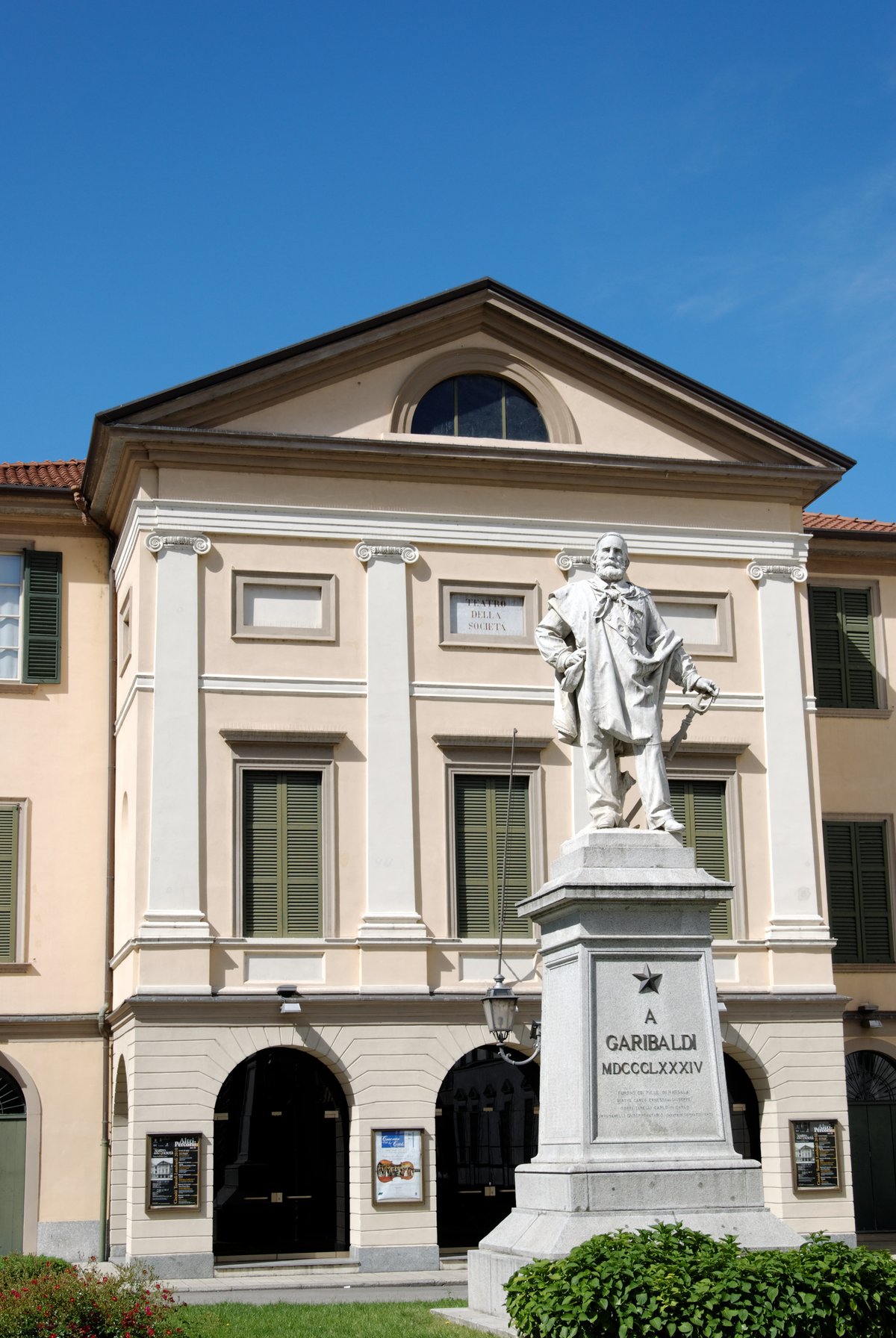
Following the rule of the Visconti, the Republic of Venice took over in 1428 and added further fortifications, including a defensive wall in the lower part of the city. In the 16th century, an imposing bastioned circuit was built to make Bergamo an impregnable fortress. The Rocca maintained its military function during the Napoleonic era and under Austro-Hungarian rule until 1859, when it was liberated by Garibaldi. Around 1850, the Austrians implemented a final strengthening of the fortress.
Sources: Wikipedia, OpenStreetMap, Wikidata, Wikimedia Commons
Written by Nicolo Ciampini
Discuss this with the author and others
No comments yet. Be the first to start the conversation.