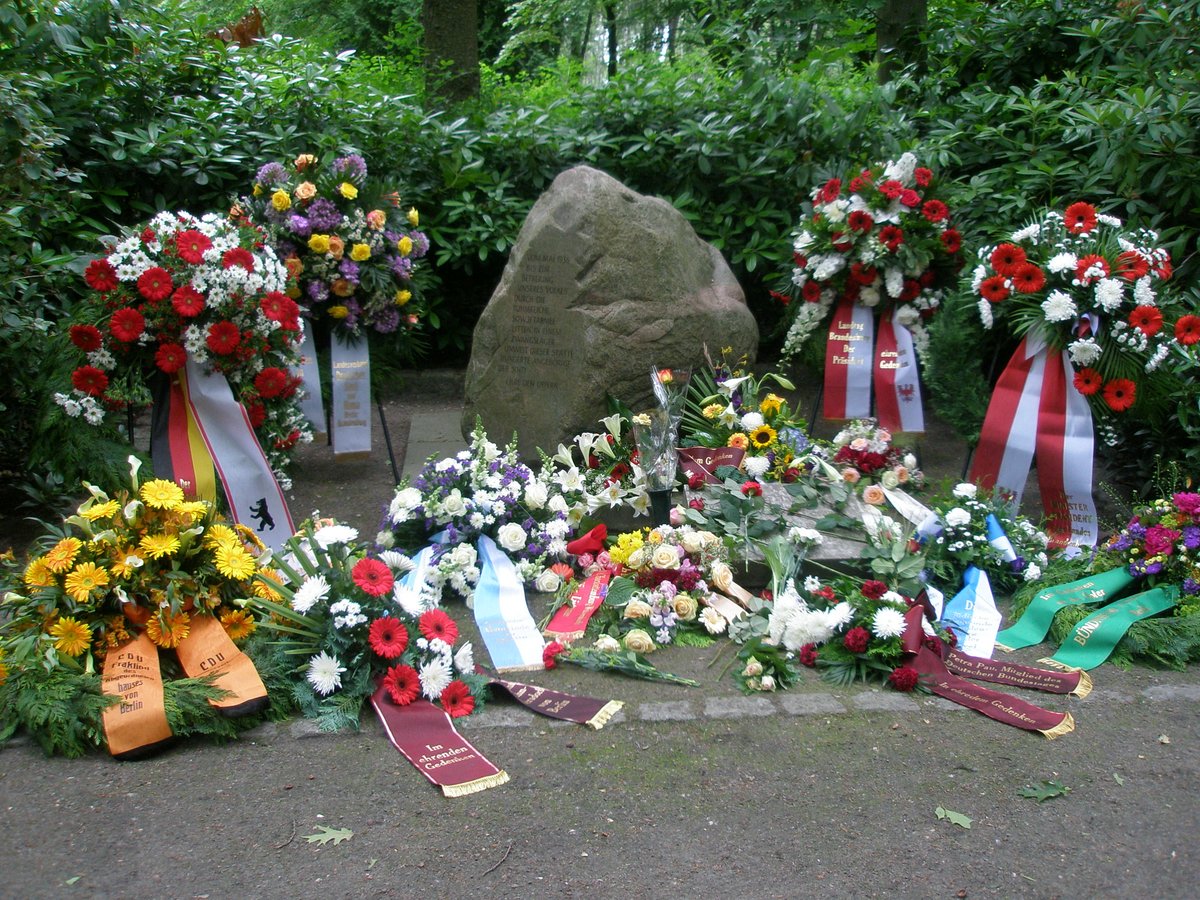
A heavy boulder anchors Parkfriedhof Marzahn. It rests within a garden built to remember those who suffered there. Before the 1936 Olympic Games, Nazis transformed a former Rieselfeld into a Zigeunerrastplatz. This Gypsy rest area housed hundreds of Sinti and Roma in dark barracks. They lived through hard work, disease, and hunger. Authorities conducted humiliating racial hygiene investigations, spreading terror throughout the community. From May 1936 until the Soviet army arrived, the site served as a forced labor camp.
Spring 1943 brought a severe turn. Most held in the Marzahn camp were deported to Auschwitz. This removal targeted men, women, the elderly, and children. Only a few survived that journey. The memorial serves as a place of acknowledgement, ensuring the history of the field is remembered.
This ensemble began in September 1986 as a vision from writer Reimar Gilsenbach and Pastor Bruno Schottstädt of the Marzahn-Nord parish. The District Council of Marzahn erected the boulder. A marble tablet appeared on June 16, 1990, created with the Cinti Union and Reimar Gilsenbach.
Today, three elements of remembrance exist. The boulder notes the camp duration and Soviet liberation. Nearby, a light marble tablet measuring 0.10 by 0.60 by 0.45 meters bears the name ATSCHEN DEVLEHA. Finally, a 1991 copper tablet by Götz Dorl describes the barracks and Auschwitz deportations. Visitors find these markers in the peaceful cemetery.
Sources: Wikipedia, OpenStreetMap, Wikidata, Wikimedia Commons



Written by Aurora
Discuss this with the author and others
No comments yet. Be the first to start the conversation.