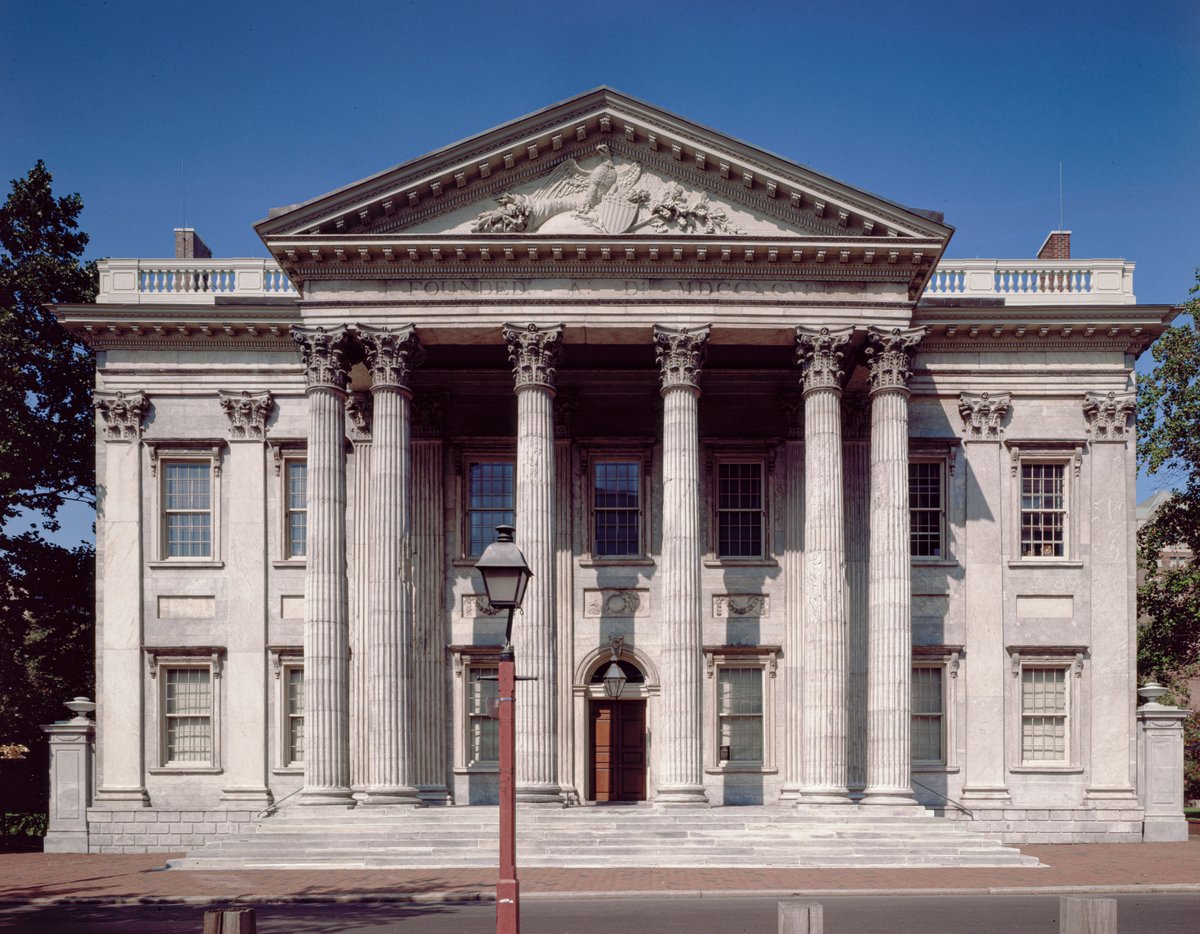
Alexander Hamilton proposed the idea for the First Bank of the United States in 1789 because he believed a national bank was necessary to stabilize and improve the nation's credit. He wanted to improve the handling of the financial business of the United States government under the Constitution, create a common currency, and resolve the issue of the 'Continental' fiat currency issued during the Revolutionary War.
Congress chartered the bank on February 25, 1791, for a twenty-year term. The government needed money to buy the bank's stock. To solve this, the bank lent the government money, which the government then used to purchase the first $2 million in shares. This loan was to be paid back in ten equal annual installments. Public investors also purchased the remaining $8 million of stock, with the requirement that they pay one-quarter of the purchase price in gold or silver.
Despite its name, this was not a central bank. It did not set monetary policy, regulate private banks, hold excess reserves, or act as a lender of last resort. It was a national bank in the sense that it could have branches in multiple states - a privilege other banks did not have - and it served as a depository for collected taxes for the federal government. Its primary function was to issue credit for internal improvements and economic development.
Today, the First Bank building is located on South 3rd Street in Philadelphia and is a National Historic Landmark within Independence National Historical Park. It was completed in 1797 and served as part of a three-part expansion of federal fiscal and monetary power, along with a federal mint and excise taxes.
Sources: Wikipedia, OpenStreetMap, Wikidata, Wikimedia Commons

Written by Kyle McLonely
Discuss this with the author and others
No comments yet. Be the first to start the conversation.