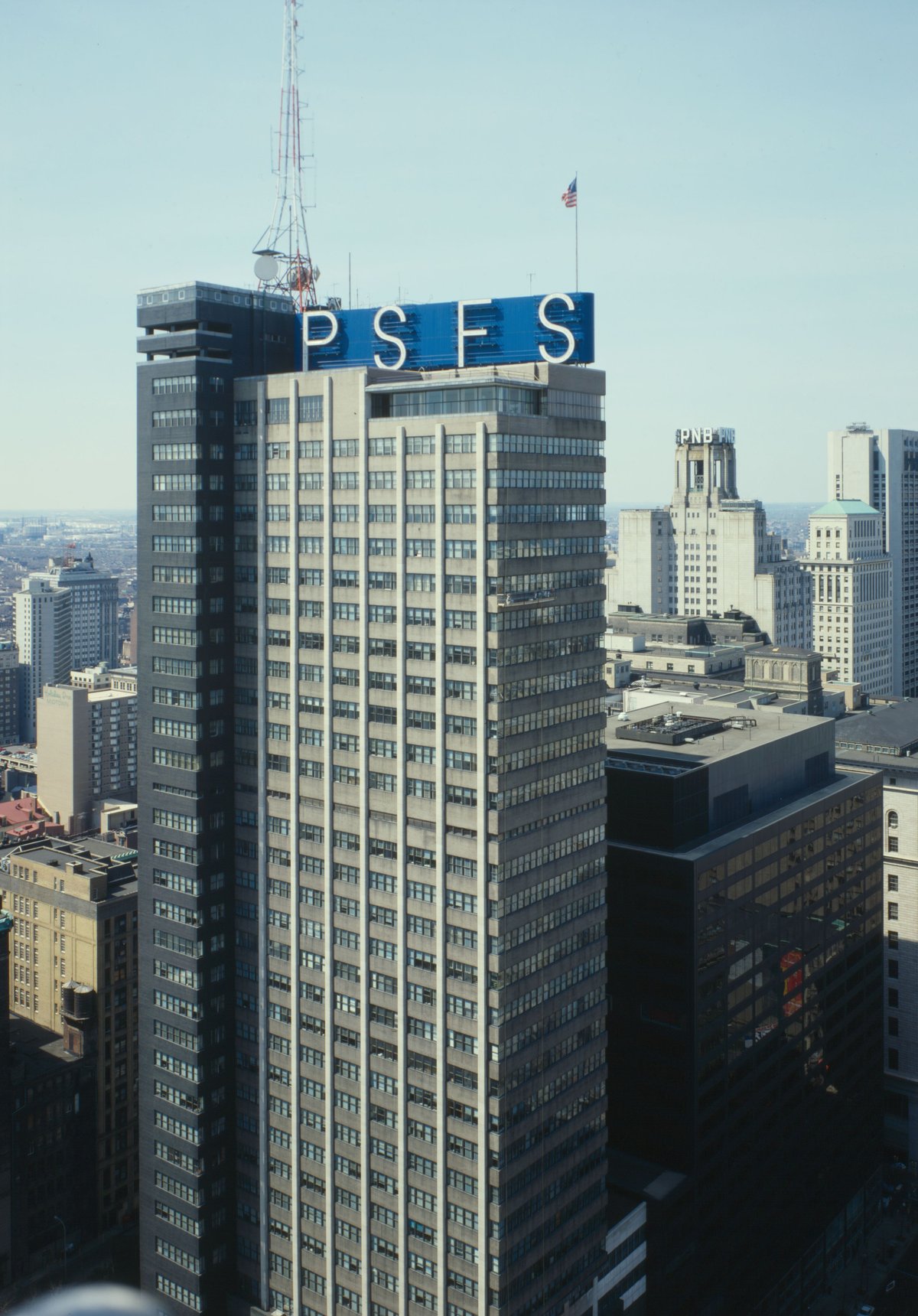
In 1932, the Philadelphia Saving Fund Society completed a new headquarters on Market Street. Designed by architects William Lescaze and George Howe, the building was a departure from traditional Philadelphia architecture, lacking the domes and ornamentation typical of the era. It was among the first skyscrapers of its type built in the United States, featuring a T-shaped tower designed to maximize natural light and rentable space.
The building incorporated several modern amenities to attract tenants, including radio reception devices in each office and air conditioning, making it only the second air-conditioned high-rise in the country. Inside, the banking hall featured custom-designed furniture, including custom Cartier clocks on every floor. Outside, the skyscraper was topped by a red neon sign with the PSFS initials, which was visible for 20 miles and became a Philadelphia icon.
During the Great Depression, the neon initials were kept lit as a symbol of consistency for the city, though some joked they stood for "Philadelphia Slowly Faces Starvation." In the late 1980s, the bank merged and eventually sold the PSFS name to Mellon Bank. In 1990, the neon sign was turned off, provoking outrage from the public and historians. Consequently, Meritor and Mellon Bank agreed to relight the sign, stating it was in the best interest of the city.
By 1992, the Philadelphia Savings Fund Society lost millions of dollars and the building was 85 percent vacant. The Federal Deposit Insurance Corporation seized the building and auctioned it off to developers. Conversion into a hotel began in 1998, and the Loews Philadelphia Hotel opened in 2000 in time for the Republican National Convention.
Sources: Wikipedia, OpenStreetMap, Wikidata, Wikimedia Commons
Written by No Other
Discuss this with the author and others
No comments yet. Be the first to start the conversation.