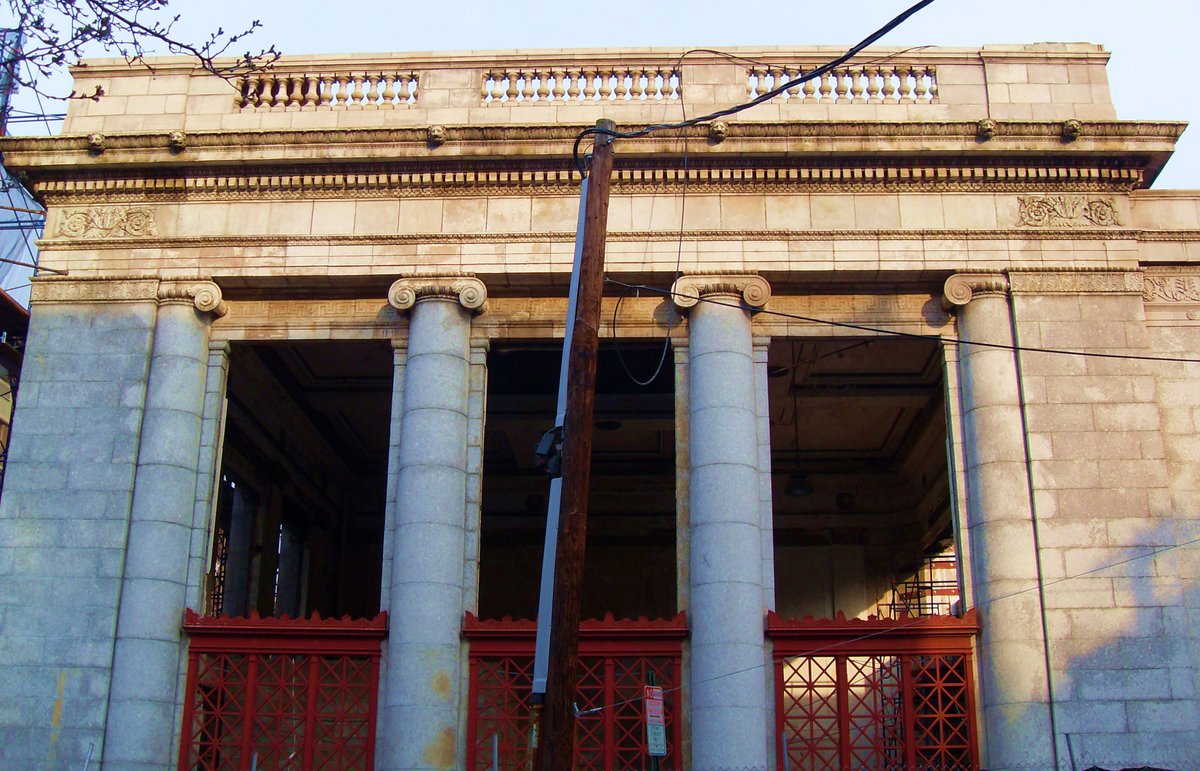
Listen up. We are analyzing a 1912 granite and brick fortress. The objective was established by the Jefferson Trust Company because their old quarters were insufficient. However, their reign was short. The company folded during the Great Depression. By 1939, the City of Hoboken seized the asset due to tax delinquency. It was a total tactical failure for the bank, but a win for the local government.
The building's resume is a mess of shifting loyalties. During World War II, it served as a base for personnel from Todd Hoboken Shipyards. By 1962, the G&S Coat Company moved in and converted the site into a garment factory. It eventually fell into disrepair. That is a long road from high finance to industrial sewing. It is basically the architectural equivalent of a soldier changing uniforms five times in one day.
A restoration project in the early 1980s gave the structure a second life as the Jefferson Trust Renaissance Center. It functioned as a hub for the Hoboken Civic Theater, hosting about 75 people at a time. A plan for a 600 seat theater in 1990 failed to materialize. Finally, in the late 2000s, the building was overhauled into luxury condos.
Now, the site functions as high end real estate. One penthouse occupies two floors behind the restored clock. It features a 20 by 20 foot stained glass skylight over the living area. Most of the original plaster interior survived the transition from factory floor to luxury living. That is a rare win for the building's structural integrity. Mission accomplished.
Sources: Wikipedia, OpenStreetMap, Wikidata, Wikimedia Commons

Written by Kyle McLonely
Discuss this with the author and others
No comments yet. Be the first to start the conversation.