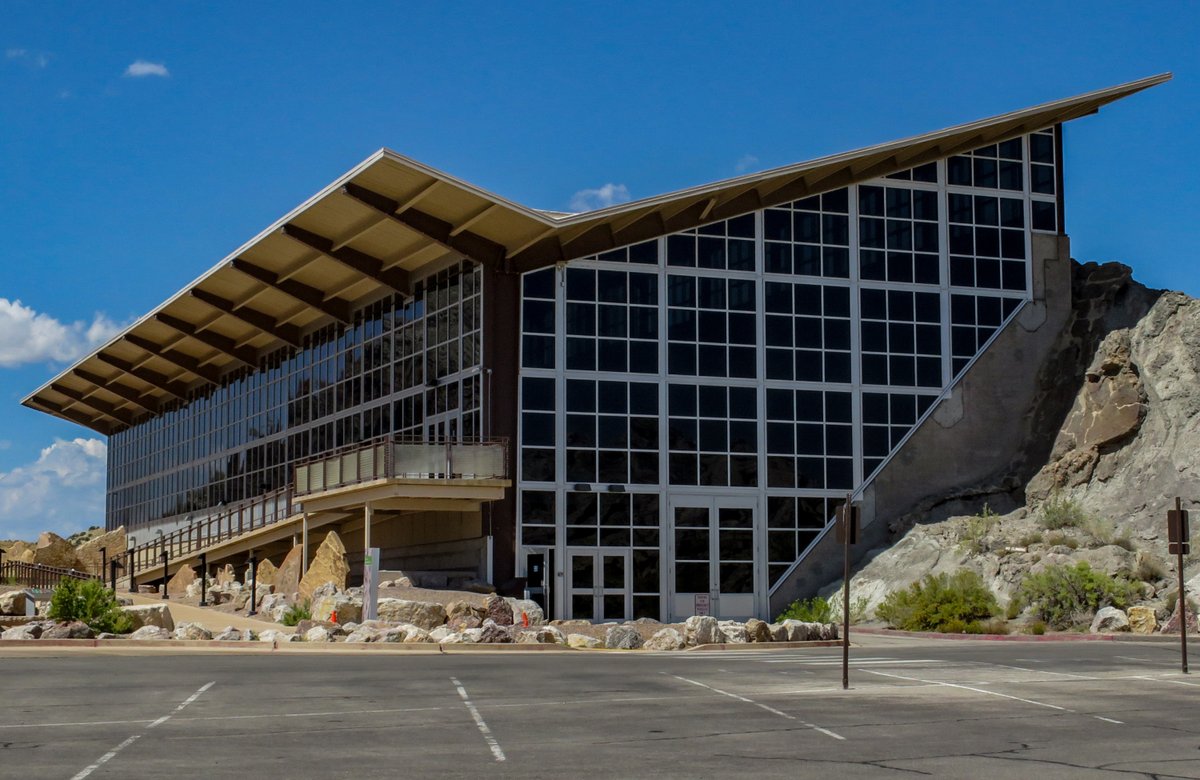
The government had a very specific, very small goal in 1915: protect the Dinosaur Quarry. They carved out a tiny 80-acre slice of land. It was a modest start for a monument to protect the dinosaur beds.
In 1909, Earl Douglass found eight vertebrae of an Apatosaurus at the Carnegie Quarry. The Apatosaurus vertebrae were the first dinosaur skeleton discovered and excavated at the new Carnegie Quarry. Since then, the area has yielded over 800 paleontological sites. That includes everything from the Abydosaurus - whose holotype skull was found in the Mussentuchit Member - to Allosaurus and Deinonychus.
By 1938, the monument was greatly expanded to 210,844 acres to include its natural history and the river canyons of the Green and Yampa. The fossils are enclosed in a sandstone and conglomerate bed of alluvial or river bed origin known as the Morrison Formation. This formation is from the Jurassic Period, some 150 million years old, and the rock layers were tilted by the Laramide orogeny.
Today, you can walk the Fossil Discovery Trail near the visitor center. You can see the results of erosion that exposed these bones to the surface and check out petroglyphs left by the Fremont people before the 14th century. It is a pretty impressive collection of old bones and even older art.
Sources: Wikipedia, OpenStreetMap, Wikidata, Wikimedia Commons
Written by Kyle McLonely
Discuss this with the author and others
No comments yet. Be the first to start the conversation.