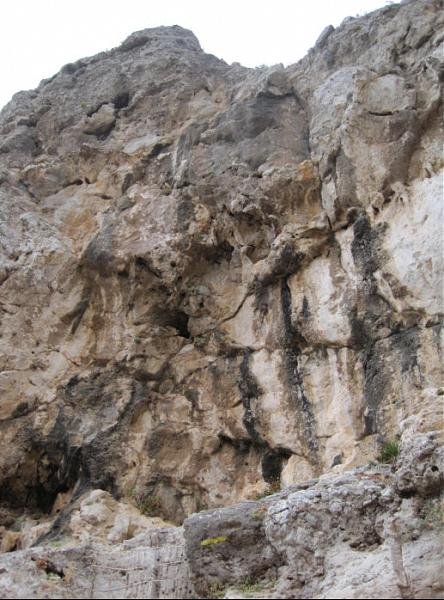

The Cueva y Abrigo de Benzú is an archaeological site located in the town of Benzú in the autonomous city of Ceuta. The site dates from approximately 250,000 years ago to 70,000 years ago, placing it within the Pleistocene. Between 2002 and 2012, excavations conducted by the University of Cádiz recovered more than 30,000 objects from the area.
The site is situated in the northwestern zone of Ceuta in the Campo Exterior, near the border of Benzú. The shelter (abrigo) is open in the dolomites with almost vertical walls and has lost most of its upper cover due to collapse. It measures 15.52 x 6.20 meters. The cave, located at the southwestern end, measures approximately 5.4 x 4.6 meters and is difficult to recognize from the outside due to a small lenticular entrance.
Studies suggest the site was frequented by hunter-gatherer societies during the Middle and Upper Pleistocene in the North of Africa near the Strait of Gibraltar. The geography provided raw materials for tools, fresh water, and animal and plant resources. Archaeological records indicate the cave was used as a semi-permanent occupation site linked to a nearby village and also served as a primary burial site for communal tribal communities.
Sources: Wikipedia, OpenStreetMap, Wikidata, Wikimedia Commons
Written by Mutabor
Discuss this with the author and others
No comments yet. Be the first to start the conversation.