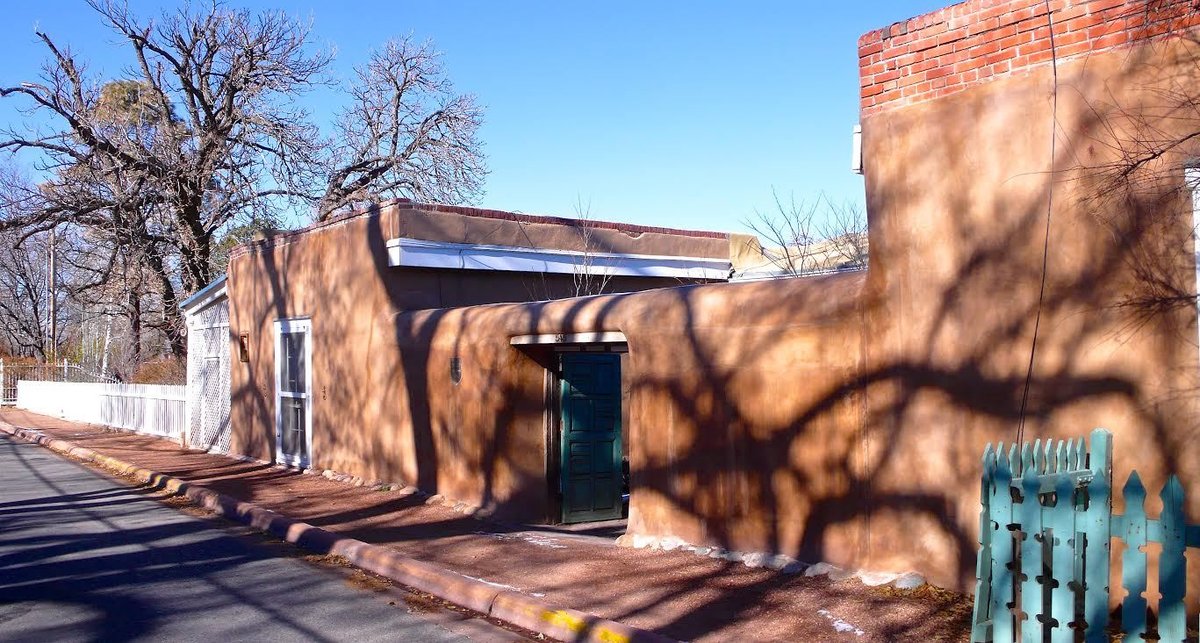

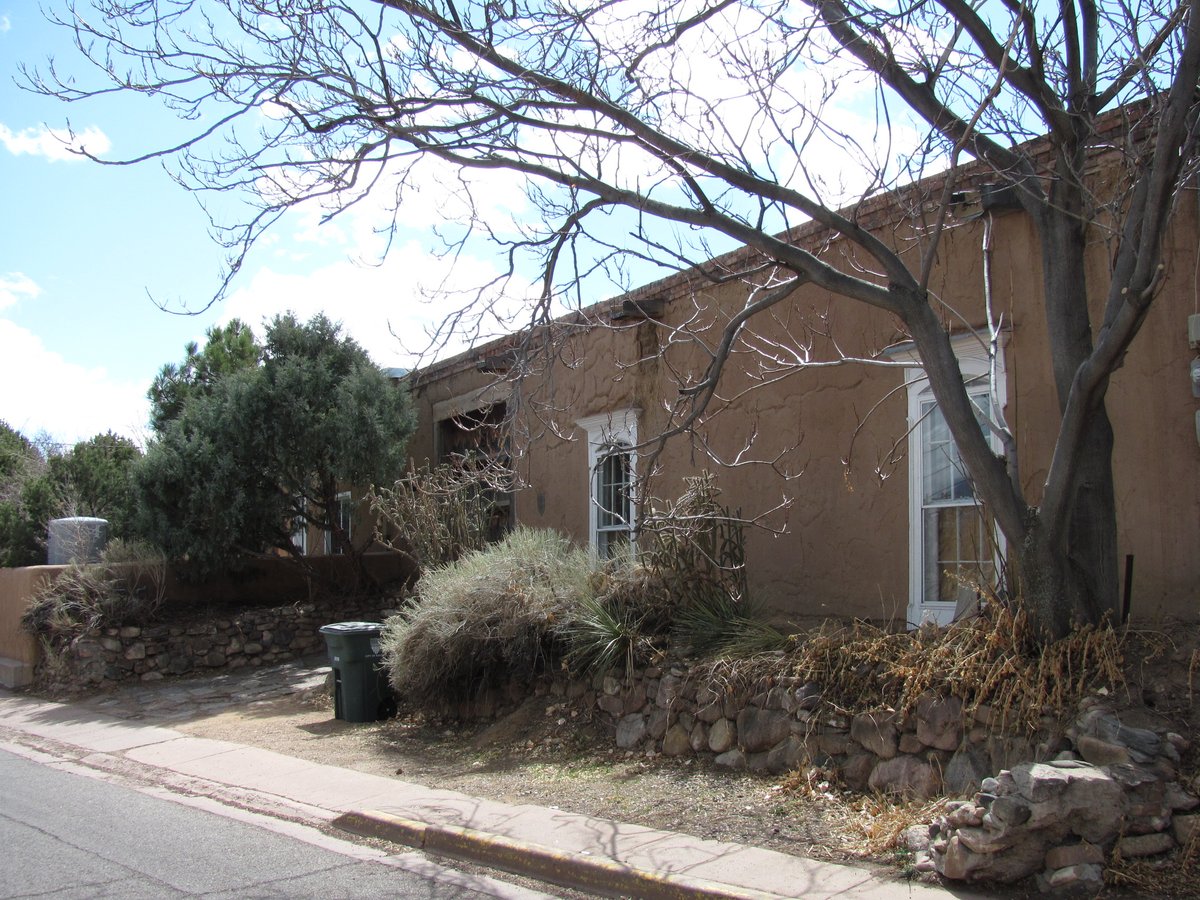
El Zaguan, located at 545 Canyon Rd. in Santa Fe, New Mexico, is a historic complex started in 1854. Listed on the National Register of Historic Places in 2008, the property consists of 1.8 acres containing two contributing buildings, three contributing structures, two contributing objects, and a contributing site. It is a Territorial Revival style complex, featuring a zaguán - a compound with a street doorway entrance leading back to a courtyard surrounded by one-deep rooms.
The property was originally a modest adobe farmhouse. In 1854, James L. Johnson, a merchant linked to the Santa Fe Trail trade network, purchased the house for $250. He and his wife expanded the property with a multi-roomed house and large gardens fed by an acequia. Over time, the Johnsons expanded the property into a mansion of 24 rooms, including a library overlooking the garden and a private chapel.
Johnson eventually mortgaged the property to a local lawyer and politician, Thomas B. Catron. In 1881, Johnson defaulted on the mortgage and the property was transferred to Catron, although the Johnsons continued to live there. In 1918, Catron sold the property to James Baca, Johnson's grandson. Later, Margretta Stewart Dietrich purchased the property and saved it from demolition. It subsequently operated as a hotel and an apartment complex.
Following Dietrich's death, the property was acquired by the El Zaguan, Inc. corporation, owned by architect John Gaw Meem. In 1979, the property was transferred to the Historic Santa Fe Foundation. The complex is considered a notable example of the transition from the Territorial to the modern period, featuring adobe walls in the Spanish Pueblo style and additions with wooden patios and large panes of glass.
In 2022-23, the historic acequia in the garden was restored. Built in the 1850s by Maria Jesusita Johnson, the stone-lined irrigation ditch is fed by the Acequia Madre. While water to this section was cut off in the 1940s, the restored ditch now uses well water. The garden features plantings imported from colonial Spain as well as those brought by later homesteaders.
Sources: Wikipedia, OpenStreetMap, Wikidata, Wikimedia Commons
Written by Friendly Jane
Discuss this with the author and others
No comments yet. Be the first to start the conversation.