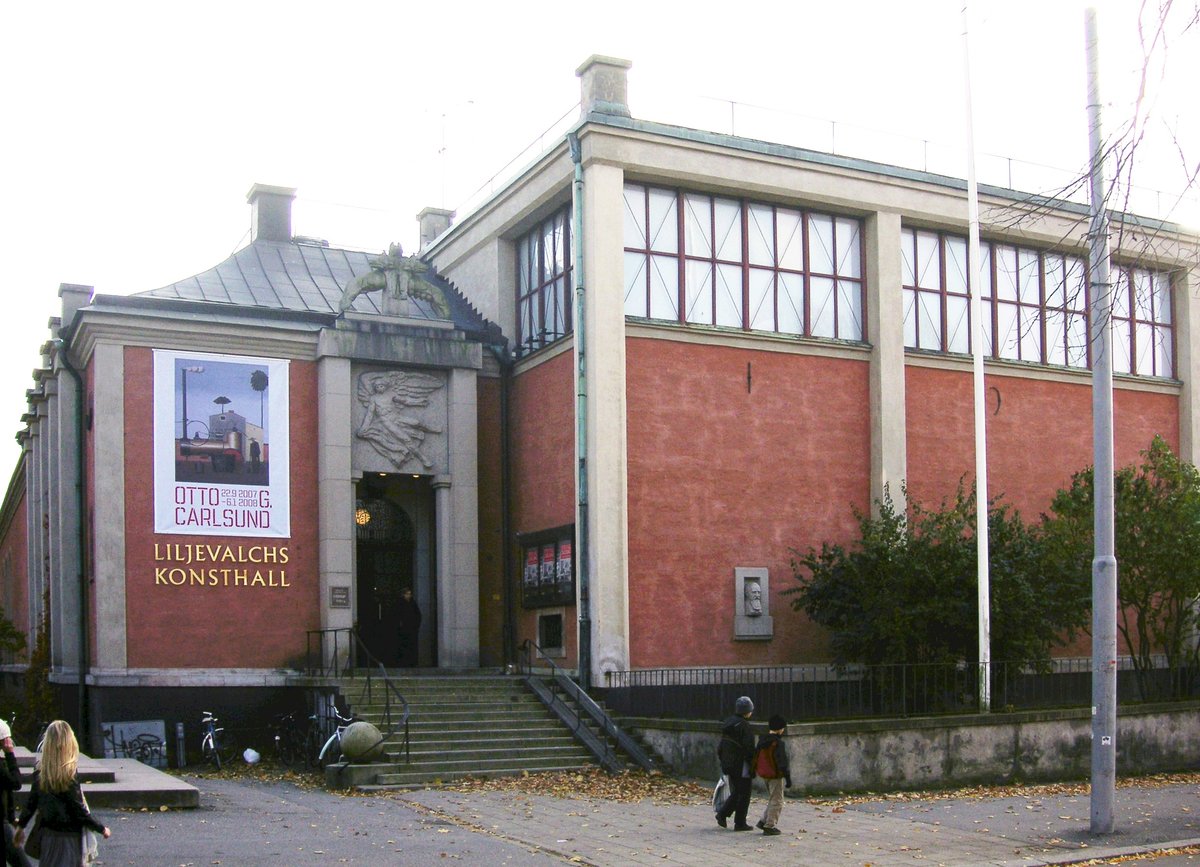

In 1913, Carl Bergsten secured the commission for Liljevalch's Art Gallery by making a calculated shift in his artistic philosophy. He traded his earlier avant-garde experiments for a balanced Rational Classicism. Even as he embraced this new order, he remained committed to the industrial potential of modern concrete construction.
This bold combination sparked immediate debate regarding the building's aesthetic integrity. Some critics dismissed the work as lacking the traditional grandeur of historical architecture. They felt the design was too forward looking for its era. Yet, the interior revealed a profound honesty. By leaving the concrete pillars and beams visible, Bergsten transformed raw structural elements into the very moldings and pilasters of the space.
The gallery functions as a precursor to modernism because it derives its classical character from the principle of simplicity rather than imitation. It features a spacious sculpture hall that transitions into two large galleries, where skylights were specifically designed to illuminate paintings.
Today, this venue remains a premier exhibition site in Sweden. Visitors can still encounter the Carl Milles sculpture at the entrance. The design uses basic functional demands as a departure point to create a series of multi-purpose spaces.
Sources: Wikipedia, OpenStreetMap, Wikidata, Wikimedia Commons





Written by Nik Frost
Discuss this with the author and others
No comments yet. Be the first to start the conversation.