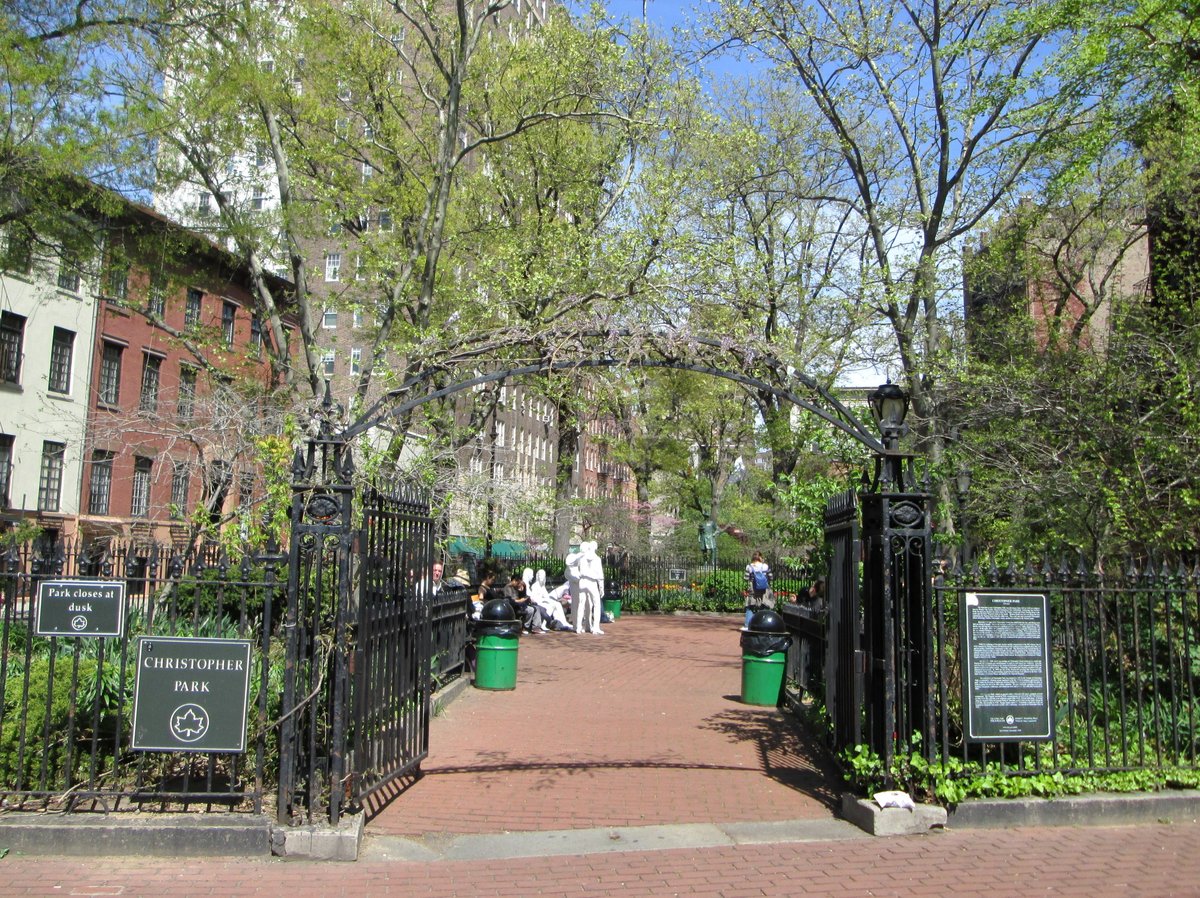

Located directly across from the Stonewall Inn in New York City, the Gay Liberation Monument is a life-sized, near-life-like collection of amorous couples by artist George Segal. The work was created in 1980 as the first piece of public art dedicated to gay rights and solidarity for LGBTQ individuals, commemorating both the ongoing struggles of the community and the Stonewall uprising of 1969.
The monument's history includes a period of display at Stanford University in 1984. During this time, it was brutally vandalized; perpetrators painted derogatory words onto the statues, physically cutting and jabbing into the figures' faces and bodies. LGBT students at Stanford openly protested against the fact that this act could not be legally deemed a hate crime, as California's definition of a hate crime consists of the violation of an individual's natural or civil liberties. The damage imposed by the perpetrators was estimated at $50,000.
In 1994, the monument was vandalized again when some members of Stanford's football team splattered the sculpture with paint and wedged a bench between the figures. Despite these incidents, the sculpture is noted for its focus on tenderness, gentleness, and sensitivity. Segal remarked that the work concentrates on these qualities as expressed in gesture, allowing the viewer to appreciate the intimacy of the partners' relationships.
Sources: Wikipedia, OpenStreetMap, Wikidata, Wikimedia Commons

Written by Friendly Jane
Discuss this with the author and others
No comments yet. Be the first to start the conversation.