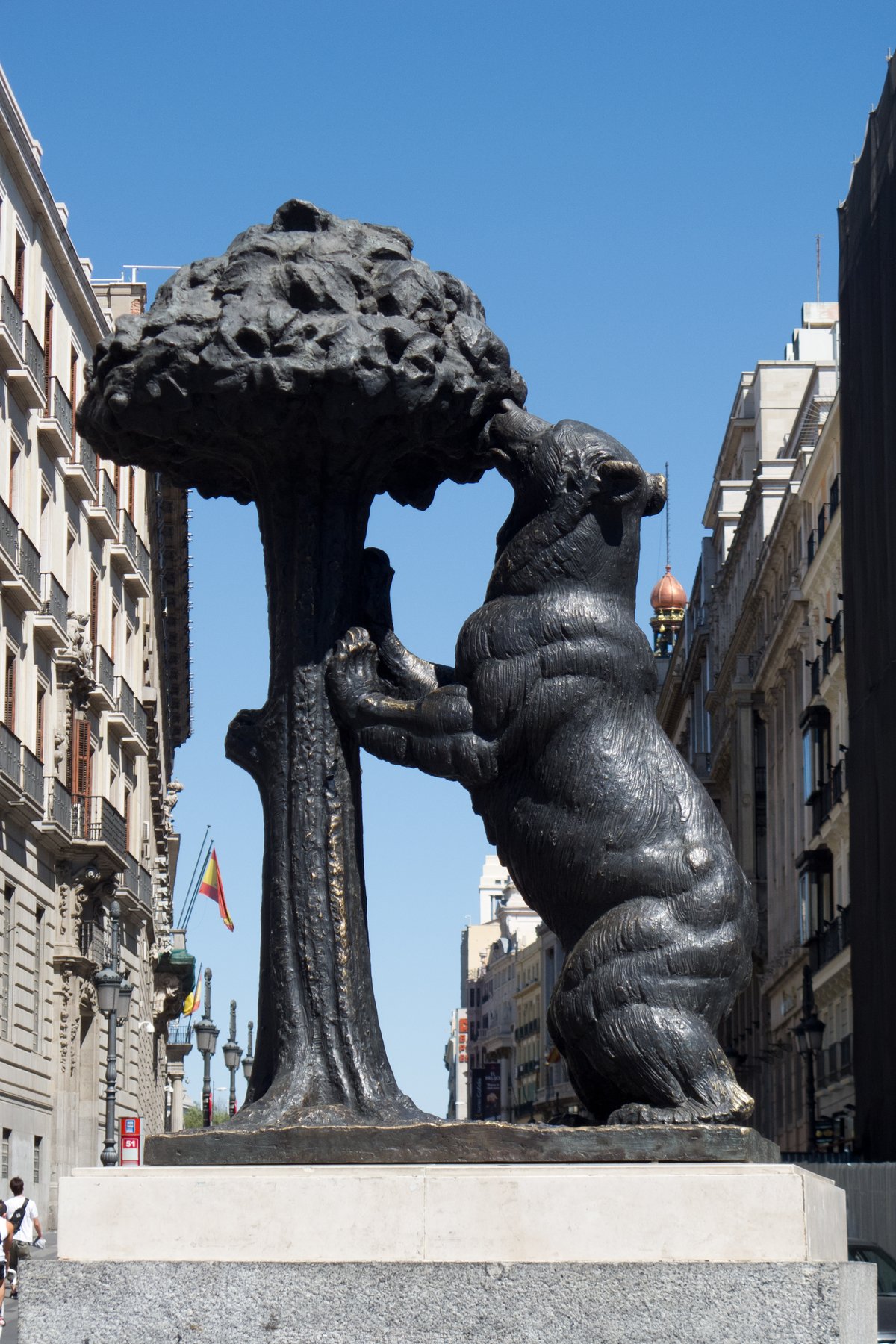

We must look closely at the bear leaning against the strawberry tree to understand a 13th-century legal settlement. During that time, a conflict arose between the municipality and the Chapter of Priests and Beneficiaries regarding local pastures and trees. They established a firm compromise where the Chapter retained the pastures while the council claimed the trees. To memorialize this agreement, the city's coat of arms was updated to feature both symbols, depicting the bear with both paws on the tree.
Let us examine the physical presence of the monument. Sculptor Antonio Navarro Santafé cast this bronze and stone work in 1967. It stands four metres tall and weighs approximately 22 tons. Although it serves as a primary landmark in Puerta del Sol, the statue was moved to the front of Carmen Street in 1986 due to a square reform and relocated back to its original location in 2009.
There is much to observe regarding the modern interactions with the statue. Visitors frequently touch the bear's tail or heel for good luck. This practice has caused the bronze to discolor in those specific areas. While this gesture mirrors traditions in other cities, we find no historical record of it as a local custom. It remains a modern habit that has left a permanent mark on the metal.
Sources: Wikipedia, OpenStreetMap, Wikidata, Wikimedia Commons
Written by Nik Frost
Discuss this with the author and others
No comments yet. Be the first to start the conversation.