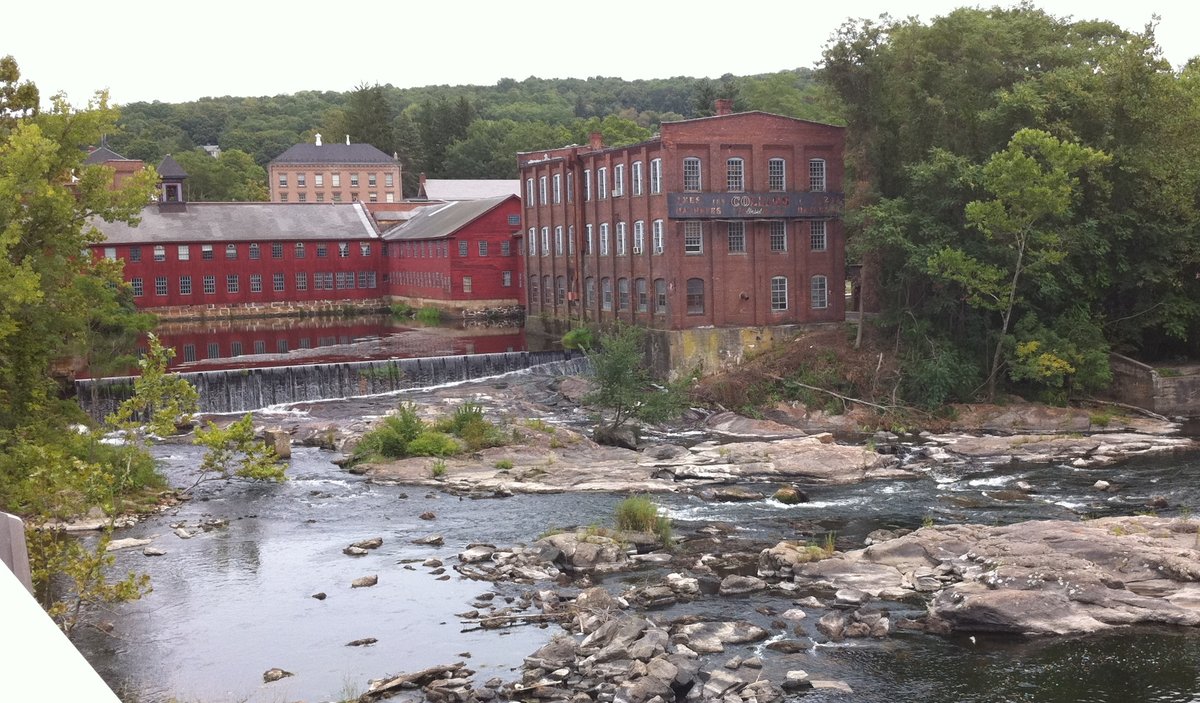
Collinsville was built to make sharp things. The Collins Company factory sat on the Farmington River, using water to turn turbines and power the production of axes, machetes, and picks.
These weren't just garden tools. They were the workhorses of expansion. Collins tools were used almost exclusively to build the Trans-Siberian Railway. They were hauled across the country for the California Gold Rush. Even Admiral Peary took them to the North Pole.
In the nineteenth century, Samuel W. Collins ran the largest manufacturer of axes in the country here. Nearby, Elisha Root invented die casting, an industrial technique that changed manufacturing. The company finally shut its doors in 1966.
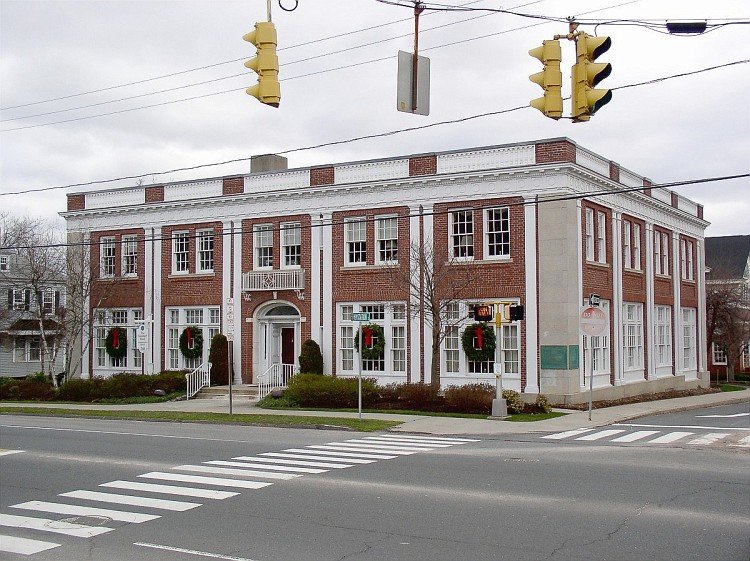
The old factory buildings still stand. They are rented out to local businesses today. You can walk along the riverbank and see the maze of old sluices. The Canton Historical Museum sits in a 1865 factory building, housing thousands of pieces of memorabilia.
Sources: Wikipedia, OpenStreetMap, Wikidata, Wikimedia Commons
Written by Leroy
Discuss this with the author and others
No comments yet. Be the first to start the conversation.