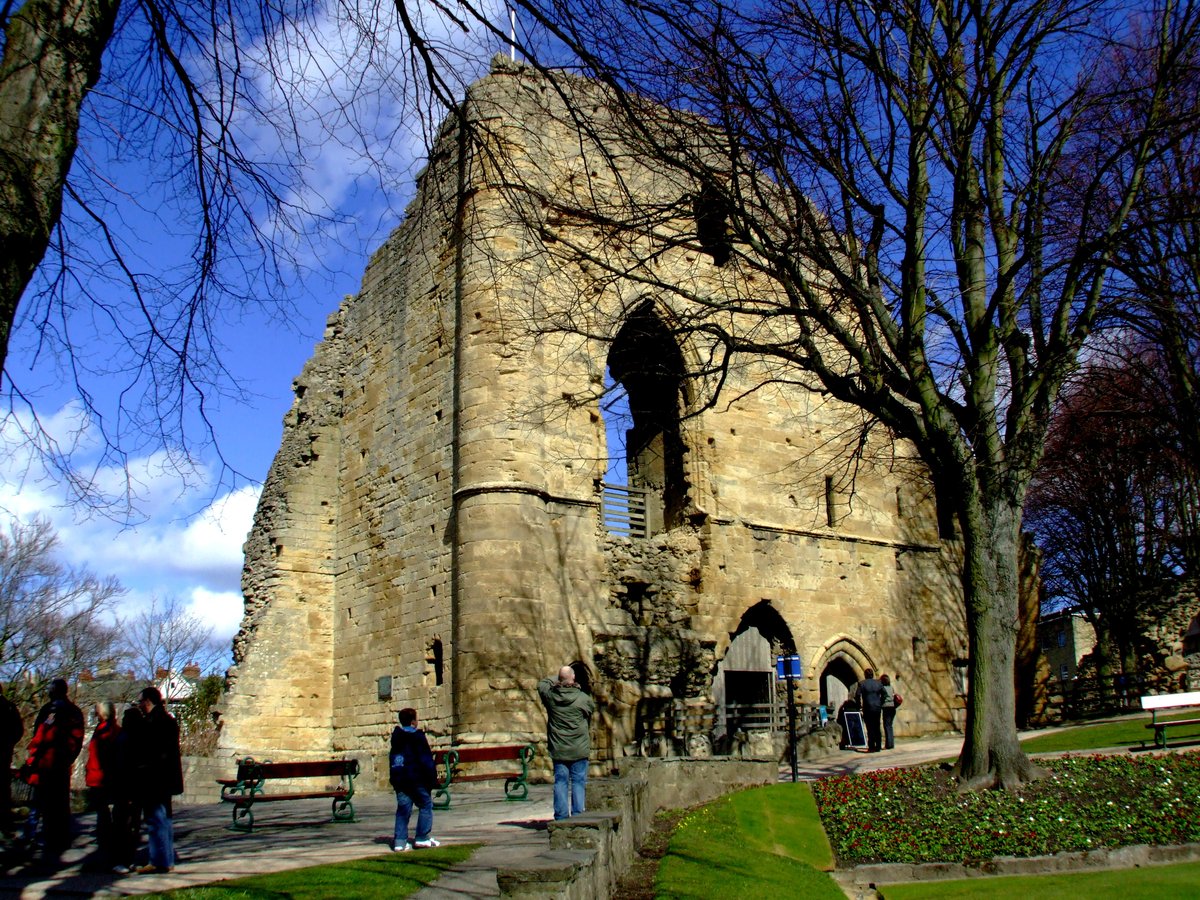
Knaresborough Castle, situated on a cliff above the River Nidd in the town of Knaresborough, North Yorkshire, England, is a testament to over eight centuries of history. Originally, Knaresborough Castle was a royal residence and has been preserved to showcase its rich history and architecture. The castle was first built by a Norman baron in the early 12th century. This historic site has seen a range of uses, from a royal residence to a prison. The castle played a pivotal role in several significant events throughout history.
In 1170, Hugh de Moreville and his followers took refuge at Knaresborough Castle after assassinating Thomas Becket. The castle was also a refuge for Richard II's favourite, Piers Gaveston, when he was besieged in Scarborough Castle by Edward II's Barons. In 1304, Elizabeth, the daughter of Edward I, gave birth to her son Humphrey while residing at the castle. John de Stuteville, Governor of the castle in Easter 1173, was appointed as Governor of Knaresborough castle by King Henry II.
The castle was rebuilt after being destroyed by the Parliamentarians during the English Civil War in 1648. Today, the castle ruins are open to the public and have been transformed into a Tudor Court Museum, located in a former courthouse. The museum houses furniture from the original Tudor Court. The castle's picturesque grounds are also open to visitors and are used for hosting events such as the annual FEVA (Festival of Visual Arts and Entertainment).
Visitors can admire the remains of the castle's two visible towers, which form the main gate, and the tall five-sided keep on the north side of the inner bailey, which served as a residence for the lord of the castle throughout its history.
Sources: Wikipedia, OpenStreetMap, Wikidata, Wikimedia Commons
Written by Nicolo Ciampini
Discuss this with the author and others
No comments yet. Be the first to start the conversation.