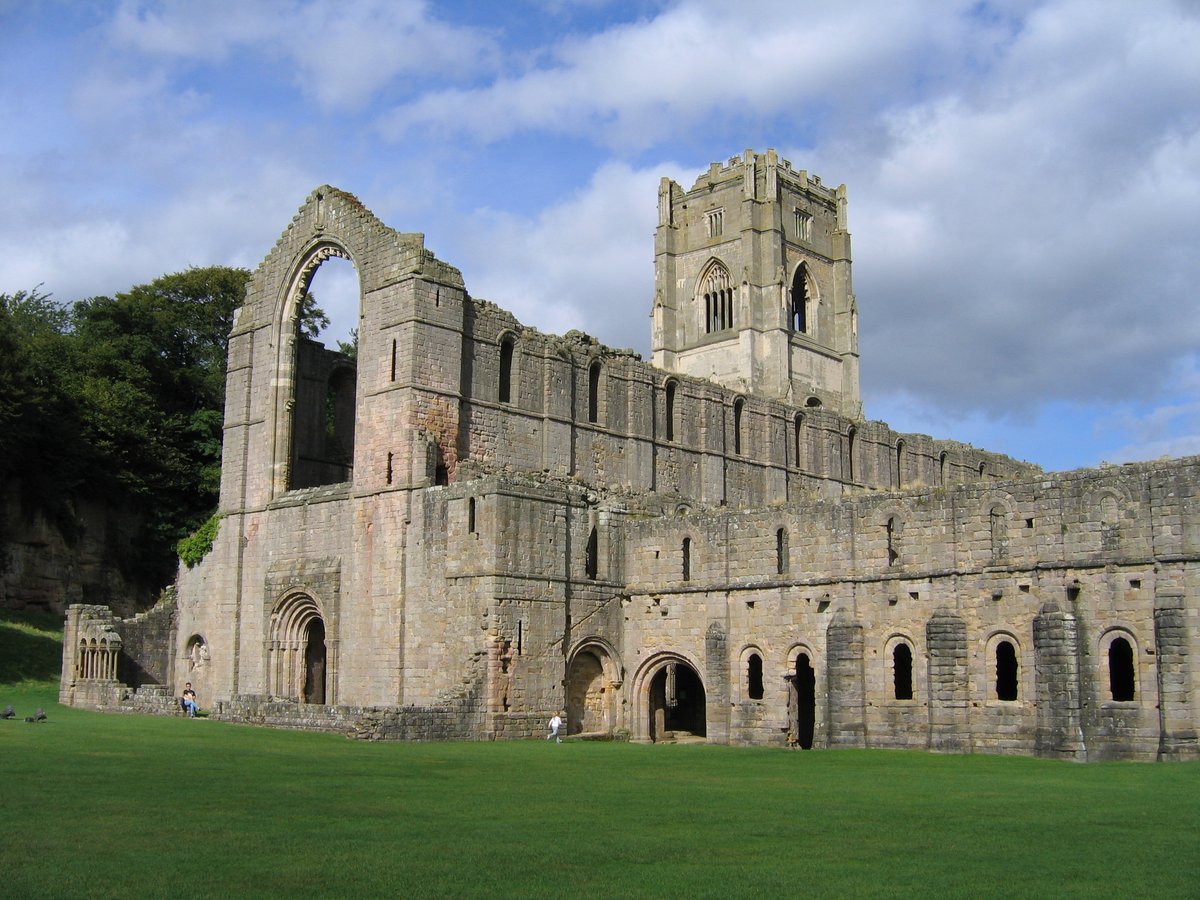
Born from a dispute at a Benedictine house, thirteen monks found shelter under the protection of Archbishop Thurstan of York in 1132. They were given a picturesque location with a total of six springs that watered the site, which gave Fountains Abbey its unique and surprising name. For four centuries, Fountains Abbey flourished, becoming one of the wealthiest monastic communities in England thanks to its vast landholdings. But in 1539, during the English Reformation, the religious buildings were destroyed, and the abbey's lay buildings survived and were later adapted for residential use.
In the 18th century, Fountains Abbey was incorporated into the Studley Royal Park, a landscaped garden where the abbey ruins now form a striking contrast to the formal gardens and lush greenery. The abbey's stunning ruins have been protected as a grade I listed building and scheduled monument by Historic England. Today, Fountains Abbey remains one of England's most well-preserved examples of Cistercian abbeys, boasting some of the finest surviving architectural features, including the chapter house, refectory, and lay brothers' dormitory, as well as ancillary structures such as the guest houses, abbey mill, and bridges.
Sources: Wikipedia, OpenStreetMap, Wikidata, Wikimedia Commons
Written by Nicolo Ciampini
Discuss this with the author and others
No comments yet. Be the first to start the conversation.