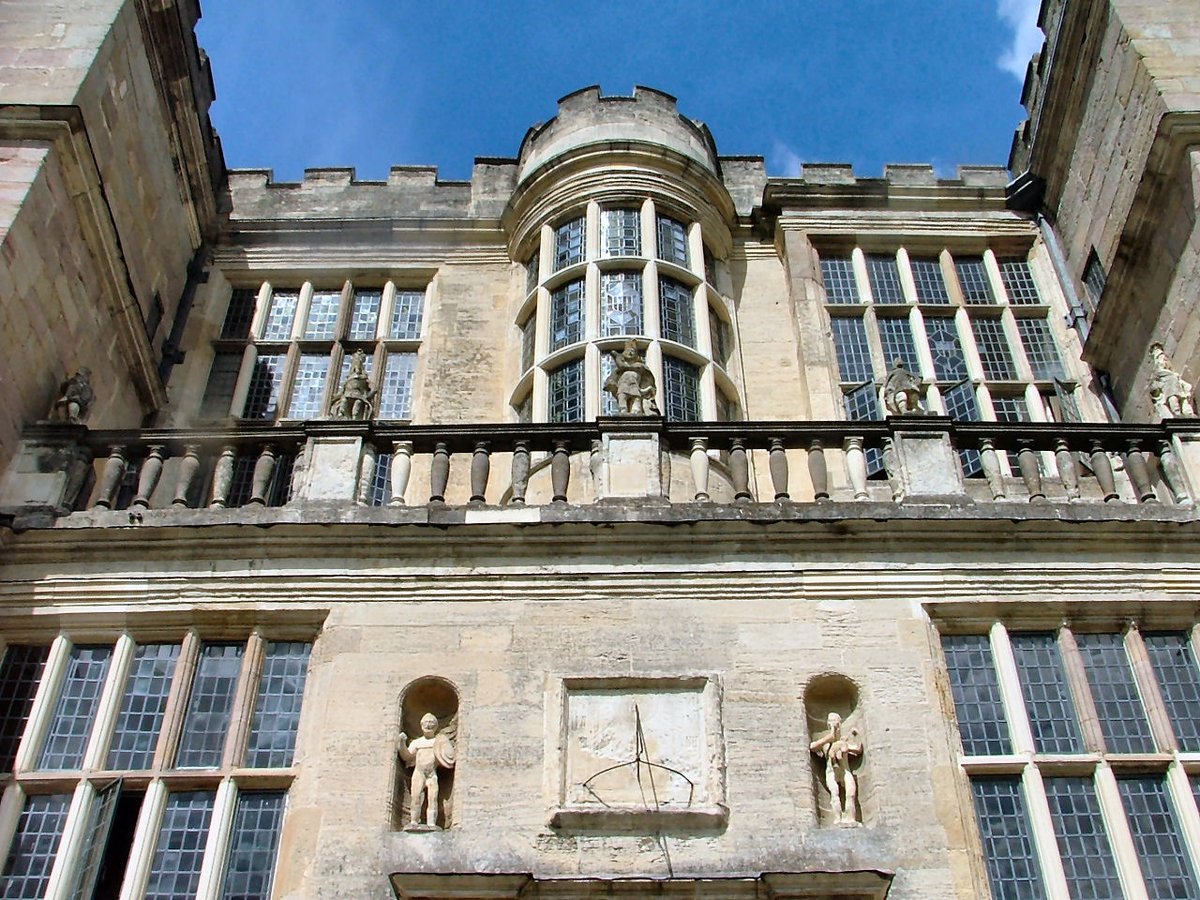
Fountains Hall, situated in the World Heritage Site of Studley Royal Park in North Yorkshire, England, is a Grade I listed building. Originally constructed by Stephen Procter between 1598 and 1611, this historic manor serves as an example of late Elizabethan prodigy houses, a style influenced by Robert Smythson in the Renaissance idiom. The structure is built of grey limestone with a stone slate roof, in a style influenced by Robert Smythson’s work.
Fountains Hall has a three-bay central block, flanked by projecting gabled wings and towers at each end, all echoing Smythson’s architectural style. However, this grand estate is more famously known for a lesser-known tale - the Vyner family’s tragic story of love and loss.
Prince Charles visited the estate in 1604. The Vyner family’s Fountains Hall connection became tragic during the Second World War.
Charles Vyner, a Royal Naval Volunteer Reserve pilot, went missing in action near Rangoon, Myanmar, in 1944. Elizabeth Vyner, his sister, served in the Women’s Royal Naval Service and died of lethargic encephalitis in Felixstowe, Suffolk. The Vyner family’s losses moved Doris Vyner, their sister, to commission a stone and stained-glass memorial in their remembrance.
The memorial was designed by John Seely, 2nd Baron Mottistone and Paul Edward Paget and constructed by the sculptor Cecil Thomas and stained-glass artist Hugh Easton. It was first unveiled in 1953 by Queen Elizabeth, the Queen Mother and now serves as a poignant testament to the Vyner family’s tragic history.
Today, Fountains Hall continues to be protected as a Grade I listed building. Visitors can explore its stunning architecture, which features elaborate oak-panelled rooms and a striking balcony, despite the structure being unsafe for public use. The estate has been carefully maintained and is managed by the National Trust.
Sources: Wikipedia, OpenStreetMap, Wikidata, Wikimedia Commons
Written by Nicolo Ciampini
Discuss this with the author and others
No comments yet. Be the first to start the conversation.