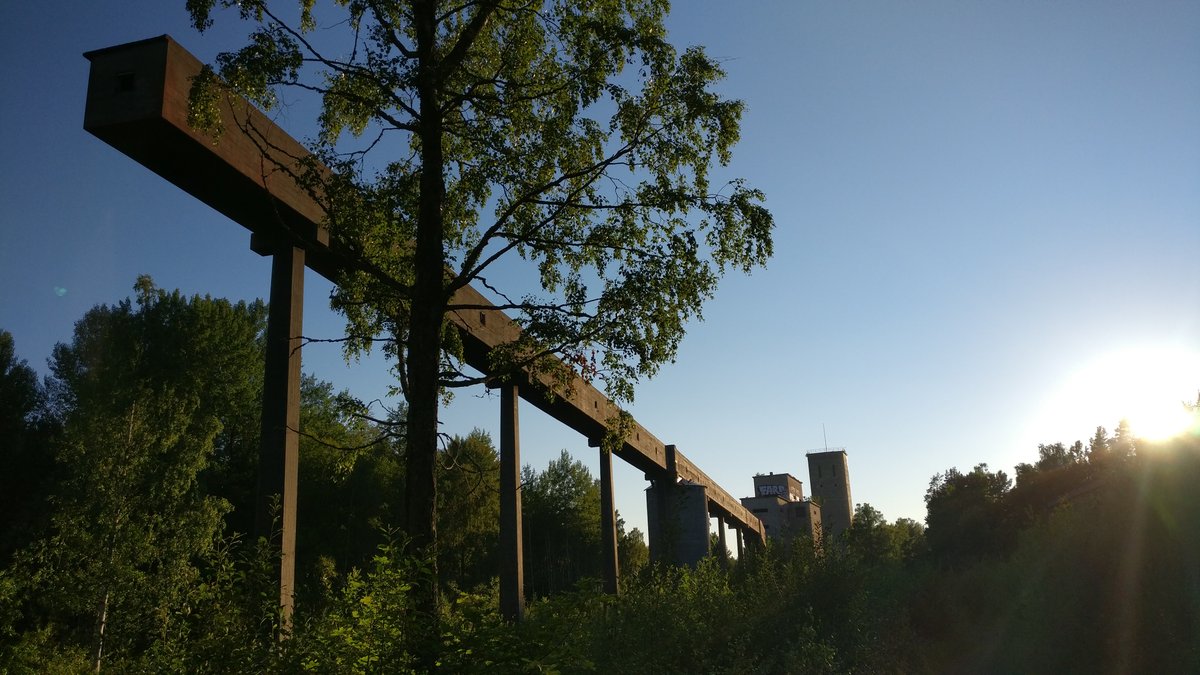

The history of Ramhäll began with the discovery of iron ore in 1742, with mining occurring until the mid-1760s. Significant industrial growth followed in 1832 when Kilafors bruk took over the Hammarin mines and began working on a larger scale. This progression led to the acquisition of a steam engine in the 1870s and the expansion of the railway to Ramhäll in 1878.
After the mines were bought by Stora Kopparberg in 1942, production gained momentum, leading to the construction of a modern processing plant in 1957. The railway that had served the site was decommissioned and removed in 1959. From that moment, the site transitioned to moving ore by truck to Alunda for reloading onto trains.
The industrial life of the mine concluded in 1975. Today, the structures stand vacant and the tunnels are submerged in water. The site remains a brownfield area, inviting those with a sense of adventure to explore the remnants at their own risk.
Sources: Wikipedia, OpenStreetMap, Wikidata, Wikimedia Commons
Written by Nik Frost
Discuss this with the author and others
No comments yet. Be the first to start the conversation.