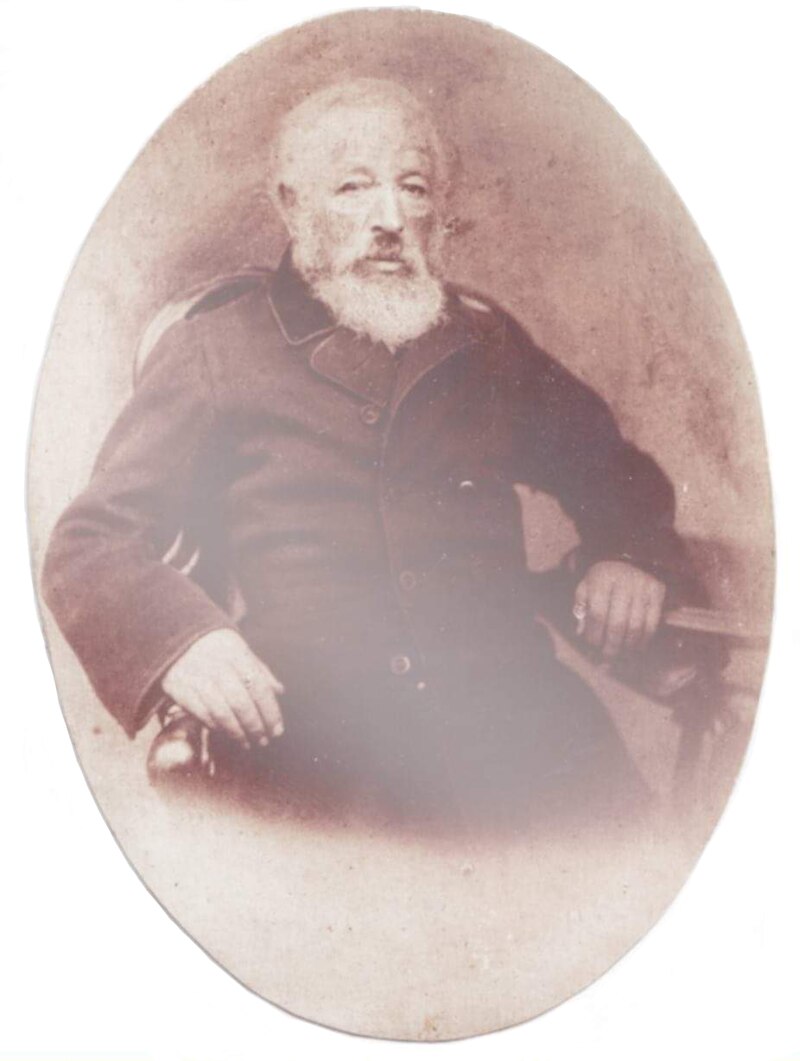
Forgotten Grandfathers of Lenin: Dmitry and Alexander Blank

Brinko Lane, 4, Saint Petersburg, Russia, 190068

In the official biography of Lenin, published in 1940, it was said about the leader's parents: "Ilya Nikolaevich Ulyanov came from very poor townspeople of the city of Astrakhan... Vladimir Ilyich's mother, née Blank, was the daughter of the doctor A.D. Blank." There was no further mention of grandmothers or grandfathers.
Irony of fate: Lenin's cousin grandfather renounced Judaism in favor of Orthodoxy and was nevertheless killed by Orthodox Russians who mistook him for a German.
Lenin's sister Anna Ilyinichna wrote: “The elders could not clarify this for us. The surname seemed to us to be of French origin, but there was no evidence of such ancestry. Personally, I had long entertained the thought of possible Jewish origin, mainly prompted by our mother's statement that our grandfather was born in Zhytomyr — a well-known Jewish center. Grandmother — our mother's mother — was born in Petersburg and was of German origin from Riga. But while connections with maternal relatives were maintained for quite a long time by our mother and her sisters, no one had heard of her father’s relatives, A.D. Blank. He seemed like a cut-off piece, which also led me to think of his Jewish origin. No stories from grandfather about his childhood or youth were preserved in the memory of his daughters.”
But Lenin’s grandfather Alexander Blank had much to tell. However, the story began long before him.
His father Moishe Blank appeared in the town of Starokonstantinov already as an adult and in 1793 married a local 29-year-old maiden Maryam Froimovich. Documents show that he could read both Hebrew and Russian, owned his own house, engaged in trade, and in addition had about 3 hectares of land leased near the town of Rogachevo, which was sown with chicory.
In 1794 he had a son Abel, and in 1799 a son Israel, writes the magazine "Historian". From the very beginning, Moishe Itskovich had a difficult relationship with the local Jewish community. He was “a man who did not want or perhaps could not find common ground with his compatriots.” In other words, the community simply hated him. In 1808 his house was set on fire. The family moved to Zhytomyr.
Many years later, in September 1846, he wrote a letter to Emperor Nicholas I. He proposed — for the purpose of assimilating Jews — to forbid them from wearing national clothing, and most importantly, to oblige them to pray in synagogues for the Russian emperor. He told the tsar that “40 years ago he renounced the Jews,” but because of his “excessively devout wife,” who died in 1834, he converted to Christianity and received the name Dmitry only on January 1, 1835. Nicholas I fully agreed with the proposals of the “baptized Jew Blank,” as a result of which in 1850 Jews were forbidden to wear national clothing, and in 1854 a corresponding prayer text was introduced.
Both sons, like their father, could read Russian, and when in 1816 a district school opened in Zhytomyr, they were enrolled there and successfully graduated. In spring 1820 they went to the capital and submitted a petition to the metropolitan expressing their desire to be baptized and leave the Pale of Settlement. The petition was granted, and on May 25, 1820, the priest baptized both brothers. Abel became Dmitry Dmitrievich, and Israel became Alexander Dmitrievich.
On July 31 of the same year, by order of the Minister of Education Prince Alexander Nikolaevich Golitsyn, the brothers were appointed pupils of the Medical-Surgical Academy, which they graduated from in 1824, receiving the academic title of second-class doctors and a gift in the form of a pocket set of surgical instruments.
Dmitry Blank (Vladimir Lenin’s cousin grandfather) remained in the capital as a police doctor, while Alexander Blank (Lenin’s biological grandfather) in August 1824 began service in the town of Porechye, Smolensk province, as a district doctor. He did not like the province much, and already in October 1825 he returned to Petersburg and was enrolled, like his brother, as a police doctor in the city. In 1828 he was promoted to staff doctor.

At first, things went well for Alexander Blank. As a police doctor, he earned 1,000 rubles a year. Soon he proposed to Lenin’s grandmother.
The cholera epidemic broke out in spring 1831. Quarantines on the distant approaches to the capital did not help. On June 14, 1831, Dmitry Blank, doctor of the main cholera hospital in Petersburg, identified the first patients. Within a week, the number of sick exceeded three thousand, nearly half of whom died, reports the magazine "Pages of History".
Cholera primarily struck the common people. Rumors spread through the capital that German doctors were deliberately poisoning Orthodox Russian people. On June 22, a crowd gathered at Sennaya Square and rushed to the main cholera hospital. The riot turned into a mass killing of doctors, among whom was Dr. Dmitry Blank. He was beaten to death, mistaken by surname for a German. Alexander Blank, Lenin’s biological grandfather, was also in Petersburg that day; he was lucky. The death of his brother so shocked him that he did not work for a year and was recovering.
The next morning, Emperor Nicholas I himself went to Sennaya Square. A crowd was already gathering there to resume the riots. According to the official version, Nicholas ordered everyone to take off their hats and read a patriotic lecture: “It is shameful for the Russian people, forgetting the faith of their fathers, to imitate the frenzy of the French and Poles.” According to an unofficial version, the sovereign’s speech began with the words “On your knees! Scoundrels!” and consisted mostly of profanities.
One way or another, the emperor made a great impression on everyone, which pleased him greatly, and he promised forgiveness to all. Indeed, no one was brought to trial in the case of the cholera riot in the capital.

Sources:
https://годы-и-люди.рф/entry/7117
Author: Maxim Kuznetsov

Follow us on social media

More stories from Petersburg: Jews

Where there is salt, there is Peretz.

Nevsky Ave., 15, Saint Petersburg, Russia, 191186

Peretz is a wealthy Jew who owns large businesses in various leases and contracts, especially in the transportation and supply of salt to government stores.

A Jew of Peter the Great or the First Bathhouse Scandal of Russia

Nevsky Ave., 39A, Saint Petersburg, Russia, 191023

The first "bathhouse scandal" in Russian history occurred in 1727, and its protagonist was Anton Devier, the General Police Master of Saint Petersburg, the first and highest-ranking official in law enforcement. The fact that he was also Jewish makes the situation even more intriguing.

Synagogue in the Mikhailovsky Castle

10 Inzhenernaya St., Saint Petersburg, Russia, 191023

In the complex of buildings of the Engineering Castle, but not in the castle itself, there was a Jewish soldiers' synagogue from 1838 to 1856.

Burned alive

Nevsky Ave., 15, Saint Petersburg, Russia, 191186

About the Famous Case of Voznitsyn and Leibov in the 18th Century

Bironovshchina or Lipmanovshchina

Moika River Embankment, 12, Saint Petersburg, Russia, 191186

The Jews of Anna Ioannovna

The Empress's Doctor, the First Russian Jewish Academician

Dvortsovaya Square, 2, Saint Petersburg, Russia, 190000

About paired Russian banyas, since they contribute to the strengthening, preservation, and restoration of health

The Best Diplomat of Peter the Great

Bolshaya Morskaya St., 20, Saint Petersburg, Russia, 191186

For where do I need you! The career of Petr Pavlovich Shafirov seems utterly incredible. A baptized Jew finds his way to the court of Peter I, becomes a diplomat, heads the postal service, mining and metallurgy, oversees foreign trade, saves the tsar and tsarina from Turkish captivity, becomes one of the richest and most powerful people in the empire, and then, one fine day, loses everything.

Samoyed King

Dvortsovaya Embankment, 2E, Saint Petersburg, Leningrad Region, Russia, 191186

He helped Peter I shave the beards of the boyars, became a king, and was exiled.

The Soft-bodied Robespierre of Revolutionary Petrograd

Gorokhovaya St., 2, Saint Petersburg, Russia, 190000

Moisey Uritsky - Bloody Executioner or Humanist Chekist

Jewish cemetery

Stachek Square, 4, Saint Petersburg, Russia, 198095

Jewish cemetery near Leningrad. A crooked fence made of rotten plywood. Behind the crooked fence lie side by side lawyers, merchants, musicians, revolutionaries.

The Holocaust in Leningrad

Moskovskaya St., 5, Saint Petersburg, Russia, 196601

The Jews were gathered in the city center, near the "Avangard" cinema, lined up in a column, and led towards the Alexandrovsky Palace. A resident of Pushkin, Ivanova, recalled seeing the column of Jews, which included elderly people, women, and children, totaling about 800 people. Witnesses reported that when the Jews were being led to the execution, they sang a mournful song.

Great Choral Synagogue of Saint Petersburg

Lermontovsky Ave., 2, Saint Petersburg, Russia, 190121

On September 1, 1869, Emperor Alexander II approved the resolution of the Committee of Ministers allowing the Jews of St. Petersburg to build a synagogue to replace the existing prayer houses.

Moisey Nappelbaum – artist or photographer?

Nevsky Ave., 72, Saint Petersburg, Russia, 191025

Nappelbaum considered Rembrandt his spiritual inspiration, who, according to him, more than any other artist, brilliantly worked with light and shadow. “Our life is continuously enriched, renewed, and moves forward. And photographic art must develop, spiritually mature, otherwise it will wither, take on a frozen form, and lose everything that was so arduously gained. To prevent this from happening, it is necessary to learn not only the technique of photography, the laws of visual art, composition, and lighting – one must study life, people, human faces, characters in their movement. It is necessary to learn to creatively comprehend the subject.” M. S. Nappelbaum from the book *From Craft to Art*.

Diamond of the Revolution

X828+2M Petrogradsky District, Saint Petersburg, Russia

Dora Vul'fovna Brilliant — revolutionary, member of the Socialist-Revolutionary Party (SRs) and their combat organization, participant in the assassination attempts on Minister of Internal Affairs Vyacheslav Pleve and Grand Duke Sergei Alexandrovich.

Three Jewish diplomats at the emperor's throne

Bolshaya Morskaya St., 20, Saint Petersburg, Russia, 191186

Three representatives of this remarkable family became the pride of Russian diplomacy and in the 1710s entered the most influential clan overseeing the empire's foreign policy. Their fate could fill more than one thick novel: secret wars, conspiracies, escapes abroad, and the "return of the resident," closeness to the court, and a long period of disgrace.

The Legacy of the Ginzburg Barons

Konnogvardeyskiy Lane, 14, Saint Petersburg, Leningrad Region, Russia, 190000

Something unprecedented happened. The Hasidim, in protest against the ban on using texts sacred to the Jews, barricaded themselves in the office of one of the GBL leaders…

Alexander Lishnevsky — the "universal soldier" of architecture

Zagorodny Prospekt, 11, Saint Petersburg, Russia, 191002

Alexander Lvovich Lishnevsky (1868–1942) was a Russian architect, a representative of Art Nouveau and Neoclassicism. He was the author of numerous buildings in Saint Petersburg.

How an Explosion at a Gunpowder Factory Led to the Discovery of a Jewish Cemetery

14 Aleksandrovskoy Fermy Avenue, Saint Petersburg, Russia, 192174

On February 16, 1875, approximately 12 kilometers south of the OPZ, on the opposite bank of the Neva River, a large crowd gathered for the solemn opening of the Jewish Cemetery. It was established as a separate section of the Preobrazhensky Cemetery (now the cemetery in memory of the victims of January 9) and later became independent. Regular burials at the newly opened cemetery began only two weeks later. The reason was that, according to ancient Jewish tradition, a person is not buried alone if no one has yet been buried in that place. Judaism forbids condemning the soul of the deceased to loneliness in the afterlife. To properly "launch" the cemetery, it was necessary to bury two people at once, but such a case did not occur. However, as you have already understood, it did not take long to wait.