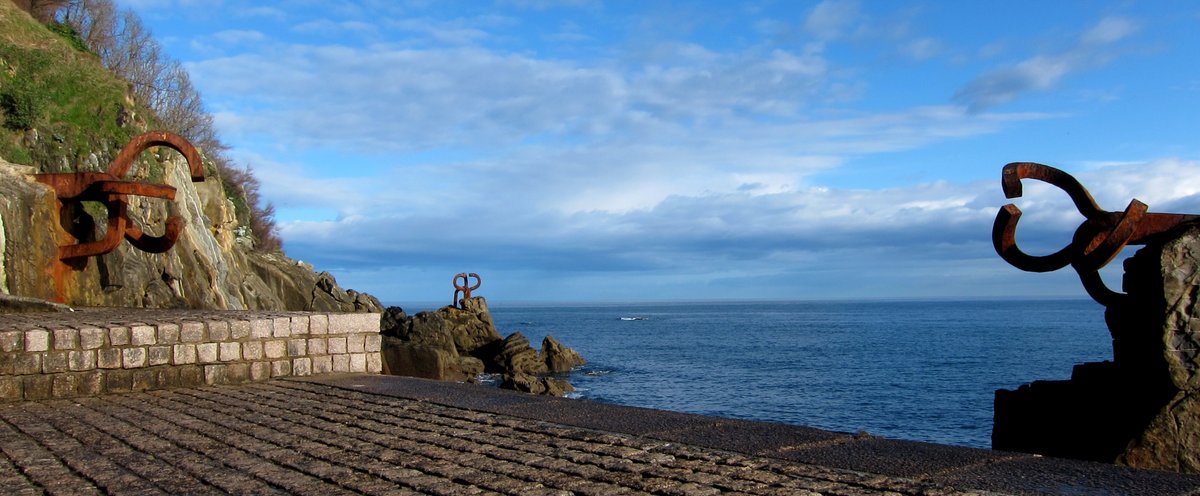

The three sculptures at Playa de Ondarreta are monumental Corten steel forms, each weighing 10 tons, anchored in the coastal rock. Designed to harmonize with natural forces, their claw-like shapes and embedded iron combs echo Chillida's 'combs' series, which began in 1952. Originally planned as a car park, the site was transformed into an art installation that responds to the Cantabrian Sea's rhythms. Blow-holes and wave-driven outlets let air and water pass through the sculptures, creating a dialogue between art and environment.
Chillida's work here reflects his fascination with intangible elements like wind and sea, captured in angular, wind-shaped forms. The sculptures' iron combs, visible in the rock, mirror the 'tool for trapping the wind' concept central to his practice. Nearby, the Chillida Leku museum and San Marko Fort offer further insight into the region's artistic and military history. This site, part of a series with at least 20 variations, remains a striking landmark where steel and granite meet the Atlantic.
Today, visitors can walk the viewing area, where the sculptures' dynamic interaction with waves and wind offers a unique perspective on Chillida's vision. The site's integration with the landscape underscores its role as both a cultural landmark and a testament to industrial-era materials and techniques.
Sources: Wikipedia, Wikimedia Commons, The Comb of the Wind: poetry in steel and rock, Chillida Leku - Peine del viento XVII
Written by Nik Frost
Discuss this with the author and others
No comments yet. Be the first to start the conversation.