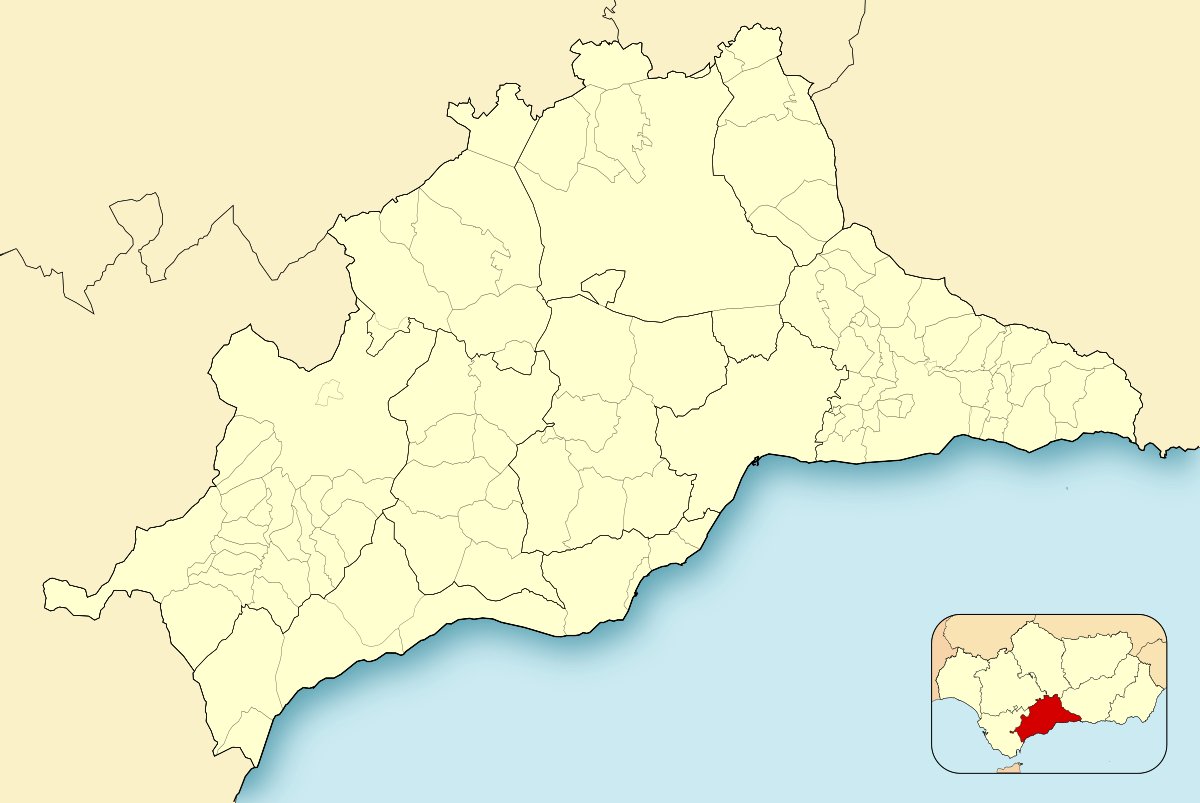

The Necrópolis megalítica de la Planilla is a significant funerary area corresponding to the megalithic phenomenon in the Ronda area of Málaga. While many settlements in the region date to the Copper Age, this site serves as a key reference for understanding the continuity of settlement in the area. It shares parallels with the necropolises of Los Gigantes and Montecorto, representing some of the first sites to receive megalithic influence from Portugal via the lower Guadalquivir.
Located on a flat hill between the Guadalevín river and the Culebras stream, the site contains four accurately studied tombs belonging to the Bronze Age. Tomb number 1 features five cover slabs starting from the entrance of the corridor, which are displaced and tilted toward the left side. As a result, the left side does not show the composing orthostats, while only the first entrance orthostat is visible on the right side. A stone relleno is preserved at the exterior of the header to serve as a support.
Tomb number 2 is situated northwest of the first grave. It shows a pair of parallel orthostats with one meter of separation between them, alongside scattered slabs, leading to the possibility that it is a cista. The third tomb follows a N-40°-E orientation, though its construction details are difficult to see because the area has been used as a dumping ground for stones. However, a cover slab of similar dimensions to the first tomb is still visible.
The fourth burial is also located in a stone dumping area, but parts of its elements are discernible. It has a N-315°-E orientation with a maximum length of 9.5 meters and a maximum width of 3.9 meters. On the right side, six orthostats are aligned, measuring approximately one meter in length and 0.20 meters in thickness. Two large cover slabs are preserved near the header sector. Generally, this necropolis is part of the megalithic world developed in the Ronda region from the early Chalcolithic to the Bronze Age.
Sources: Wikipedia, OpenStreetMap, Wikidata, Wikimedia Commons




Written by Nicolo Ciampini
Discuss this with the author and others
No comments yet. Be the first to start the conversation.