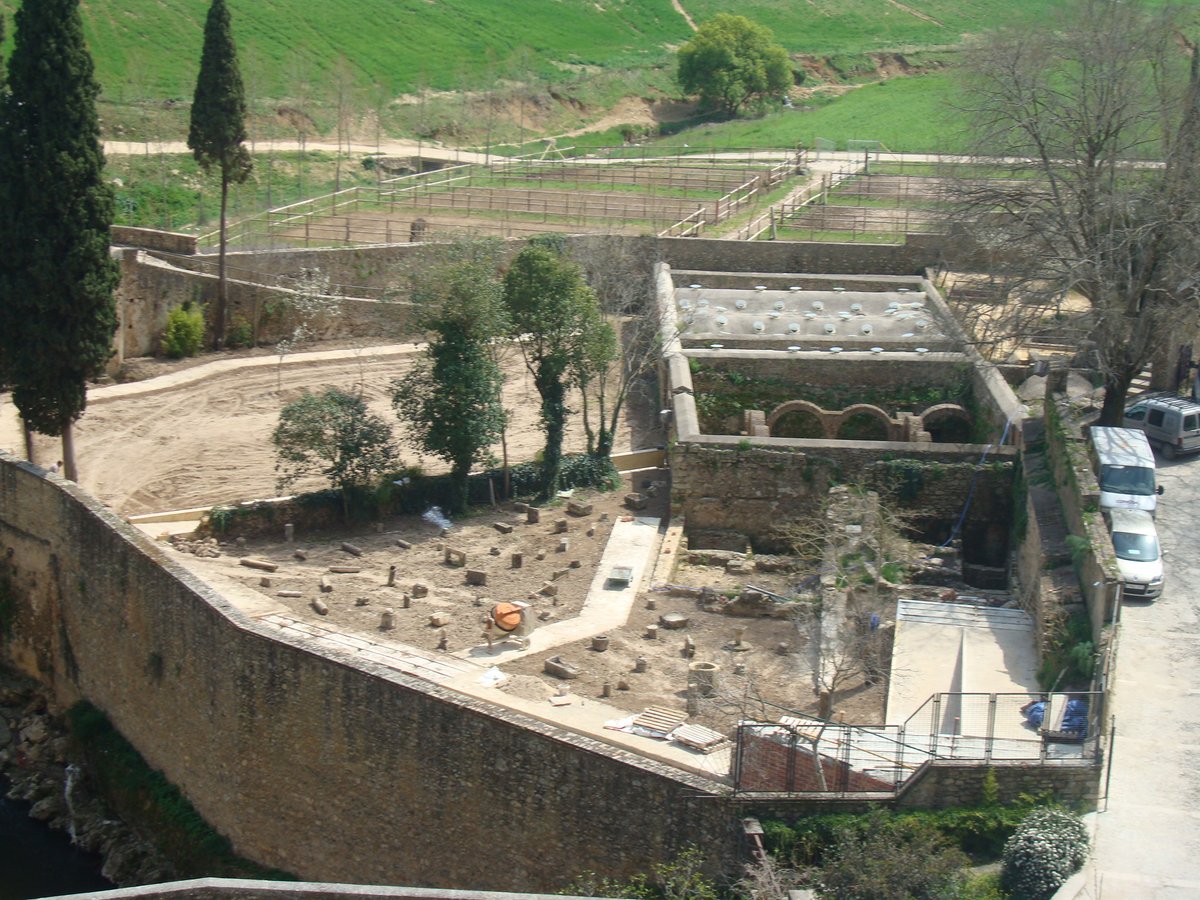
The Arab Baths of Ronda, located outside the known urban area in the Barrio de San Miguel, are a singular find. During the Middle Ages, the Barrio de San Miguel was a thriving Islamic artisan and agricultural arrabal, where industries such as potteries and tanneries were prevalent. Established as a fundamental aspect of the Islamic urban culture, these baths were used for both religious rituals and social gatherings, even serving as a place to welcome visitors.
For the water supply, a waterwheel (noria) was used near the confluence of Arroyo de las Culebras and River Guadalevín to gather water. The water was first stored in a small tank (aljibe) and then carried through a small aqueduct to the first room of the bath (leñera), where the caldera was found. The caldera heated only a small part of the water; the rest of the heat was provided through subterranean channels (hipocausto). Hot vapor was produced by pouring water onto heated floors (leñera) in the hot and temperate rooms. A small basin next to the aljibe was used for filling the containers.
Sources: Wikipedia, OpenStreetMap, Wikidata, Wikimedia Commons
Written by Nicolo Ciampini
Discuss this with the author and others
No comments yet. Be the first to start the conversation.