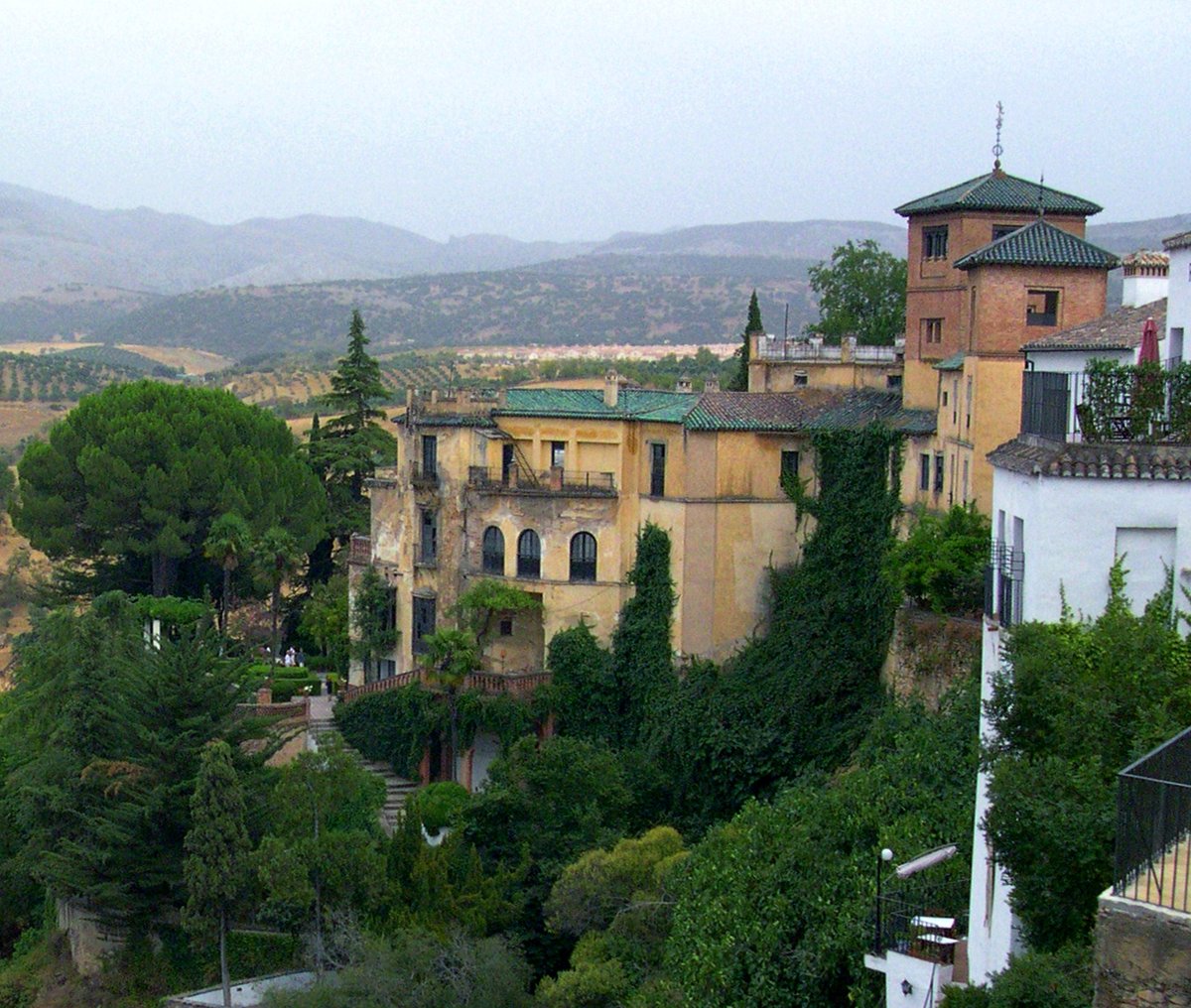

Casa del Rey Moro, situated in Ronda, Spain, is a monumental complex dating back to the 14th century. It's divided into three main parts: an ancient water mine, a neo-Mudéjar house, and a garden designed by Jean-Claude Nicolas Forestier. The complex stretches across approximately 3700 m² of land, overlooking the Tajo in the northern part of the old Muslim city, opposite the Puerta de Almocábar and the old Alcázar. The property was initially built during the reign of the Merinids, who controlled some cities on the western border of the Nasrid Kingdom.
Ronda was a crucial city in the defense of the Nasrid Kingdom, and a water mill was constructed to supply water from the Guadalevín River during sieges. The mine played a key role during the recapture of Ronda by the Castilian army in 1485 when they managed to access it by a weak side. After the recapture, the mine and the site lay dormant until the 18th century, when a house was built on the mill. However, the bedroom of this house still shows remnants of a hidden escape route, designed as a high, narrow passageway leading from the room through the wall and opening onto a set of steps that would have led down to the garden and, eventually, to the Tajo and the possibility of escape.
Casa del Rey Moro belongs to various noble members of the Salvatierra family, who acquired it throughout the 18th and 19th centuries. Today, the mine, the garden, and the neo-Mudéjar house are open to the public for visits from Monday to Sunday.
Sources: Wikipedia, OpenStreetMap, Wikidata, Wikimedia Commons
Written by Nicolo Ciampini
Discuss this with the author and others
No comments yet. Be the first to start the conversation.