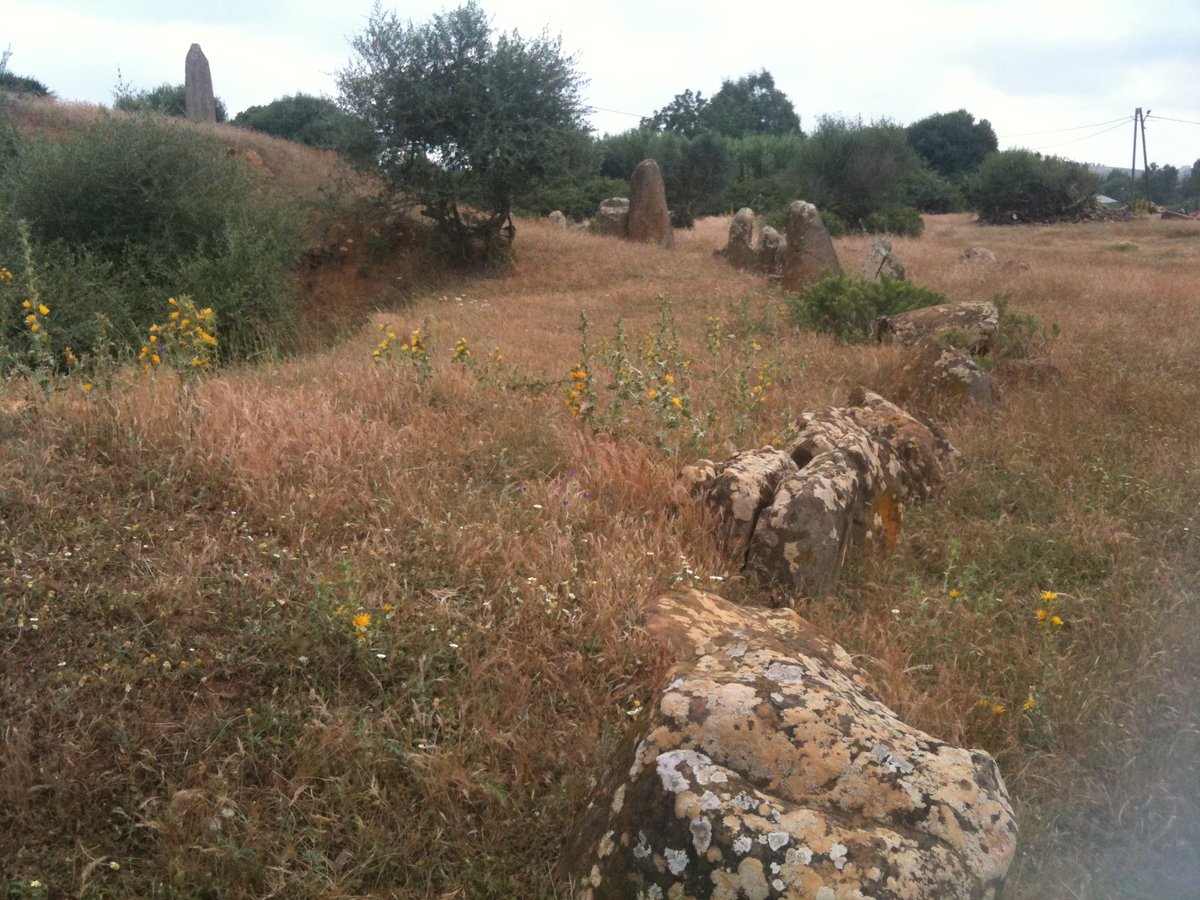

Located 15 kilometers southeast of Asilah, the archaeological site of Mzoura (also known as Msoura) consists of 167 monoliths surrounding a tumulus. The tumulus measures 58 m long, 54 m wide, and 6 m high. While the average height of the monoliths is 1.5 m, one specific monolith known as El Uted measures more than 5 m.
Legend claims the site is the tomb of the giant Antaeus, son of Gaia and Uranus. According to the Greek-Roman biographer Lucius Plutarch, the Roman general Quintus Sertorius was shown the site in 82 BCE, excavated the tomb, and found the body of the giant. Sertorius then performed a sacrifice and refilled the tomb. While the story is apocryphal, it suggests that Ancient North Africans engaged in ancestor worship and that the person buried there was likely an important tribal war chief or ruler.
Dated to the 4th or 3rd century BC based on the dating of amphora found in the mound, the site likely marks the beginnings of the Kingdom of Mauretania. The Moroccan Ministry of Culture added Mzoura to the list of national heritage sites on 27 January 2025. The site remains a significant archaeological feature, though it bears an X-scar from a botched excavation in 1935.
Sources: Wikipedia, OpenStreetMap, Wikidata, Wikimedia Commons



Written by Mutabor
Discuss this with the author and others
No comments yet. Be the first to start the conversation.