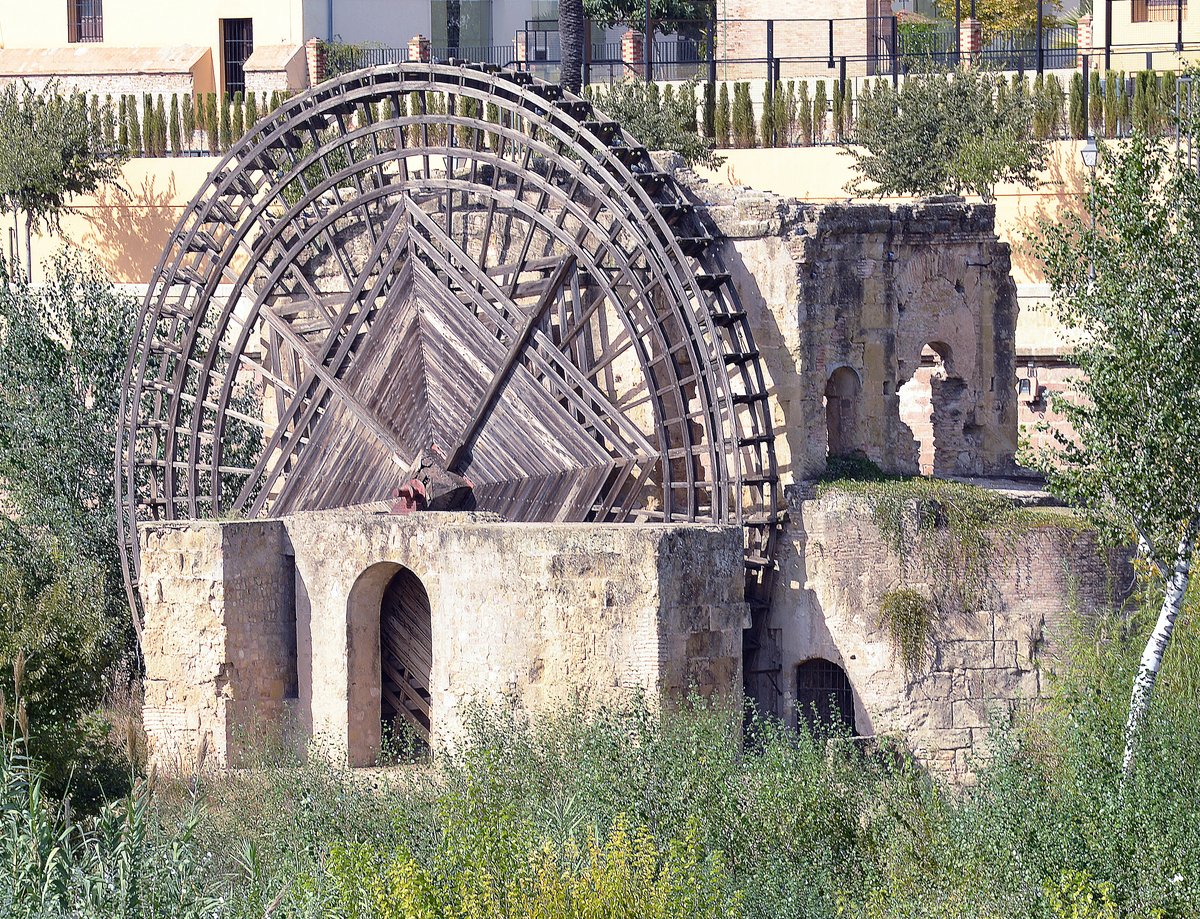

A silent sentinel on the banks of the Guadalquivir River in the heart of Córdoba, Spain, stands the Molino de la Albolafia. Commonly known as a noria, this medieval waterwheel echoes with a sound derived from the Arabic verb meaning to groan or grunt. It is commonly believed to date from the Islamic era of the city, though its exact origins are uncertain.
Originally, this structure played a pivotal role in raising water from the river and into an aqueduct that delivered water to the city and to the nearby Alcázar royal palace. The wheel, which has a diameter of 15 meters, was propelled by the force of the river's current. Buckets around its circumference collected water and dropped it into the aqueduct's channel. In the 16th or 17th century, the noria was converted into a flour mill which remained operational until the 20th century.
In 1492, the wheel of the noria was dismantled on the orders of Queen Isabella, who complained of the noise it made as she lay sick inside the Christian-era Alcázar. Following restorations in the 1960s and a replacement of the wooden wheel with an exact replica between 1993 and 1994, the structure remains a significant part of the historic center of Córdoba.
Sources: Wikipedia, OpenStreetMap, Wikidata, Wikimedia Commons

Written by Nik Frost
Discuss this with the author and others
No comments yet. Be the first to start the conversation.