


Like much in the city of Riga, the beer production on the shore (of the Sarkan Daugava, the Red Dvina) was founded by a thoroughly “German German” – the Bavarian Joachim Dauder. It is in his honor that the estate is now named Dauderi. This happened in 1865, and at first, next to the sawmills of Sarkan Daugava, there appeared only a small brewery and a glass production facility – containers were needed. A decade and a half later, the business was bought by a representative of a noble Riga family – Adolf von Bingner. A descendant of the Baltic German barons, who had participated in Riga’s governance for generations – including aldermen and the burgomaster Robert, his father – he decided to make the Waldschlößchen brand the leading one in the Russian Empire. The expansion of the beer industry was supported by a recently obtained chemistry diploma, and the quality foamy drink quickly added to the family budget.

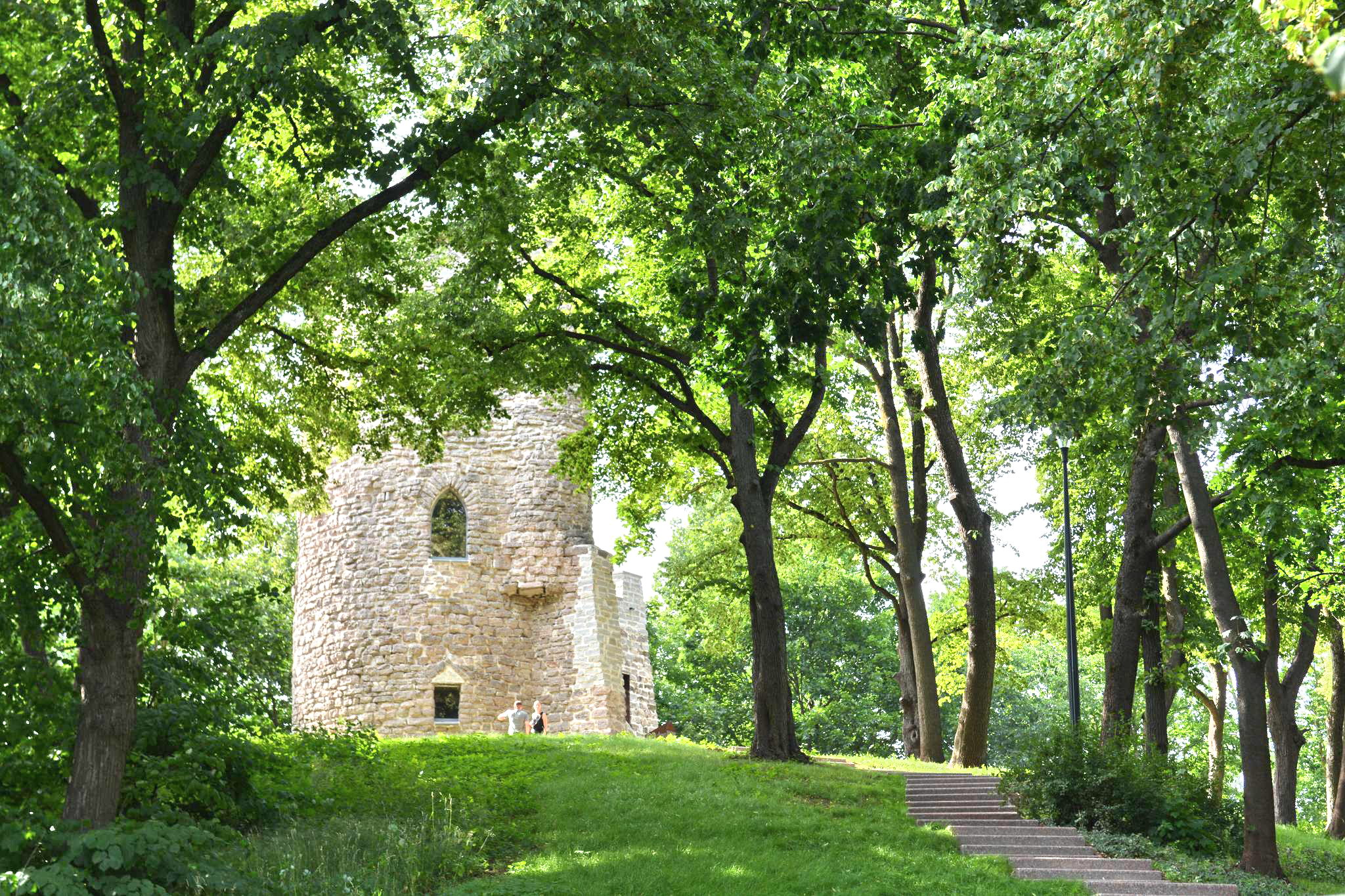
In 1897, a luxurious villa in the Neo-Renaissance style was built, inspired by German romanticism. Turrets, columns, spires in the spirit of a medieval castle – all this was the product of Friedrich Zeiberlich’s imagination. A civil architect who graduated from the Riga Polytechnic, he built several tenement houses and the Kimmel brewery, which was on Knight Street (now Bruninieku). He is also the author of the city pawnshop on Zirgu Street, and the masterpiece of industrial architecture is the wonderfully preserved Russian Electrotechnical Society factory, on whose pediment sits Zeus the Thunderer, with lightning bolts. Today, alas, it is no longer the VEF factory but an administrative building... But let’s return to Sarkan Daugava. The buildings were complemented by their surroundings – a beautiful garden of 2.2 hectares, designed by the best landscape architect of Livonia, Georg Kufalt. Incidentally, he also designed – in a good sense – the parks Arkādija and Ziedondarzs. The garden near the brewery differs from the flat majority of Riga’s counterparts by its wonderful relief – here the dunes of northern Riga played a role. To add more allusions to old Germany, “ruins” of a medieval castle were arranged here, and an artificial pond was dug. In short, the construction company of Robert Hezerman did its best. However, World War I and the subsequent turbulent events swept the German aristocracy out of the young Latvian Republic, and the estate passed under the control of a bank and palace. And what do you think – following the principle “what I guard, I own,” in Dauderi (as the estate was “nationalized”) in 1937 settled Karlis Ulmanis himself, who by that time already combined the posts of prime minister and president.

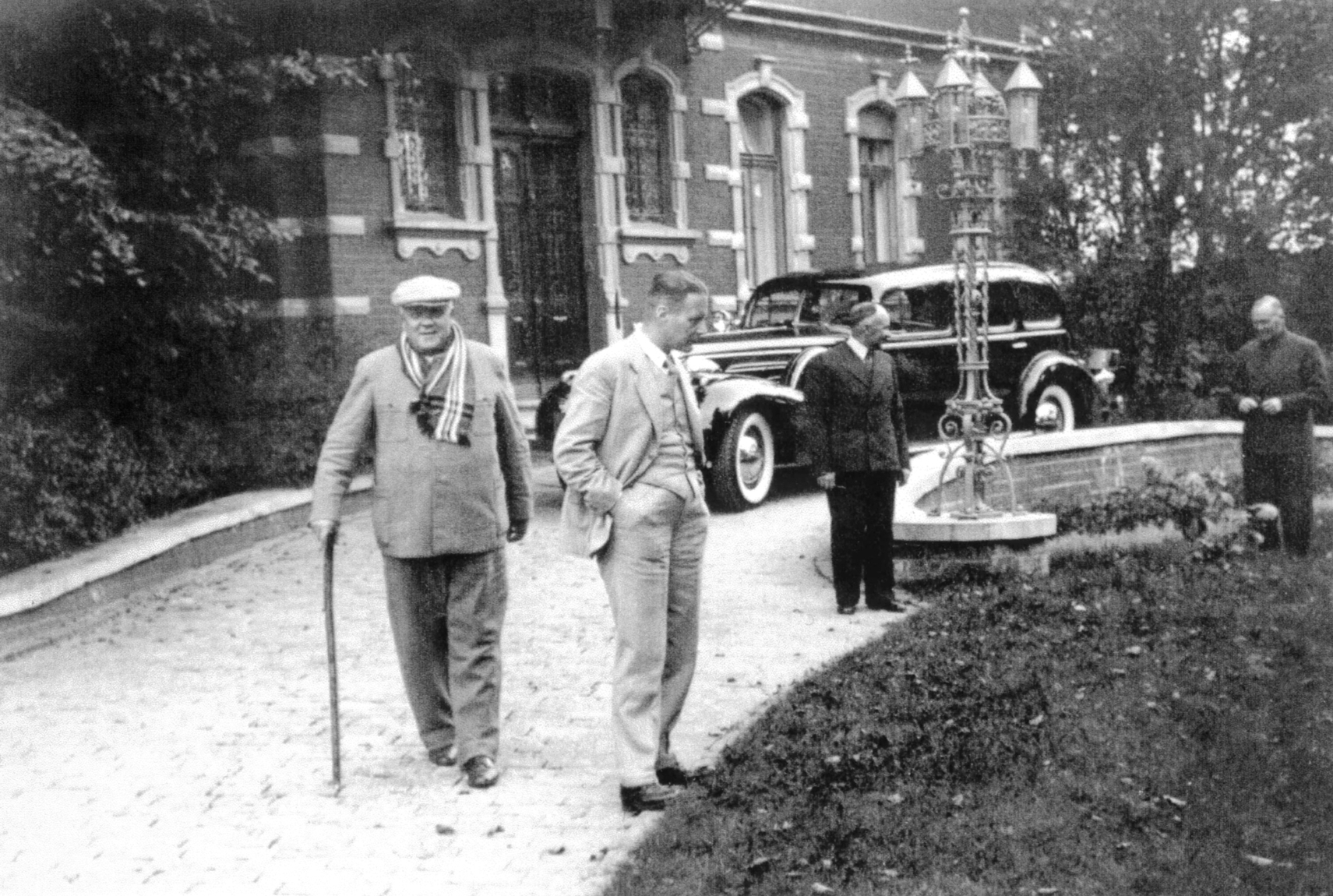
A gift from the bank for his 60th birthday – that was how the transfer of ownership of the palace to Mr. Ulmanis, from the already repatriated brewing family, was formalized. The German family proved to be savvy – the owners of Waldschlößchen took advantage of the offer to buy out their business, albeit not at the most favorable price. On its basis, the brand Aldaris, known to all of us, was created, while the former owners left for their historical homeland with a tidy sum. Those relatives and acquaintances who lingered until 1939 left Latvia almost literally naked. All the property of the Baltic Germans passed to the state; payments were supposed to be made through a clever system of mutual settlements with the Third Reich, which, of course, did not happen due to Latvia’s incorporation into the USSR and the war. Meanwhile, the new Latvian nobility rested and had fun in the luxurious interiors of Dauderi – and this prestigious real estate was indeed the personal property of the dictator. Official receptions were held in the Riga Castle, while in the rooms of Dauderi he relaxed in a close circle, which included, among others, the young foreign minister Vilhelms Munters. According to some contemporaries, it was the deep personal attachment of the elderly Vadonis to the parquet diplomat that was the fateful reason why the Latvian Republic ended its days so ingloriously in 1939-40. For now, nothing foreshadowed this, and the gentlemen, content with life, lounged in the pool shaped like Latvia. They also admired the trusting roe deer, a herd of which was bred in the park grounds. Of course, ordinary mortals could not wander here. Again, forbidden territory. Another change of socio-political order for Latvia in the 20th century, and here come changes for Dauderi. A longtime resident of Mežaparks and Sarkan Daugava, Vladimir Steshenko, recounts: “A lot happened there after the war. Unverified: allegedly, right after the war, a SMERSH unit (‘office’) was located there for a very short time. Not documented. Then it came under the care of Aldaris; there was a kindergarten and... a kind of dormitory (rooms) for young specialists. For example, the future head of the brewery, Inara Sh., after graduating from Jelgava Academy, temporarily lived in the ‘president’s residence,’ then indeed became the company’s leader. Later, a culture museum opened there, which initially ‘coexisted’ with the enterprise, which held its events in the museum. The eastern side of Aldaris, and the northern side as well, were a ‘curse’ for security. It was easiest to penetrate the factory there, especially through the common yard. Overcoming the concrete fence in the park’s thickets was no problem. And there were plenty of hunters for free beer. But there were no surveillance cameras then! The departmental nature of the site lasted until the late 1980s, when the Museum of Latvian History took on the reconstruction of the ‘abandoned place.’ The Dauderi collection was based on the collection of the emigrant Gaidis Graudins. He meticulously searched abroad for all sorts of artifacts taken out of native Latvia by the ‘third wave’ of emigration and produced in exile – and he gathered thousands of medals, printed editions, national costumes... All this is now exhibited in the museum branch located in the palace. The castle’s collection exposition includes stages of ownership changes, Riga’s industrialization, wealthy German families, World War I, Ulmanis’s authoritarian regime, and the subsequent Sovietization.”
Sources:
https://bb.lv/storage/upload/d8.jpg
https://bb.lv/storage/upload/d5.jpg
https://news.inbox.lv/14wxsny-progulki-u-rezidencii-karlisa-ulmanisa-v-takih-usloviah-trudilsa-vozd

Written by Jermaine
Discuss this with the author and others
No comments yet. Be the first to start the conversation.