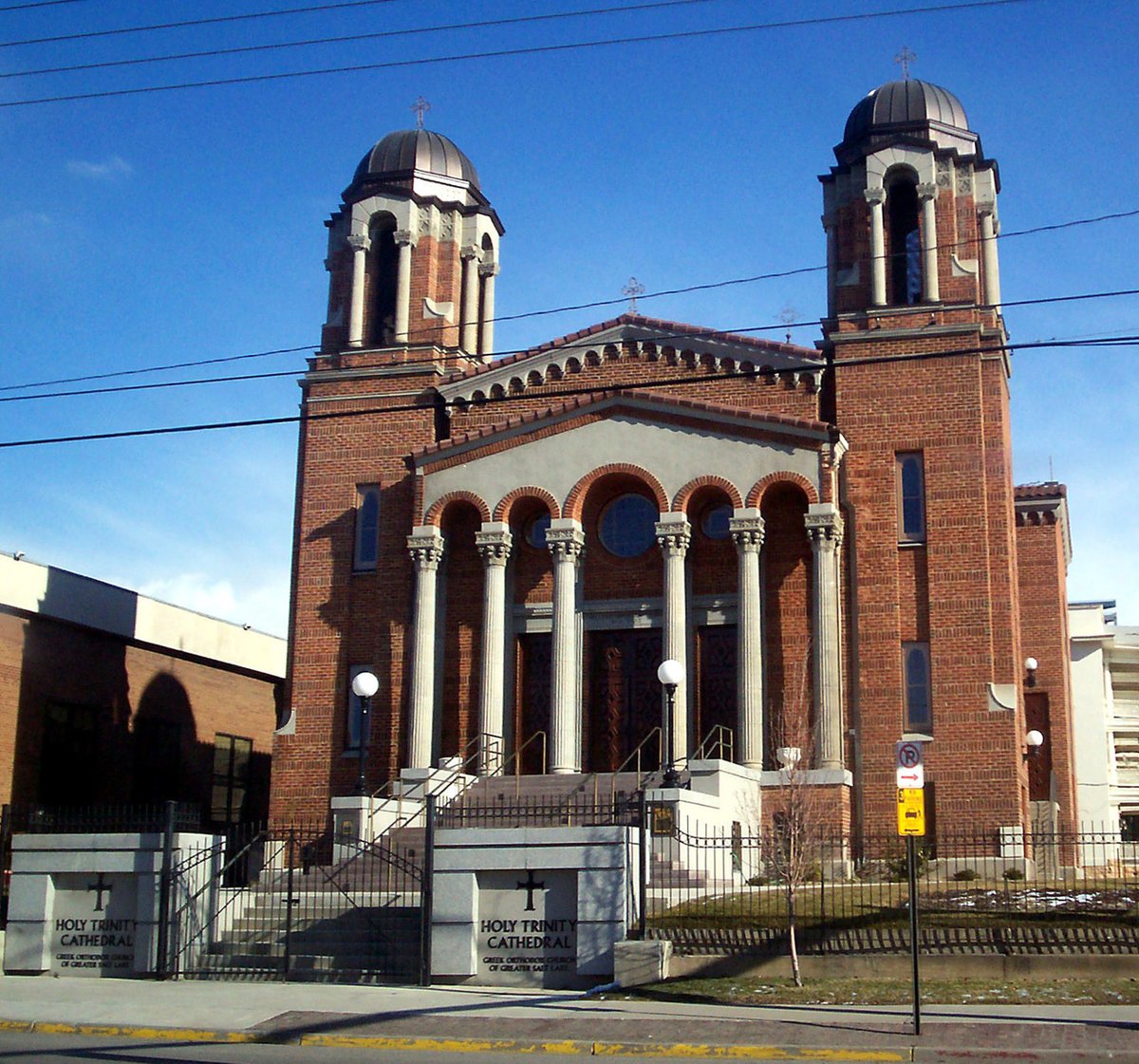
The Holy Trinity Cathedral features Byzantine architecture, which was unusual for the region. The building stands as a prominent landmark in the Salt Lake Valley, designed in a style that differs from the standard architecture of the surrounding area.
The local Greek community hit the ground running in 1905, becoming the oldest Greek Orthodox parish between the Mississippi and the Pacific. They started with a basic building that served Greeks, Serbians, and Russians alike. But the community grew faster than the floor plan could handle, forcing a move to the current site at Third South and Second West.
The current structure is a joint operation between a local firm, Pope and Burton, and a Greek architect named N. A. Dokas, who also built the Annunciation Greek Orthodox Cathedral in Chicago. The community laid the cornerstone in 1923, held the first service in 1924, and waited until the mortgage was fully cleared before the official consecration on August 2, 1925.
The building was elevated to cathedral status in 1968 by Archbishop Iakovos. Today, the lower level of the building houses the Hellenic Cultural Museum, which opened in 1992. The museum focuses on early Greek immigration and immigrant life in Utah and the Salt Lake Valley.
Sources: Wikipedia, OpenStreetMap, Wikidata, Wikimedia Commons

Written by Kyle McLonely
Discuss this with the author and others
No comments yet. Be the first to start the conversation.