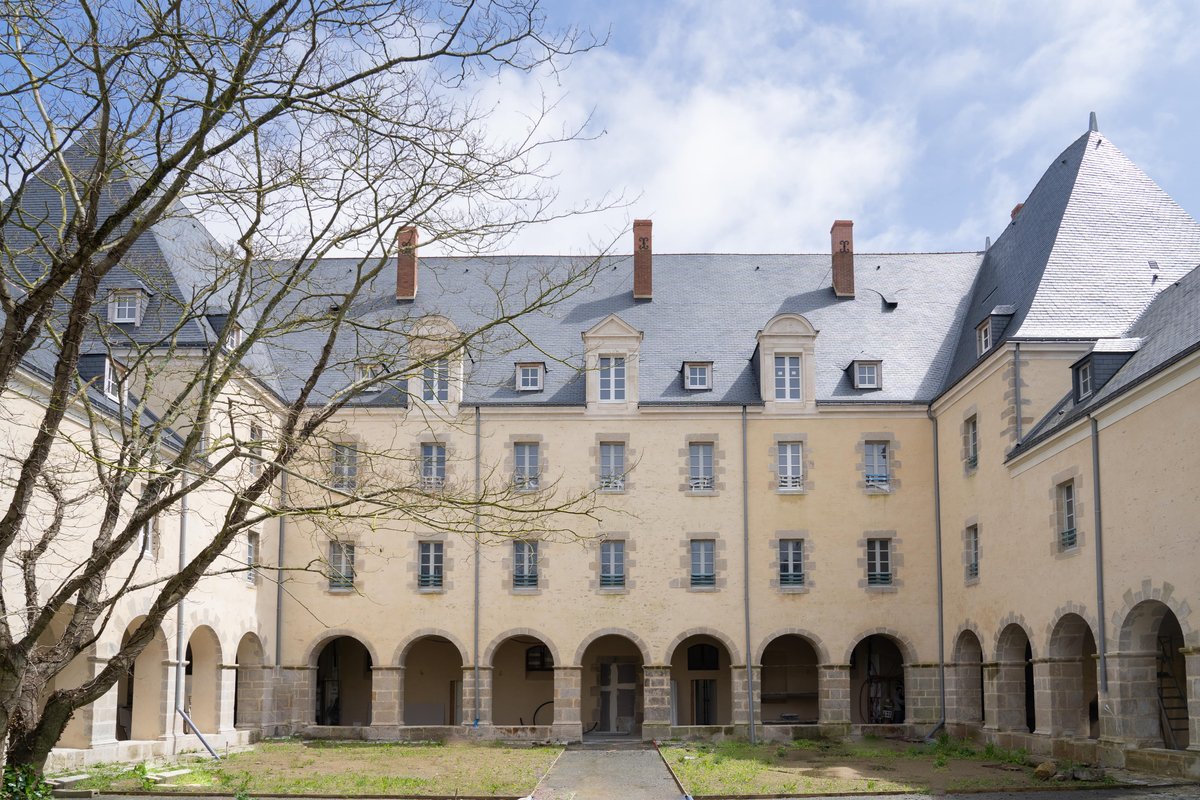

In the town of Guérande, the Ancien couvent des Ursulines stands as a significant site of heritage. Originally known as the manoir de la Porte-Calon, its name refers to Olivier Calon, the first known lord of La Porte in 1515. The manor later passed to the Secillon family before being acquired by the Ursulines in 1646, who established themselves there and built the convent.
The complex features a large body with a return wing completed in 1704, complemented by two additional return wings and a large 19th-century chapel. Located in the faubourg Saint-Michel, it sits near the Saint-Michel chapel, 600 meters southeast of the main gate of the medieval city.
Following the Revolution, the Ursulines were expelled and the site served as a hospice for twelve years. In 1810, the commune took ownership and established a secondary school. In 1823, the commune ceded the college to the bishopric for budgetary reasons. By royal ordinance of Charles X, it became a diocesan seminary on November 17, 1824, remaining so until 1906 when the law of separation of Church and State caused its closure.
During the First World War, the old convent hosted German and Austro-Hungarian nationals. It returned to being a diocesan seminary in 1922 before closing its doors permanently in 1966. The monument was inscribed as a historical monument in 2001. In 2018, the François 1er group acquired the site for restoration work, which was completed at the end of the summer of 2023.
Sources: Wikipedia, OpenStreetMap, Wikidata, Wikimedia Commons

Written by Nicolo Ciampini
Discuss this with the author and others
No comments yet. Be the first to start the conversation.