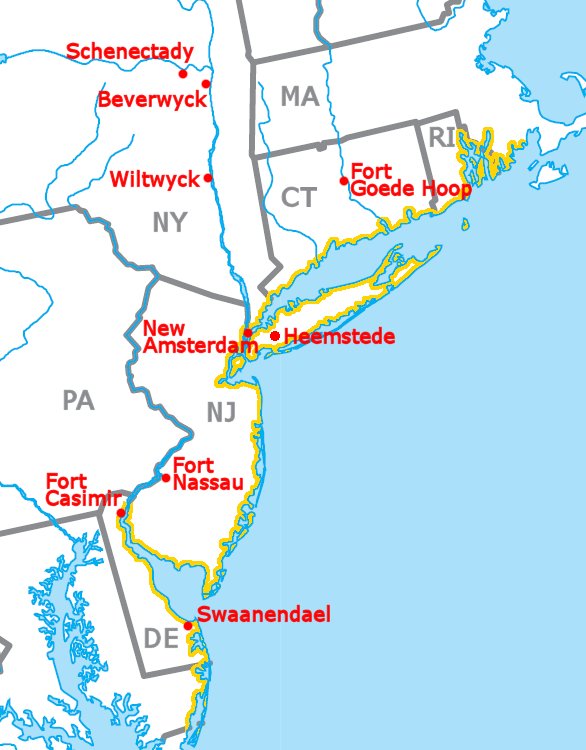
Fort Casimir sat on a barrier island. That island is gone now. In the 1600s, this site was the focal point of a three-nation struggle for the control of the Delaware River. The Dutch called the water the Zuyd Rivier and wanted to control its lucrative trade.
Peter Stuyvesant arrived in 1647. He wanted to re-assert control of the region. He moved a previous fort to the western bank downstream from Fort Christina, naming it Fort Casimir. He named it after a Polish king or the contemporary John Casimir. This was a strategic move because the richest fur-trapping area of the native Susquehannock and Lenape populations was inland to the west.
It did not stay Dutch for long. The Swedes took it in 1654. They renamed it Fort Trinity. The Dutch kicked them out in 1655. They called it New Amstel. Finally, the English arrived in 1664. They took it for themselves. The Swedes even burned their own nearby fort as they retreated.
By 1675, the fort was abandoned. The land was filled with ash. The site became commercial real estate. A parking lot and several houses sit above the remains of the fort.
Sources: Wikipedia, OpenStreetMap, Wikidata, Wikimedia Commons
Written by Leroy
Discuss this with the author and others
No comments yet. Be the first to start the conversation.