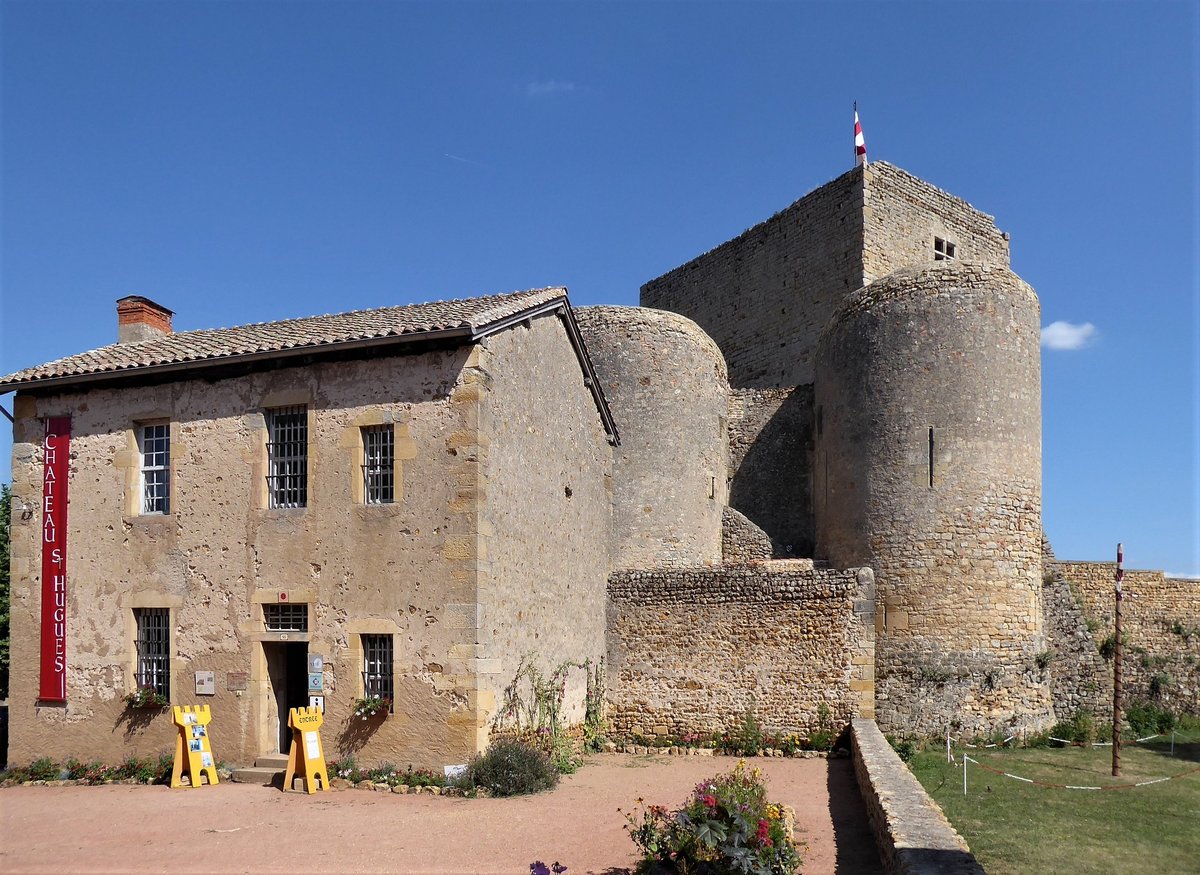

The Château de Semur-en-Brionnais is located in Semur-en-Brionnais, Saône-et-Loire, at the narrowest point of a rocky spur. Although much of the fortified ensemble that once occupied the entire rocky spur is gone, remnants of a poterne and a high rectangular tower remain. The poterne, modified in 1760, consisted of a door located on the upper floor, defended by a portcullis and by machicolations on an arcade. This door was eventually blocked and stairs were built in its place to provide access to the first floor of the towers.
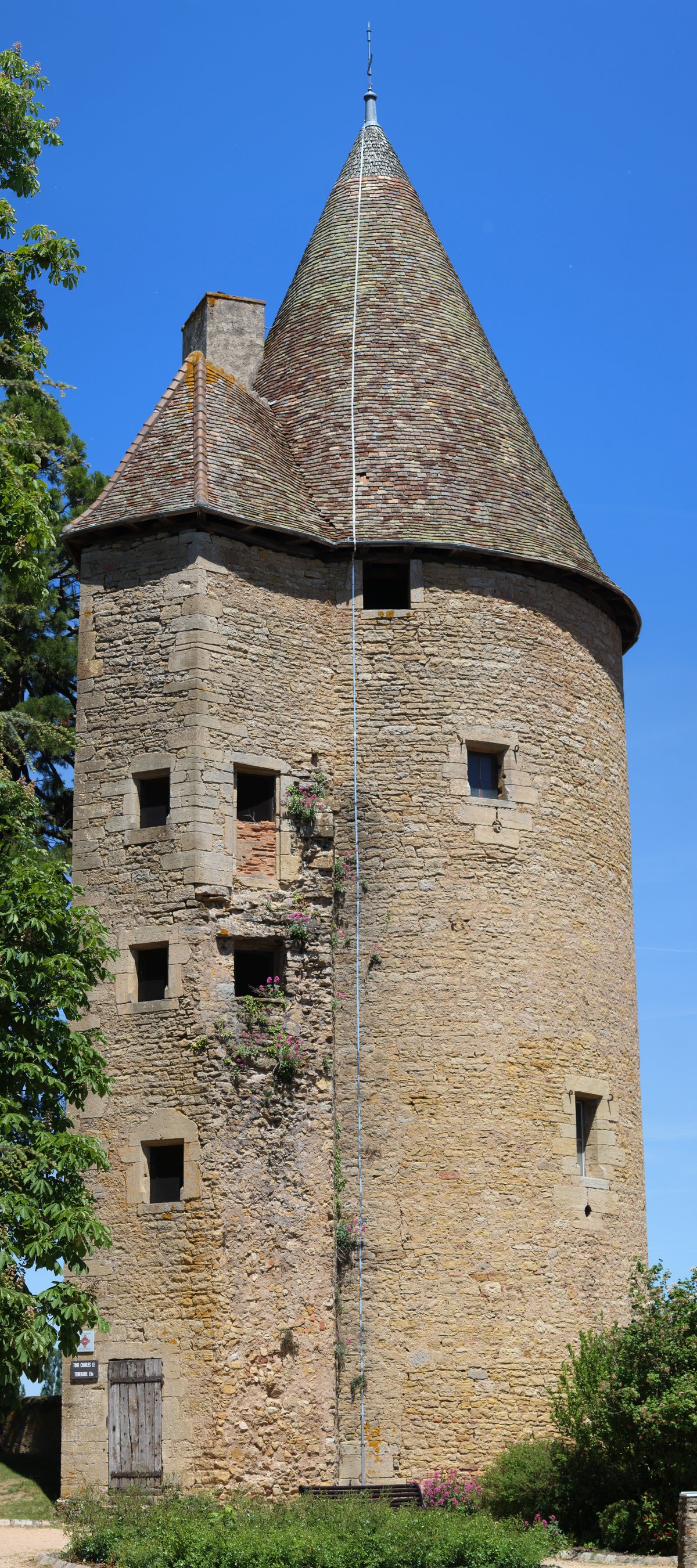
The northern tower has a cistern, while the western tower features a staircase built into the thickness of the wall. The rectangular tower stands 22 meters high, with walls at the base measuring two meters thick. The lower levels of the donjon seem to date back to the end of the 10th century, but the majority of the construction is the result of successive renovations from the 11th to the 15th century.
Freelan de Chamelet - or Chamilly - became the lord of Semur, and his family became one of the most powerful in Bourgogne. Over the centuries, the castle passed through many hands, including the family of Gaspard-Alexandre de Coligny. Between 1397 and 1477, the dukes of Bourgogne installed captains in the castle, fortifying the donjon and maintaining the furniture and artillery.
Sources: Wikipedia, OpenStreetMap, Wikidata, Wikimedia Commons
Written by Nicolo Ciampini
Discuss this with the author and others
No comments yet. Be the first to start the conversation.