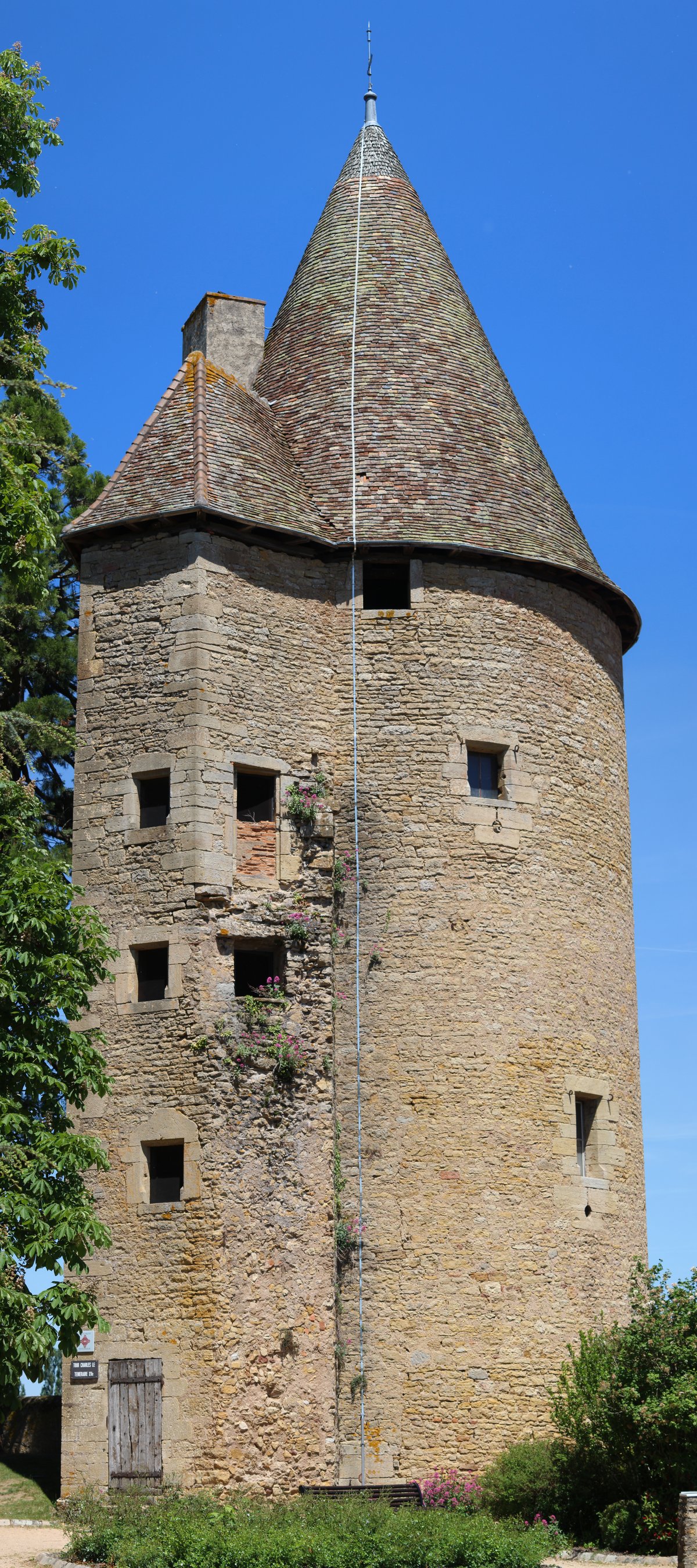

Located in the heart of the Charolles commune in the Saône-et-Loire department, the [Château de Charles-Le-Téméraire](https://fr.wikipedia.org/wiki/Château_de_Charles-le-Téméraire) has a history that spans over seven centuries. Built in the 13th century during the Moyen Age, the château was initially constructed as a residential building for the Comte de Chalon. However, over time, the château underwent multiple constructions and renovations, transforming it into a military post and serving as the center of a châtellenie for the [comté de Charolais](https://fr.wikipedia.org/wiki/Charolais_(pays)).
The château has experienced multiple transformations and played host to various historical figures, such as Hugue IV, Duke of Bourgogne, the French monarch, Louis IX, and military leaders like Philippe le Bon. The château had cannons and arbalests for defense and was reinforced with false breaches and bulwarks to resist siege artillery in the 15th century. The main entrance was strengthened in 1460, while the Tour des Archives, also known as the Téméraire Tower, was built between 1471 and 1474.
By the 16th century, the château was in ruins, with parts being used as a prison. The logis burned in 1694, and the grande tour collapsed in 1705. The château remained in ruins until the early 19th century, when the municipal government bought it.
Today, the [Château de Charles-Le-Téméraire](https://fr.wikipedia.org/wiki/Château_de_Charles-le-Téméraire) stands as a testament to France's rich history. The castle is semi-circular in plan, with a tower-porch providing access to the courtyard. The southern entrance is an arc-braced cart portal and a rectangular pedestrian portal. The Diamond Tower, a high, circular tower with no windows, is a prominent feature of the castle. Visitors can explore the stunning architecture and history of the Château de Charles-Le-Téméraire.
Sources: Wikipedia, OpenStreetMap, Wikidata, Wikimedia Commons
Written by Nicolo Ciampini
Discuss this with the author and others
No comments yet. Be the first to start the conversation.