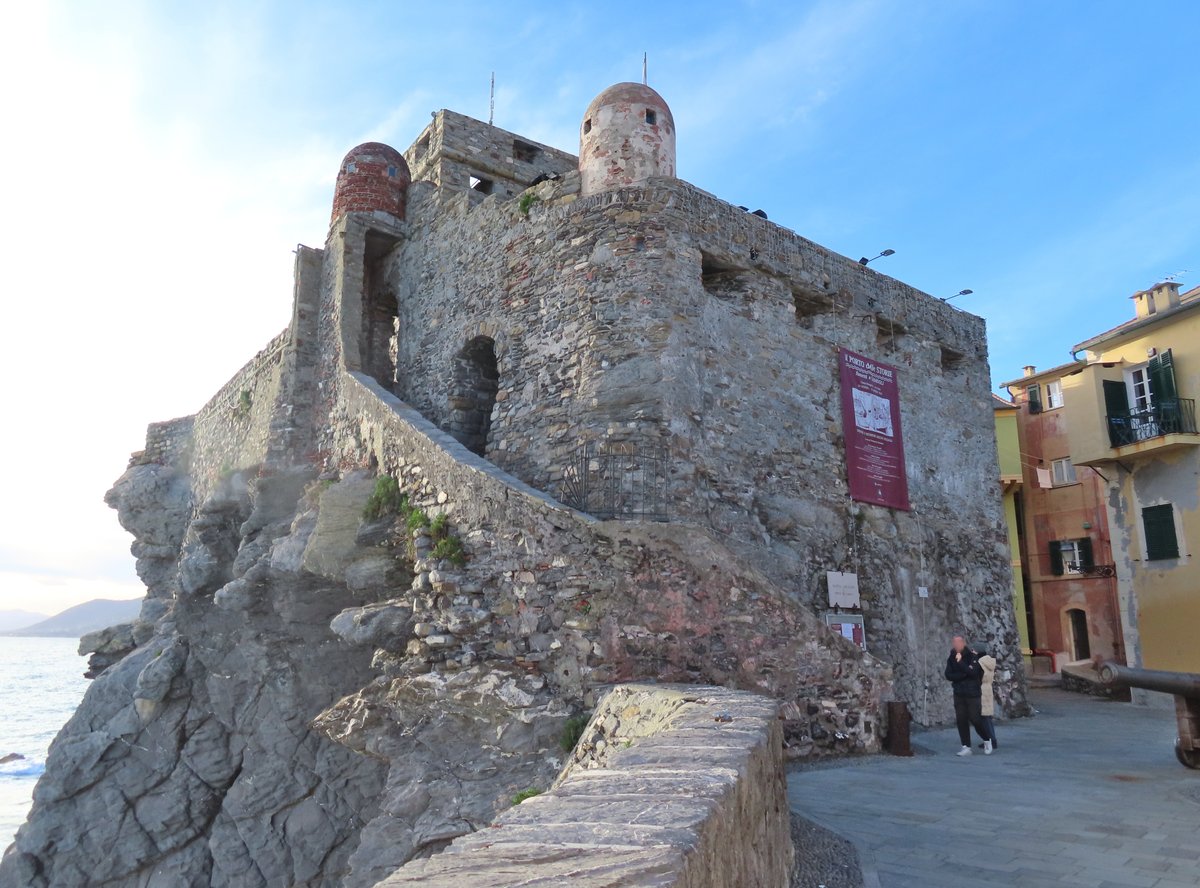

The Castello della Dragonara, also known as Castel Dragone, is a defensive building located in the municipality of Camogli. While the exact construction date is uncertain due to fragmentary sources, it is believed the manor was built around the first half of the 11th century. It originally served as a lookout and defense for the village and the nearby coastline, while also providing a place for the locals, known as camoglini, to elect representatives and find refuge from pirate raids.
Relations with the Republic of Genoa were often tense. In 1448, the Republic ordered the immediate destruction of the castle due to high tensions between Camogli, Recco, and the Republic. The inhabitants complied with the destruction, but only six years later, they rebuilt it and handed it over to the doge of the Republic. Throughout the 1400s, the structure was repeatedly reinforced or rebuilt, including a reconstruction in 1430 and another after a 1438 siege by the partisans of the Duchy of Milan.
In the 16th century, the castle was abandoned as a military post and used as a prison. After decades of abandonment, it was recovered in the 1970s and turned into the Tirrenian aquarium. Managed by the Azienda Autonoma di Soggiorno, it featured saltwater tanks containing marine life typical of the Camogli waters, acting as a precursor to the modern aquarium of Genoa. It housed lobsters, eels, and a large grouper before the animals were eventually transferred to the city's aquarium when it closed.
Today, the structure remains on via Isola. It stands as a result of many centuries of repairs and reconstructions by the community of Camogli to protect their maritime village.
Sources: Wikipedia, OpenStreetMap, Wikidata, Wikimedia Commons

Written by Nicolo Ciampini
Discuss this with the author and others
No comments yet. Be the first to start the conversation.