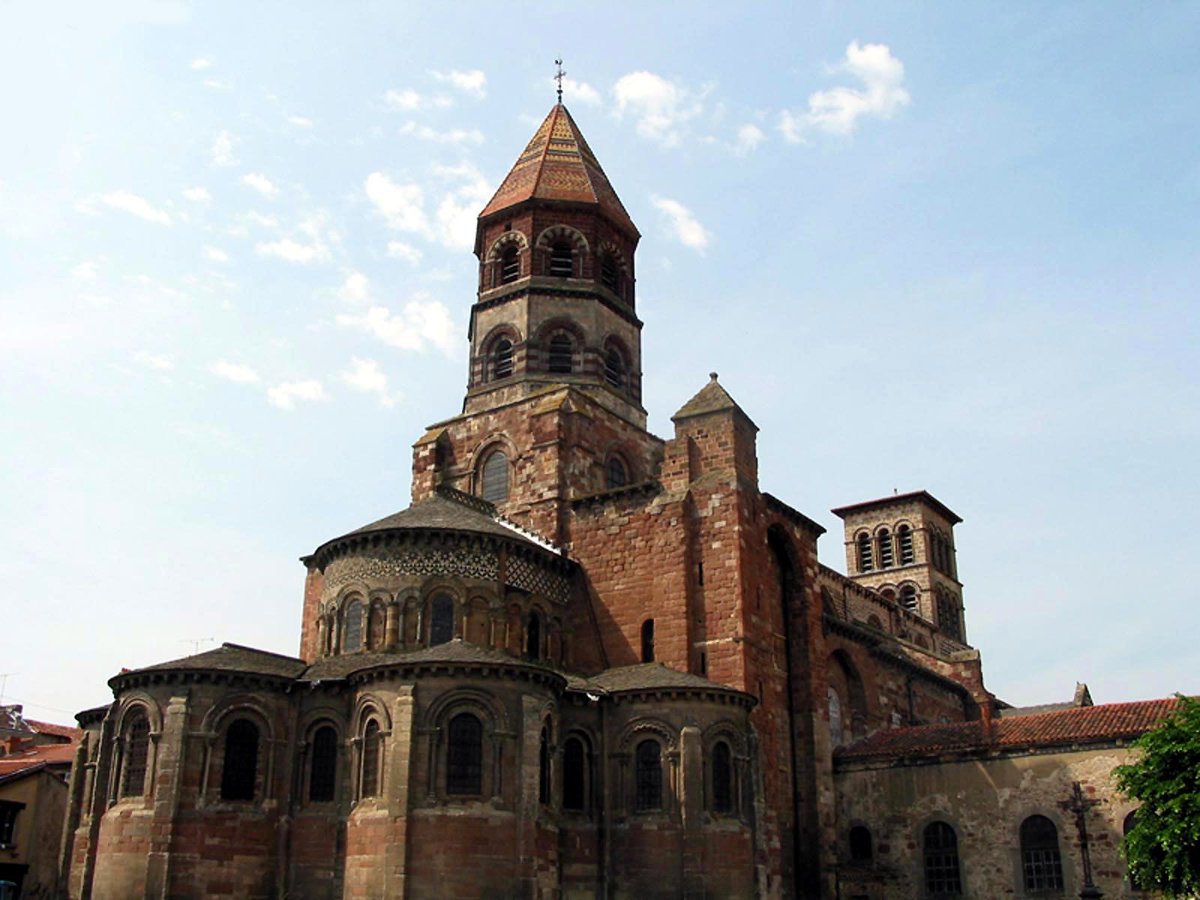

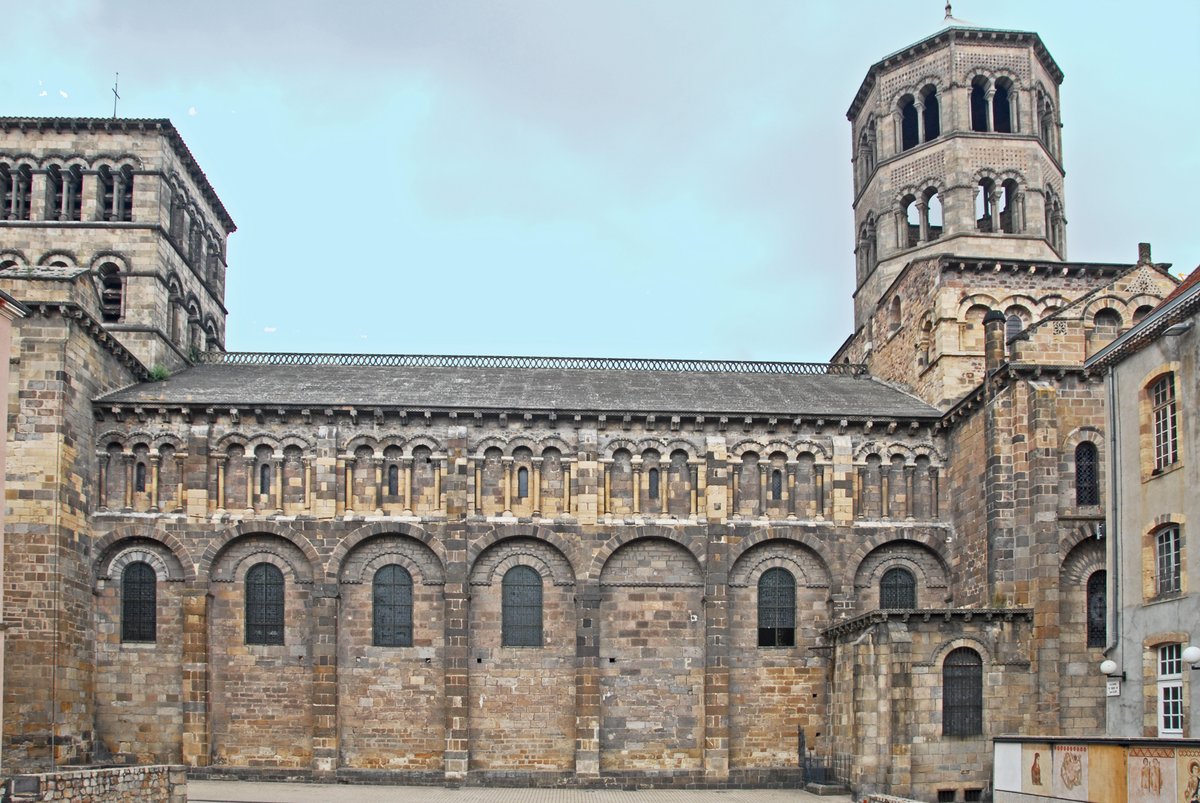
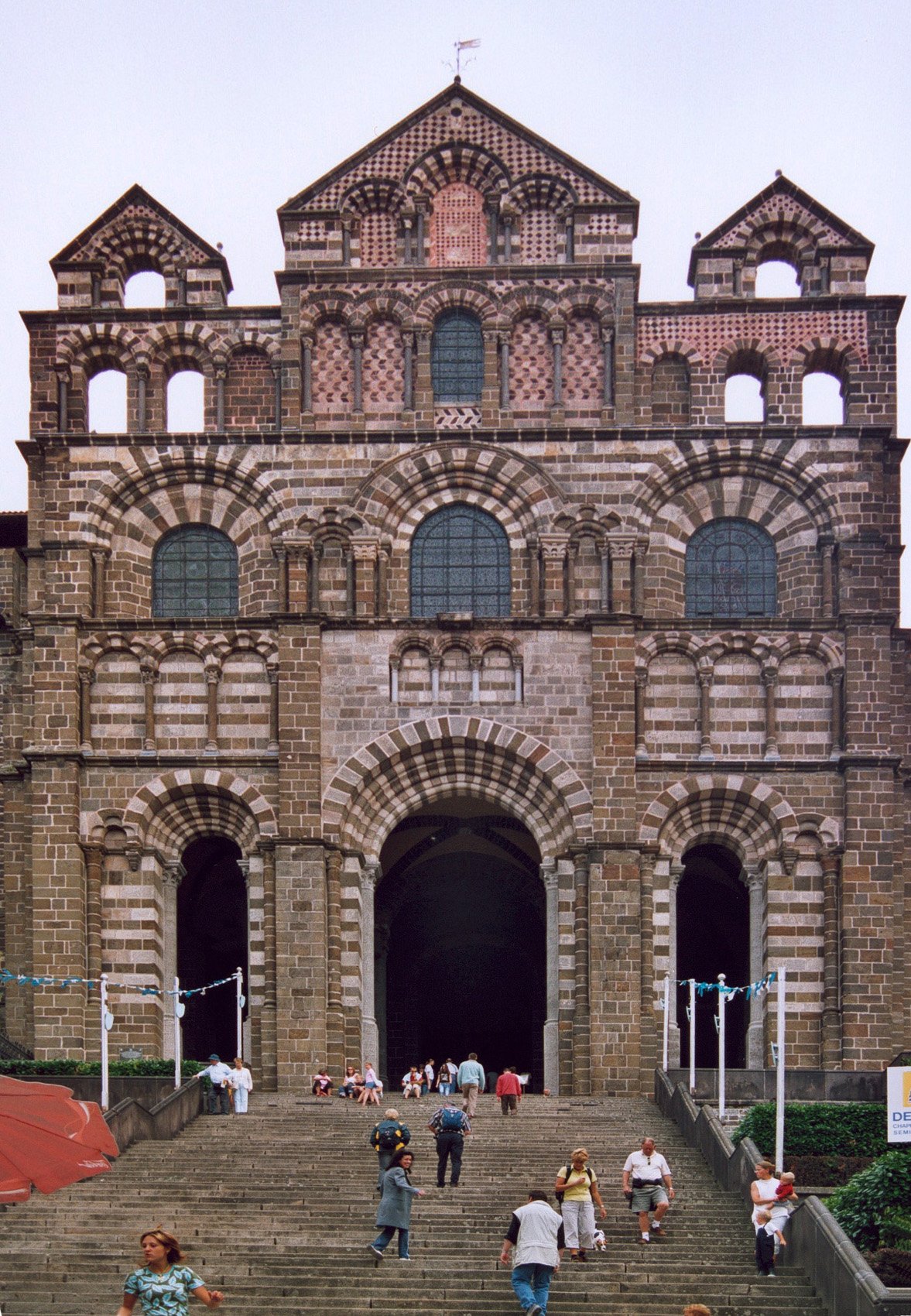
The Basilica of Saint-Julian of Brioude is a masterpiece of Auvergne Romanesque architecture in the Haute-Loire department. It is one of only a small number of churches in France, excluding cathedrals, to have the top three-star ranking from Michelin. The structure is classified as a historic monument and serves as a significant site for artwork and heritage.
The first sanctuary dedicated to Saint Julian dates back to the late 4th century, built on the presumed tomb of the saint by a Spanish lady as a token of gratitude for a fulfilled vow. The Duke Victorius later adorned an early church with marble columns from ancient monuments. By the first quarter of the 12th century, the current Romanesque church was constructed, favored by the development of Brioude as a stop on pilgrimage routes to Santiago de Compostela, Rome, and Jerusalem.
Inside, the basilica features a unique 16th-century mosaic floor across the nave and a Carolingian-era mosaic in the transept. The crypt below the altar contains the relics of Saint Julian, who was martyred on the spot. The building is decorated with fine Romanesque and Gothic capitals, a rare 15th-century polychrome statue of the Virgin Mary, and a large medieval crucifixion known as Christ the leper. The southern aisle also houses one of the best-preserved ensembles of 13th-century Byzantine-style frescoes in France.
Sources: Wikipedia, OpenStreetMap, Wikidata, Wikimedia Commons

Written by Nicolo Ciampini
Discuss this with the author and others
No comments yet. Be the first to start the conversation.