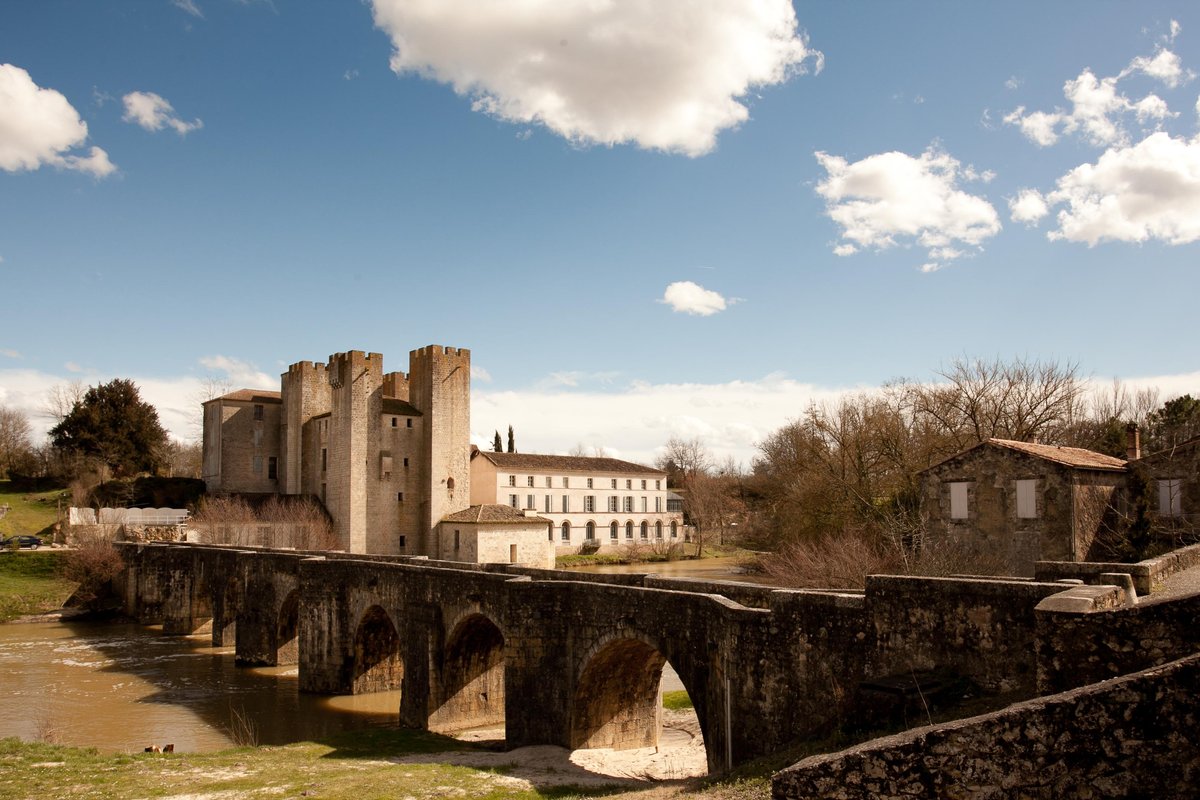

In the heart of southwest France, a structure, which appearingly hails from the 13th century, stands tall. With 10 arches, each spanning from 5.20 to 6 meters, it's quite an imposing sight. Yet, something peculiar catches the eye - the piles' thickness ranges from 2.30 to 4.90 meters, with the deck measuring 3.30 meters in width, staggeringly broadening to 6.30 meters at the maximum girth of the piles - front and back. Was this an audacious design decision, or an indication of incomplete work?
The bridge's tale includes 18th-century repairs, culminating in its acquisition of monument historique classification on November 30, 1960. Strangely enough, a mill named Moulin d' Henri IV, was rebuilt 20 meters upstream before the bridge's construction. Some speculate a hidden link between the two, but so far, no concrete evidence has materialized to support this theory.
Sources: Wikipedia, OpenStreetMap, Wikidata, Wikimedia Commons
Written by Nicolo Ciampini
Discuss this with the author and others
No comments yet. Be the first to start the conversation.