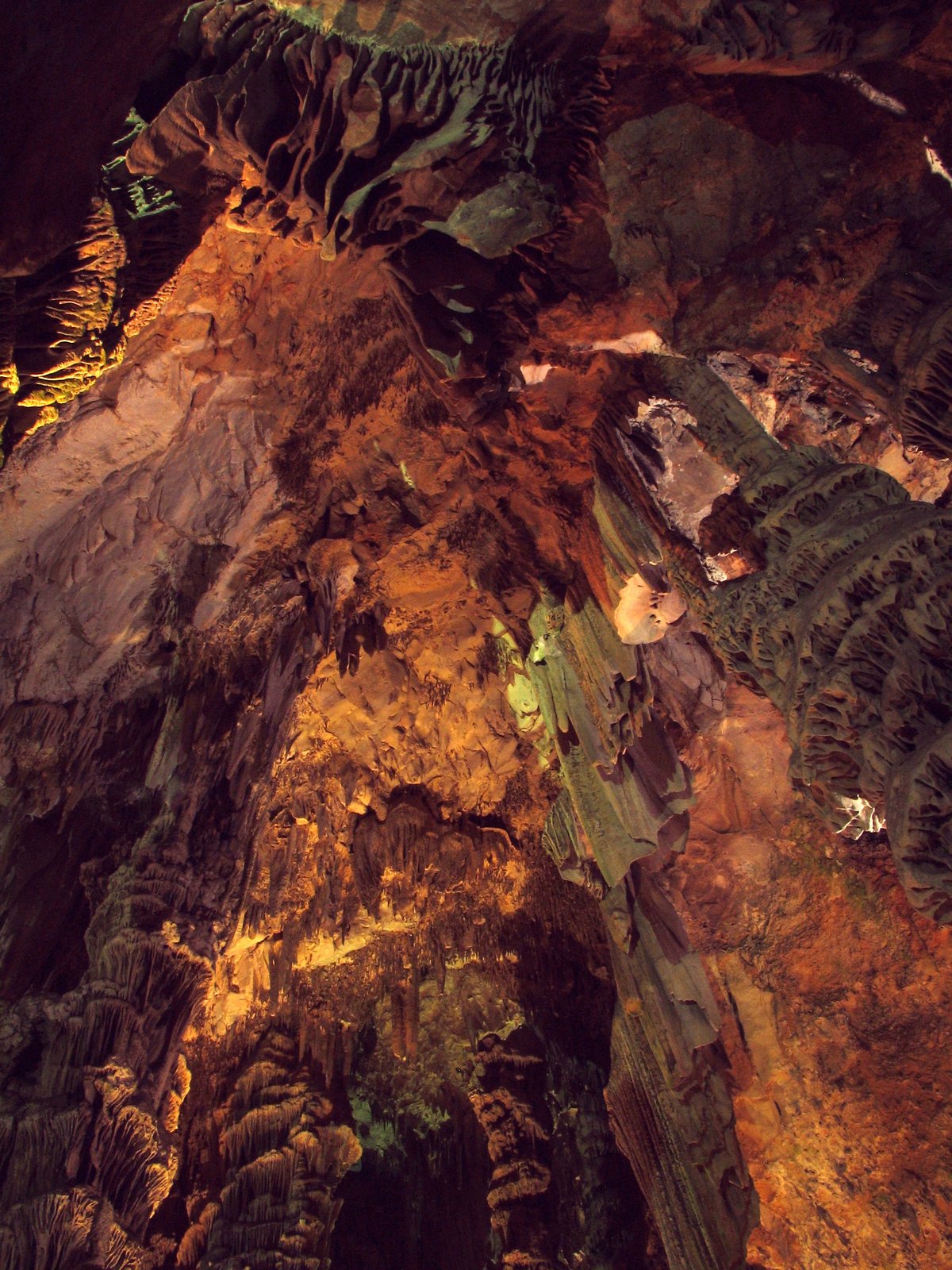

St. Michael's Cave or Old St. Michael's Cave is a network of limestone caves located within the Upper Rock Nature Reserve in the British Overseas Territory of Gibraltar, at a height of over 300 metres (980 ft) above sea level. The cave was created by rainwater slowly seeping through the limestone rock, turning into a weak carbonic acid which gradually dissolved the rock. Through this process, tiny cracks in the Rock's geological fault grew into long passages and large caverns over thousands of years.
The numerous stalactites and stalagmites in the cave are formed by an accumulation of traces of dissolved rock deposited by water dripping from the ground above. Two Neanderthal skulls have been discovered in Gibraltar, indicating they may have visited the cave around 40,000 BC. Alonso Hernández del Portillo, the first historian of Gibraltar, recorded the cave's name as Cueva de San Miguel in 1635. The cave was already well known to the ancient Greeks, Romans and Phoenicians.
Pomponius Mela, an Algeciras-born geographer, described Gibraltar as: A mountain with wonderful concavities, which has its western side almost opened by a large cave which may be penetrated far into the interior.
Sources: Wikipedia, OpenStreetMap, Wikidata, Wikimedia Commons
Written by Nik Frost
Discuss this with the author and others
No comments yet. Be the first to start the conversation.