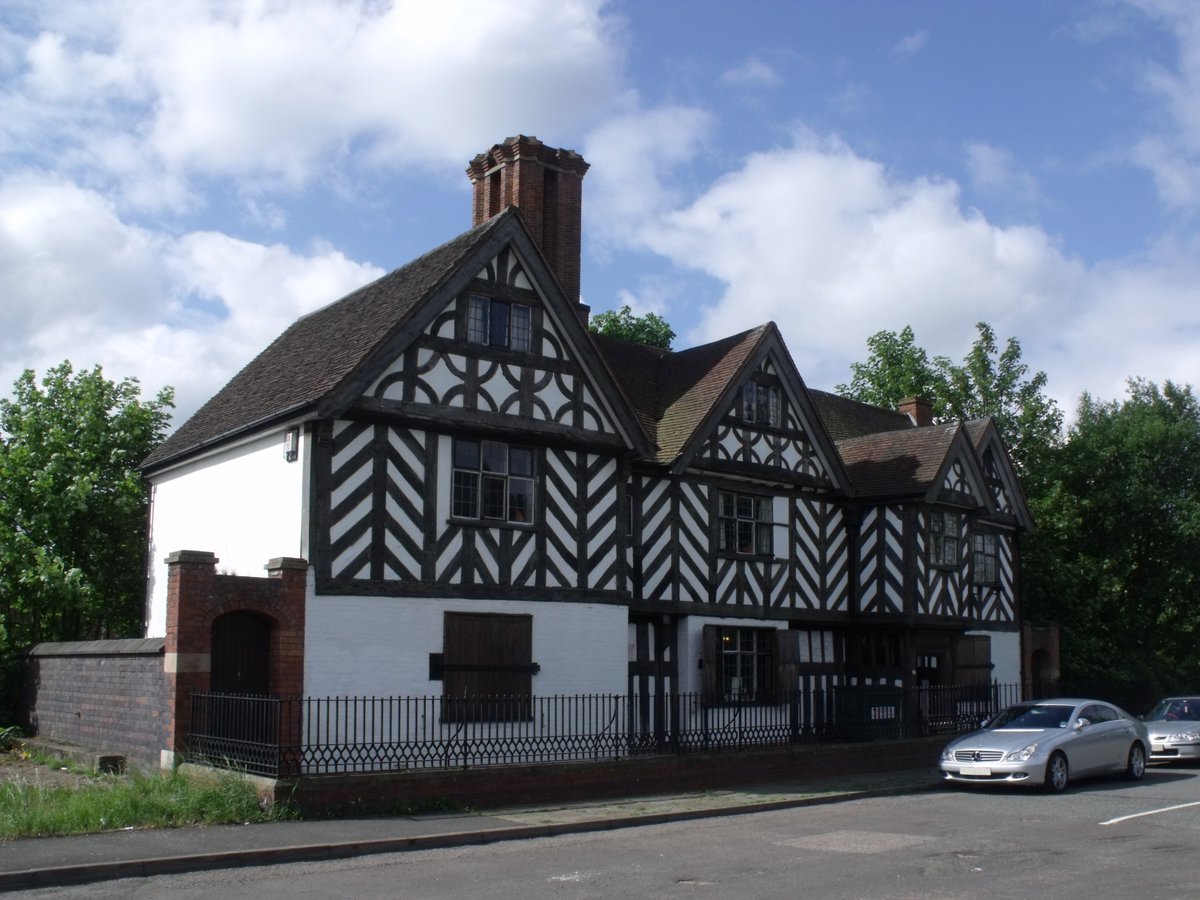
Stratford House, located in Moseley Road, Birmingham, England, is a Grade II* listed former farmhouse that boasts an interesting past. Built in 1601 by Ambrose Rotton, it was initially a farmhouse, built on a 20-acre farm owned by Ambrose. Ambrose not only owned the farm but also kept livestock such as sheep, oxen, cows, and pigs. For a period from 1854, it was used as a private girls' school. Today, Stratford House stands as an outstanding feature of Moseley Road.
This historic building has a rich history, the presence of which can be felt in its walls and rooms. For instance, the Midland Railway opened a goods yard at nearby Camp Hill in 1840, which undoubtedly played its role in the preservation of Stratford House. From 1926 to 1954, the London, Midland and Scottish railway owned Stratford House, with the intention of potentially demolishing it. However, public outcry fortunately led to its preservation.
There were more plans to demolish the house, but it was eventually bought and restored by Ivon Adams in 1954. During the late 1980s and early 1990s, Stratford House provided office accommodation for the Network Records, one of the leading UK exponents of techno music. In January 2015, the building was used as a swingers' club, operating under the name Tudor Lounge. The tenant had signed a ten-year lease starting from March 2014 and had obtained permission from Birmingham City Council to use the building as a 'private members meeting venue.
Local residents eventually raised objections, and late on 28 December 2015, the building was damaged by fire. Post-renovation, Stratford House is, as of 2020, occupied by Age UK Birmingham and Age UK Sandwell, separate local-focused charities from the national Age UK. In April 2021, Birmingham City Council approved plans for the road at the front of Stratford House to be closed and a Knott garden to be created. Stratford House still bears the insurance plate on the front, a physical reminder of its past.
Sources: Wikipedia, OpenStreetMap, Wikidata, Wikimedia Commons
Written by Nicolo Ciampini
Discuss this with the author and others
No comments yet. Be the first to start the conversation.