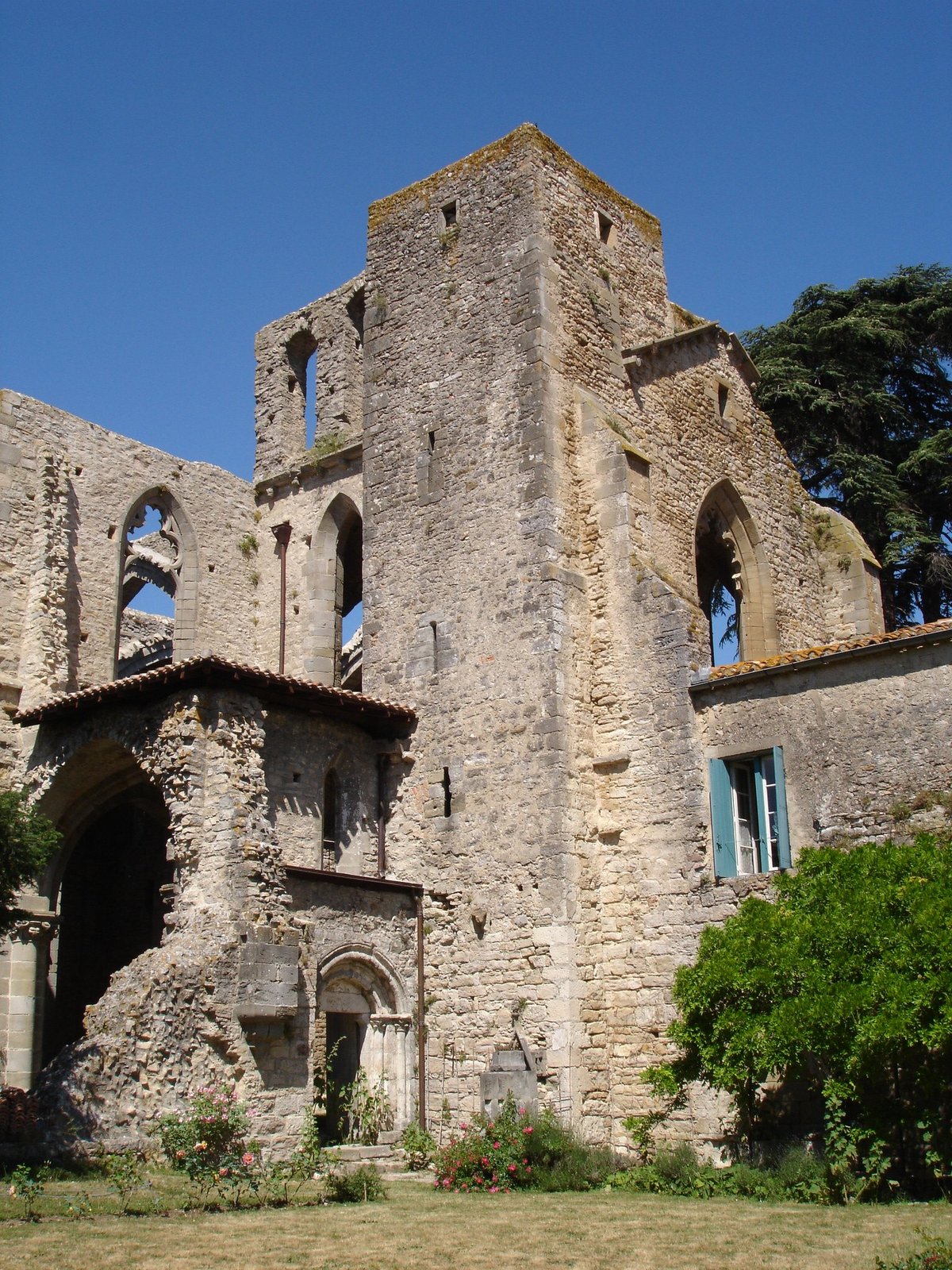

Deep in the Languedoc countryside, the former Abbaye Sainte-Marie de Villelongue stands today as a ruin. This was the first Cistercian abbey in the region, founded by a French monk between 1145 and 1149 (Exact year unspecified). Over several centuries, the abbey flourished until it declined during the plague epidemics of the 14th century. The Cistercian spirit church was rebuilt in the middle of the 13th century and continued until the beginning of the 14th century.
The church underwent several extensions and elevations during this period, with a number of additions to the structure. A notable example is the abbey's dairy, still visible today, built around the 15th century. The Protestants pillaged the abbey in 1568 but it was not completely destroyed. It was confiscated by revolutionaries in 1791 and was later sold as national property to a wealthy doctor from Saissac, Guillaume Boussac, who converted it into an agricultural estate.
Today, the site is divided into two parts: the open-to-the-public abbey and a group of dwellings at the site of the former abbatial residence, known as the ruins of the abbey. The cloister, which is particularly striking, is adorned with sculptures typical of Languedocien Southern Gothic style from the 13th and 14th centuries. One noteworthy feature of the cloister is the presence of a sculpture of a devil's head in one of the corners. According to the monks, this was forbidden by St. Benoit's rule to prevent disturbing the monks during prayer, as it goes against the Cistercian tradition.
Sources: Wikipedia, OpenStreetMap, Wikidata, Wikimedia Commons
Written by Nicolo Ciampini
Discuss this with the author and others
No comments yet. Be the first to start the conversation.