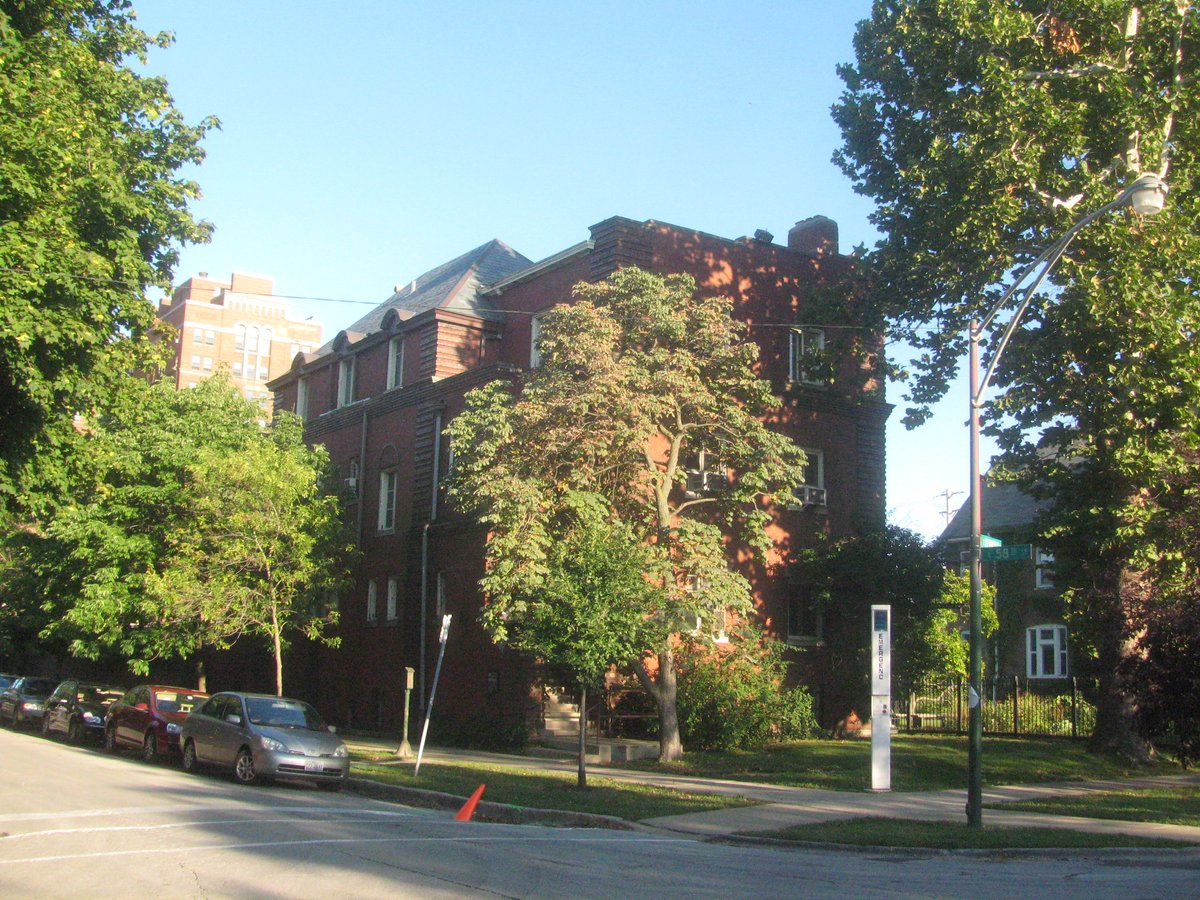
Located at 5801 South Kenwood Avenue on the campus of the University of Chicago, the Frank R. Lillie House is a historic three-story brick building. Constructed in 1904 to a design by Pond and Pond, the house is characterized by flat surfaces with diamond-shaped brickwork, unusually shaped brick corner quoining, and a variety of roof treatments. The interior has retained many of its original finishes despite being converted into office space by the university.
The house was home for many years to Frank R. Lillie (1870–1947), a native of Toronto who was educated at the University of Toronto and the University of Chicago. Lillie received a Ph.D. summa cum laude from the University of Chicago in 1894. From an early date, he cultivated an interest in embryology and made several groundbreaking discoveries, notably determining that the sex of embryos was determined by particular hormones in their blood supply. This work contributed to the establishment of endocrinology as a major area of study.
In addition to his work in embryology, Lillie was an important figure in science organizations. He provided significant financial support for the Woods Hole Oceanographic Institute, where he had spent a summer as a student, helping it become a major scientific research institute. Lillie bequeathed his house to the University of Chicago, reserving a life interest for his wife. The university took over the building in 1957 and it currently houses the offices of the Chicago Review.
Sources: Wikipedia, OpenStreetMap, Wikidata, Wikimedia Commons




Written by No Other
Discuss this with the author and others
No comments yet. Be the first to start the conversation.