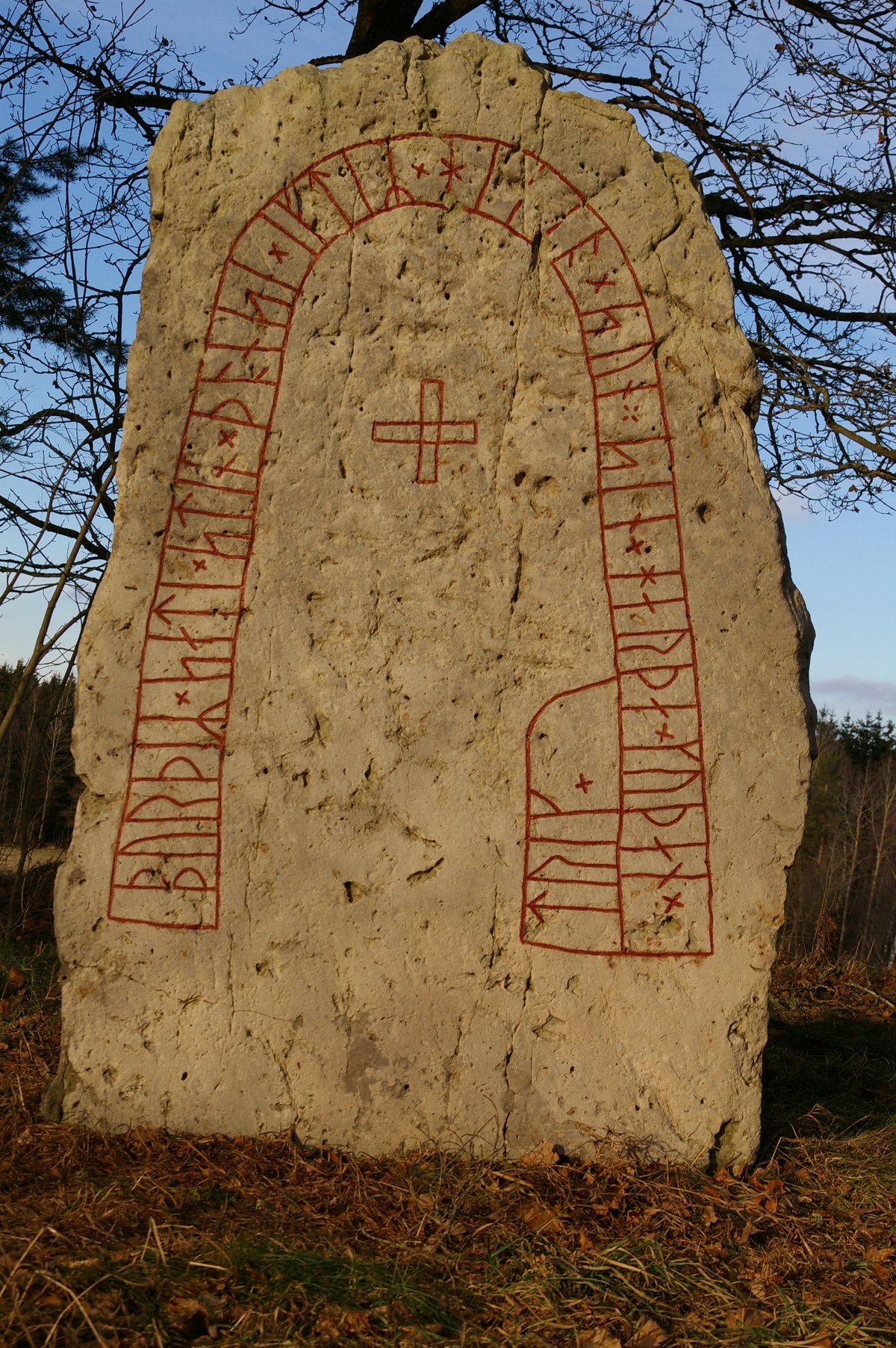

In Torestorp, just northwest of Gudhem, stands a large, skull-carved stone. This Viking Age memorial runestone, called Västergötland Runic Inscription 90 or Vg 90, is over 2.1 meters tall, making it one of the largest runestones in Sweden. The stone, made of limestone, is carved in the older RAK runestone style, which is known for its straight ends and lack of serpent or beast heads. King Magnus Ladulås noted its existence in a letter in 1287, making it one of the first modern notices of runestones in Sweden.
The unnamed runemaster who carved Vg 90 is also believed to have carved another runestone in Stora Dala. The inscription on Vg 90 consists of runes carved in the younger futhark in a text band that forms an arch that then curves back in the interior for one word. A small cross is in the upper part of the interior. The stone was raised by a man named Bróðir as a memorial for a son whose name cannot be clearly determined. The deceased son is described as being 'harða goðan dræng' or a 'very good valiant man.
The term 'dreng' was originally associated with members of a warrior group in Denmark, but over time, it became more generalized and was used by various groups such as merchants or ship crews. Similar inscriptions that describe the deceased using the term 'harða goðan dræng' can be found in other runestones across Sweden and Denmark. The trik for 'drengr' have been emphasized by their placement on the portion of the text band that bends back in the interior, although one scholar has suggested that this arrangement may have been caused by 'faulty planning' on the part of the runemaster.
Sources: Wikipedia, OpenStreetMap, Wikidata, Wikimedia Commons
Written by Nik Frost
Discuss this with the author and others
No comments yet. Be the first to start the conversation.