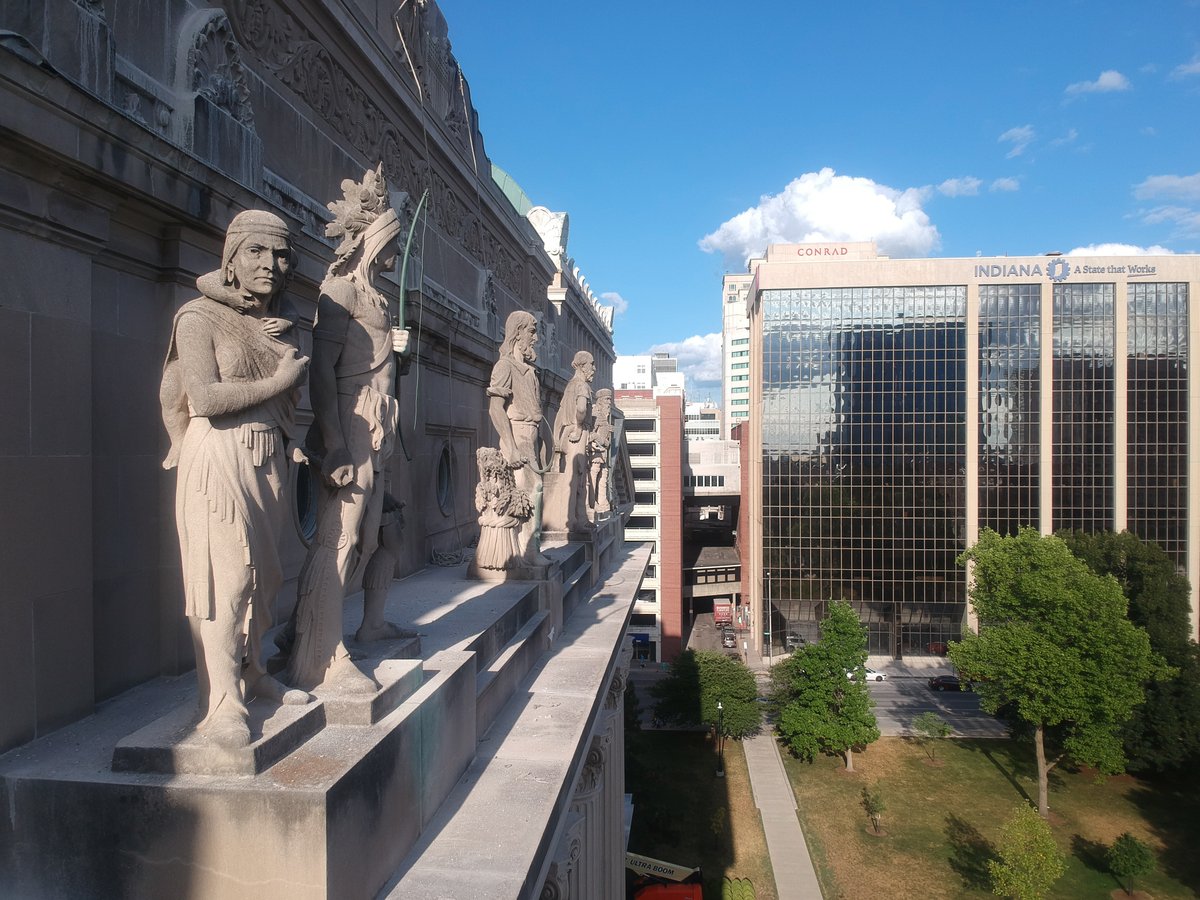
Above the south entrance portico of the Indiana Statehouse in Indianapolis are four groups of themed, symbolic figures carved in sculpted limestone. These figures, known as The Westward Journey, were created by sculptor Herman Carl Mueller and installed as part of the construction of the new State Capitol building. The sculpture was completed around 1886–1887, when the building opened to the public for the first session of the Indiana General Assembly.
Starting from the west, the first figural grouping is of a Native American family, representing the land's history. Moving east, the figures transition to a reaper holding a metal sickle and a blacksmith wearing a shirt with rolled up sleeves and a blacksmith apron. These figures symbolize the skills needed to utilize the fruits of the new land. On the eastern end is a pioneer family, where the man wears a buckskin shirt to indicate his adaptation to the west, and the woman holds her hand to her brow to shield her eyes from the sun.
At the center of the pediment, above the cornice, sits a stone American bald eagle with outspread wings. The eagle is gilded in gold and features a shield with stars and stripes on its chest. Positioned above the symbolic figures, the eagle represents Indiana's place within the union. While the limestone sculptures show some signs of erosion from their metal accessories, the gilded eagle remains a prominent feature of the statehouse architecture.
Sources: Wikipedia, OpenStreetMap, Wikidata, Wikimedia Commons
Written by Leroy
Discuss this with the author and others
No comments yet. Be the first to start the conversation.